
Years
2008 in History
2008 is remembered above all for the autumn when the world's financial system broke: on 15 September Lehman Brothers filed for bankruptcy, the largest in American history, turning the subprime mortgage crisis into a global financial collapse. Six weeks later, on 4 November, Barack Obama defeated John McCain to become the 44th president of the United States, the first African American elected to the office — crisis and change in a single season.
At a Glance
- Defining event
- Lehman Brothers bankruptcy, 15 September, triggers a global financial collapse
- The election
- Barack Obama elected 44th president on 4 November, the first African American to win the office
- The machine
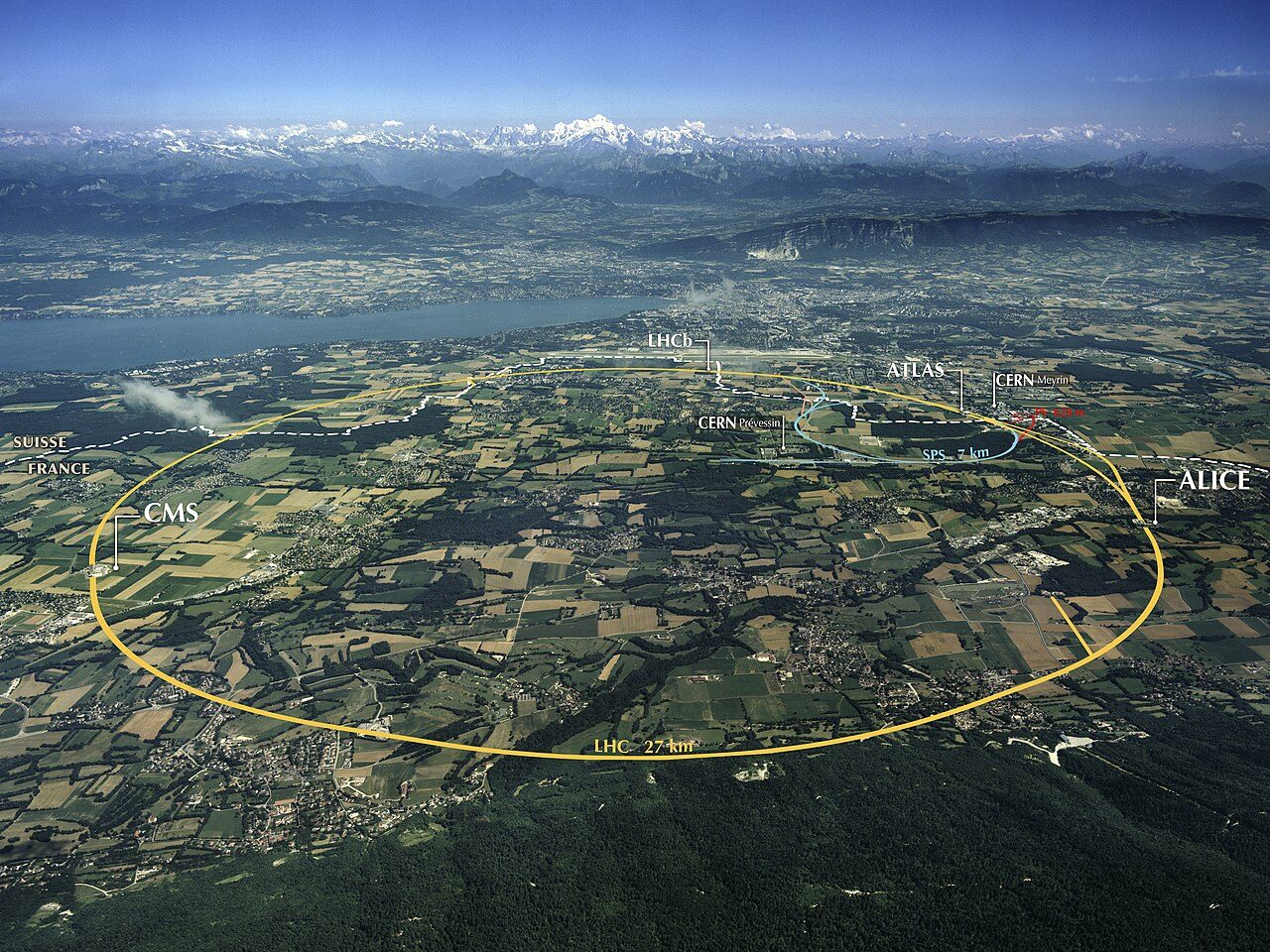
- Large Hadron Collider circulates its first beam on 10 September
- The disaster
- Sichuan earthquake, 12 May — magnitude 8.0, more than 69,000 killed
- The Games
- Michael Phelps wins his eighth gold medal of the Beijing Olympics on 17 August
- Closed the year
- Bernard Madoff arrested on 11 December; his business exposed as history's largest Ponzi scheme
The defining story: the collapse and the election
The crisis had been building in American subprime mortgages for more than a year, but 15 September 2008 was the day it became a collapse. Lehman Brothers, a bank founded in the nineteenth century, filed for bankruptcy — the largest filing in United States history — and the failure turned a housing and credit crisis into a global financial panic. Credit froze, stock markets plunged on every continent, and governments that had preached the discipline of markets found themselves rescuing banks to keep the system itself alive. The reckoning reached its symbolic end on 11 December, when financier Bernard Madoff was arrested in New York and his investment business was exposed as the largest Ponzi scheme in history.
The political answer arrived in the middle of the storm. Barack Obama had accepted the Democratic presidential nomination in Denver on 28 August — 45 years to the day after Martin Luther King's 'I Have a Dream' speech at the Lincoln Memorial — and on 4 November he defeated John McCain to become the 44th president of the United States, the first African American elected to the office. The election closed a campaign that had run through the financial system's unravelling: the new president would inherit two wars, a collapsing economy and a banking system on public life support, and the meaning of his victory — a barrier broken at the very moment of crisis — fixed 2008 in memory as a hinge year.
Five days before Lehman fell, a very different kind of system had switched on without drama. On 10 September, at CERN near Geneva, engineers circulated the first beam all the way around the Large Hadron Collider, a 27-kilometre ring of superconducting magnets buried beneath the Franco-Swiss border, built by more than 10,000 scientists from more than 100 countries. At 10:28 a.m. the beam completed the full circuit to cheers in the control centre. The triumph lasted nine days: a faulty electrical connection then caused a helium leak that shut the collider for more than a year. It restarted in 2009, collided beams in 2010, and in July 2012 announced the Higgs boson — the payoff the machine had been built for, delivered four years after its first morning.
The rest of the year crowded around those poles. On 12 May a magnitude 8.0 earthquake struck Sichuan, China, killing more than 69,000 people. Kosovo declared independence from Serbia on 17 February, and Prime Minister Kevin Rudd formally apologised to Australia's Aboriginal peoples and the Stolen Generations on 13 February. In August war broke out between Russia and Georgia over South Ossetia on the eve of the Beijing Olympics, where Michael Phelps won his eighth gold medal of the Games on 17 August. India launched its first lunar probe, Chandrayaan-1, on 22 October, and in November gunmen of Lashkar-e-Taiba attacked Mumbai, killing 166 people over three days by the commonly cited toll. Crisis, in 2008, came in every register at once.
Timeline of 2008
- 13 February
Prime Minister Kevin Rudd formally apologises to Australia's Aboriginal peoples and the Stolen Generations.
- 17 February
Kosovo unilaterally declares independence from Serbia.
- 24 March
Bhutan holds its first parliamentary elections, moving from absolute monarchy to constitutional democracy.
- 12 May
A magnitude 8.0 earthquake strikes Sichuan, China, killing more than 69,000 people.
- 7 August
War breaks out between Russia and Georgia over the breakaway region of South Ossetia.
- 17 August
Michael Phelps wins his eighth gold medal of the Beijing Olympics, the most ever won by one athlete at a single Games.
- 28 August
Barack Obama accepts the Democratic presidential nomination in Denver, 45 years to the day after King's speech.
- 10 September
The Large Hadron Collider circulates its first beam at CERN, the world's largest particle accelerator.
- 15 September
Lehman Brothers files for bankruptcy, the largest in US history, turning the mortgage crisis into a global financial collapse.
- 27 September
Zhai Zhigang performs China's first spacewalk, from the Shenzhou 7 spacecraft.
- 28 September
SpaceX's Falcon 1 reaches orbit, the first privately developed liquid-fuel rocket to do so.
- 22 October
India launches Chandrayaan-1, its first uncrewed lunar probe.
- 4 November
Barack Obama defeats John McCain to become the 44th president of the United States, the first African American elected to the office.
- 11 December
Financier Bernard Madoff is arrested in New York; his business is exposed as the largest Ponzi scheme in history.
Why 2008 still matters
The financial crisis remade economics and politics for a generation. The collapse that Lehman's bankruptcy symbolised destroyed jobs, homes and savings on every continent, discredited the idea that financial markets police themselves, and set the conditions — austerity, distrust of institutions, anger at elites — in which the following decade's politics grew. Madoff's arrest that December gave the era its emblem of private fraud to match Lehman's emblem of systemic failure. Obama's election, won in the crisis's depths, remains a landmark in American history in its own right: the first African American president, nominated on the anniversary of King's speech and elected 45 years after it, governing a country whose economy he had first to rescue.
The year's science set longer clocks running. The Large Hadron Collider's first beam began an experiment expected to run into the 2040s, whose Higgs discovery in 2012 completed the Standard Model of physics; SpaceX's Falcon 1 reaching orbit on 28 September began the private transformation of access to space; and China's first spacewalk and India's first lunar probe announced a multipolar space age. Even Bhutan's first parliamentary elections in March — a monarchy moving to constitutional democracy by its king's own design — and Kosovo's contested independence redrew maps in small places. 2008 is the year the twenty-first century's troubles and ambitions both announced themselves at full volume.
2008 on The History Trail
The collider switch-on is told in full on The History Trail, alongside the crisis autumn and Obama's election.
- September 10 in History — The Large Hadron Collider circulates its first beam at CERN.
- September 15 in History — Lehman Brothers files for bankruptcy and the financial crisis goes global.
- November 4 in History — Barack Obama is elected the 44th president of the United States.
- August 28 in History — Obama accepts the Democratic nomination, 45 years to the day after King's speech.
- May 12 in History — A magnitude 8.0 earthquake strikes Sichuan, China.
- Google — The search company whose story runs through the internet age this year helped define.
Sources
- HISTORY — This Day in History: September 10
- Wikipedia — Large Hadron Collider
- Encyclopaedia Britannica — On This Day: September 15
- HISTORY — This Day in History: September 15
- Encyclopaedia Britannica — On This Day: November 4
- Encyclopaedia Britannica — On This Day: May 12
- Encyclopaedia Britannica — On This Day: February 13
- Encyclopaedia Britannica — On This Day: December 11
The facts on this page were checked against these sources on 19 November 2026. The History Trail's permanent pages are researched and written for this site; the live profiles elsewhere on The History Trail are assembled automatically from Wikipedia and Wikidata.
About the Author
Researched and written by the The History Trail Editorial Team — the accountable editorial function behind this site's permanent story pages. The team works from the published sources cited on each page; it does not invent historians, reviewers or credentials, and it corrects errors openly.
Fact Check
Every load-bearing fact on this page traces to one of the sources listed above, and significant claims link to their source in the text. Our checking method is described on the methodology page; errors can be reported via the corrections page.
Sources & Citations
Cite this page as: The History Trail Editorial Team, The History Trail — this article's title, publication and update dates are shown beneath its headline. The full source list appears under Sources above; the site's source standards are on the sources page.