
On This Day
September 15 in History
On 15 September 1835 the 26-year-old naturalist Charles Darwin arrived in the Galápagos Islands aboard HMS Beagle, beginning five weeks of observation that helped shape the theory of evolution by natural selection. September 15 is also the day tanks were first used in war, the Nuremberg Laws were proclaimed, UN forces landed at Inchon, and Lehman Brothers collapsed.
Choose another date: open the On This Day calendar to browse events, births and deaths for any day of the year.
At a Glance
- The ship
- HMS Beagle, on a surveying voyage around South America that had left England nearly four years earlier
- The naturalist
- Charles Darwin, aged 26, serving as the ship's gentleman naturalist and companion to Captain Robert FitzRoy
- The stay
- About five weeks in the archipelago, visiting several islands and collecting birds, tortoises and plants
- The puzzle
- Mockingbirds and tortoises differed noticeably from island to island, though the islands were within sight of one another
- The outcome
- The specimens and notes fed, two decades later, into On the Origin of Species (1859) and the theory of evolution by natural selection
Events on this day
- 668The Byzantine emperor Constans II is assassinated in his bath at Syracuse, Sicily, ending a reign spent largely in the West.
- 1590Giovanni Battista Castagna is elected Pope Urban VII; he dies of malaria 12 days later, the shortest papal reign in history.
- 1776British forces land at Kip's Bay and occupy New York City, which they will hold for the rest of the American Revolutionary War.
- 1821The Central American provinces — Guatemala, El Salvador, Honduras, Nicaragua and Costa Rica — declare their independence from Spain.
- 1830The Liverpool and Manchester Railway opens, the world's first fully timetabled inter-city railway; a cabinet minister is killed at the ceremony.
- 1835Charles Darwin arrives in the Galápagos Islands aboard HMS Beagle — the featured story above.
- 1858The Overland Mail Company sends out its first stages, beginning regular transcontinental mail service between the eastern United States and California.
- 1862Confederate general Stonewall Jackson captures Harpers Ferry and some 12,000 Union troops, the largest surrender of US forces in the Civil War.
- 1916British forces use tanks in battle for the first time, at Flers-Courcelette on the Somme; of the first machines committed, many break down or are knocked out.
- 1935At the Nuremberg rally, Nazi Germany proclaims the Nuremberg Laws, stripping Jews of citizenship and banning marriage between Jews and other Germans.
- 1940The Luftwaffe launches its heaviest daylight attacks on London and is beaten off by the RAF — remembered as Battle of Britain Day, the climax of the battle.
- 1950US and South Korean forces land at Inchon in the Korean War, a daring amphibious stroke that reverses the war's course within weeks.
- 1963A bomb at the 16th Street Baptist Church in Birmingham, Alabama, kills four Black schoolgirls, a crime that shocks the American civil-rights era.
- 2008Lehman Brothers files for bankruptcy, the largest in US history, turning the subprime mortgage crisis into a global financial collapse.
Born on this day
- 1254Marco Polo — Venetian merchant whose account of his travels in Asia introduced Europe to China and the Mongol world.
- 1857William Howard Taft — 27th president of the United States and later its chief justice, the only person to hold both offices.
- 1890Agatha Christie — English novelist, creator of Hercule Poirot and Miss Marple and the best-selling fiction writer of all time.
- 1946Tommy Lee Jones — American actor, an Academy Award winner for The Fugitive.
- 1977Chimamanda Ngozi Adichie — Nigerian novelist of Half of a Yellow Sun and Americanah.
- 1984Prince Harry — younger son of King Charles III, who stepped back from royal duties and settled in California.
Died on this day
- 1859Isambard Kingdom Brunel — British engineer of railways, bridges and steamships, dead days after his ship Great Eastern's maiden-voyage accident.
- 1938Thomas Wolfe — American novelist of Look Homeward, Angel, dead at 37 of tuberculosis of the brain.
- 1973Gustaf VI Adolf — king of Sweden for 23 years, a noted archaeologist, whose death brought his grandson Carl XVI Gustaf to the throne.
- 2017Harry Dean Stanton — American character actor, the haunting lead of Paris, Texas, dead at 91.
The featured story: Darwin reaches the Galápagos, 15 September 1835
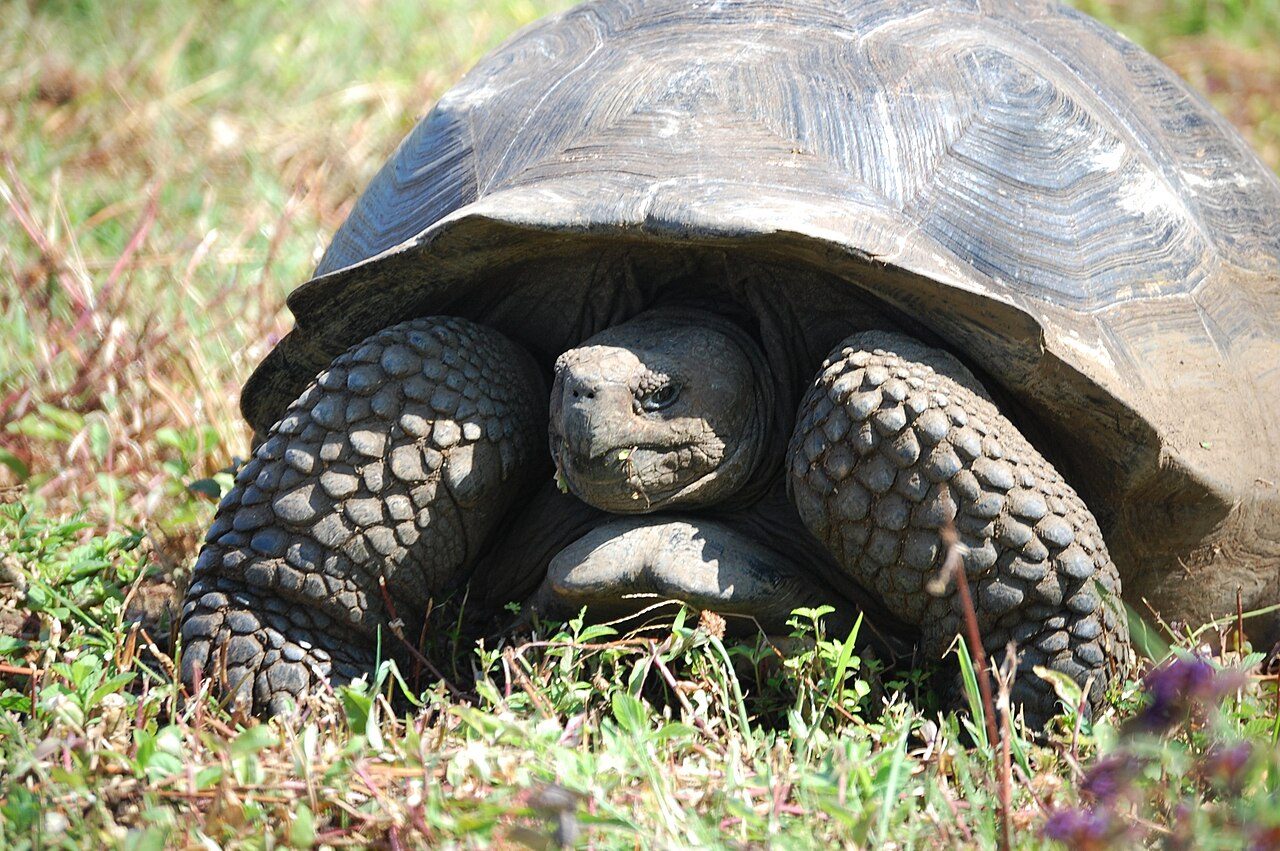
HMS Beagle had been at sea for nearly four years, charting the coasts of South America, when it reached the Galápagos archipelago on 15 September 1835. Its 26-year-old naturalist, Charles Darwin, came ashore with high but unspecific hopes — he had written to his sister that he expected the geology and zoology of the islands to be interesting. The volcanic islands, straddling the equator some 900 kilometres off Ecuador, were then little settled, used by whalers and buccaneers, and stocked with creatures found nowhere else: giant tortoises, marine iguanas, flightless cormorants and a profusion of small birds.
Darwin spent about five weeks in the islands, as Britannica's account notes, collecting specimens and riding into the highlands of Santiago Island. Two observations lodged in his mind. The vice-governor of the archipelago told him that the tortoises' shell shapes differed so reliably between islands that he could name an animal's home island on sight. And Darwin's own bird collecting — done hastily, and at first carelessly labelled — showed mockingbirds that varied from island to island. On the voyage home he began to wonder, in writing, whether such facts undermined the stability of species: if island populations differed, perhaps they had diverged from common stock.
Back in England, the ornithologist John Gould examined Darwin's bird specimens and announced that the Galápagos finches — which Darwin had taken for several unrelated kinds — were in fact a closely related group of distinct species, each adapted to its island and its food. The mockingbirds and tortoises told the same story. The Galápagos evidence did not give Darwin his theory by itself — years of work on breeding, fossils and barnacles followed — but it gave him the pattern that needed explaining: life diversifying, island by island, from shared ancestors. In 1859 he published the explanation as On the Origin of Species.
The islands have kept their role as evolution's open-air laboratory. The finches still bear Darwin's name; the tortoises he saw harvested by the thousand for ships' provisions have been brought back from the edge of extinction by captive breeding; and the archipelago is now an Ecuadorian national park and a World Heritage site. Every account of the visit returns to the same irony: the Beagle's stop was a five-week errand on a surveying cruise, and Darwin nearly mislabelled the specimens that made it immortal.
Why this date matters
September 15 is a date on which long consequences were set quietly running. A young naturalist stepped ashore in 1835 and, 24 years later, changed biology. Tanks lumbered into battle in 1916 and changed war; a racist code was proclaimed in 1935 and pointed toward genocide; a bank failed in 2008 and the world's finances followed it down. Set against those are days of deliverance — the RAF's stand in 1940, the Inchon landing in 1950 — and of grief, at Birmingham in 1963. Few dates hold so many beginnings whose endings nobody present could have foreseen.
Sources
- Encyclopaedia Britannica — On This Day: September 15
- HISTORY — This Day in History: September 15
- Encyclopaedia Britannica — Today in History: Charles Darwin Visits the Galápagos Islands
- Encyclopaedia Britannica — Inchon landing
- HISTORY — Future President William Taft born (September 15, 1857)
The facts on this page were checked against these sources on 19 November 2026. The History Trail's permanent pages are researched and written for this site; the live profiles elsewhere on The History Trail are assembled automatically from Wikipedia and Wikidata.
About the Author
Researched and written by the The History Trail Editorial Team — the accountable editorial function behind this site's permanent story pages. The team works from the published sources cited on each page; it does not invent historians, reviewers or credentials, and it corrects errors openly.
Fact Check
Every load-bearing fact on this page traces to one of the sources listed above, and significant claims link to their source in the text. Our checking method is described on the methodology page; errors can be reported via the corrections page.
Sources & Citations
Cite this page as: The History Trail Editorial Team, The History Trail — this article's title, publication and update dates are shown beneath its headline. The full source list appears under Sources above; the site's source standards are on the sources page.