
Years
2010 in History
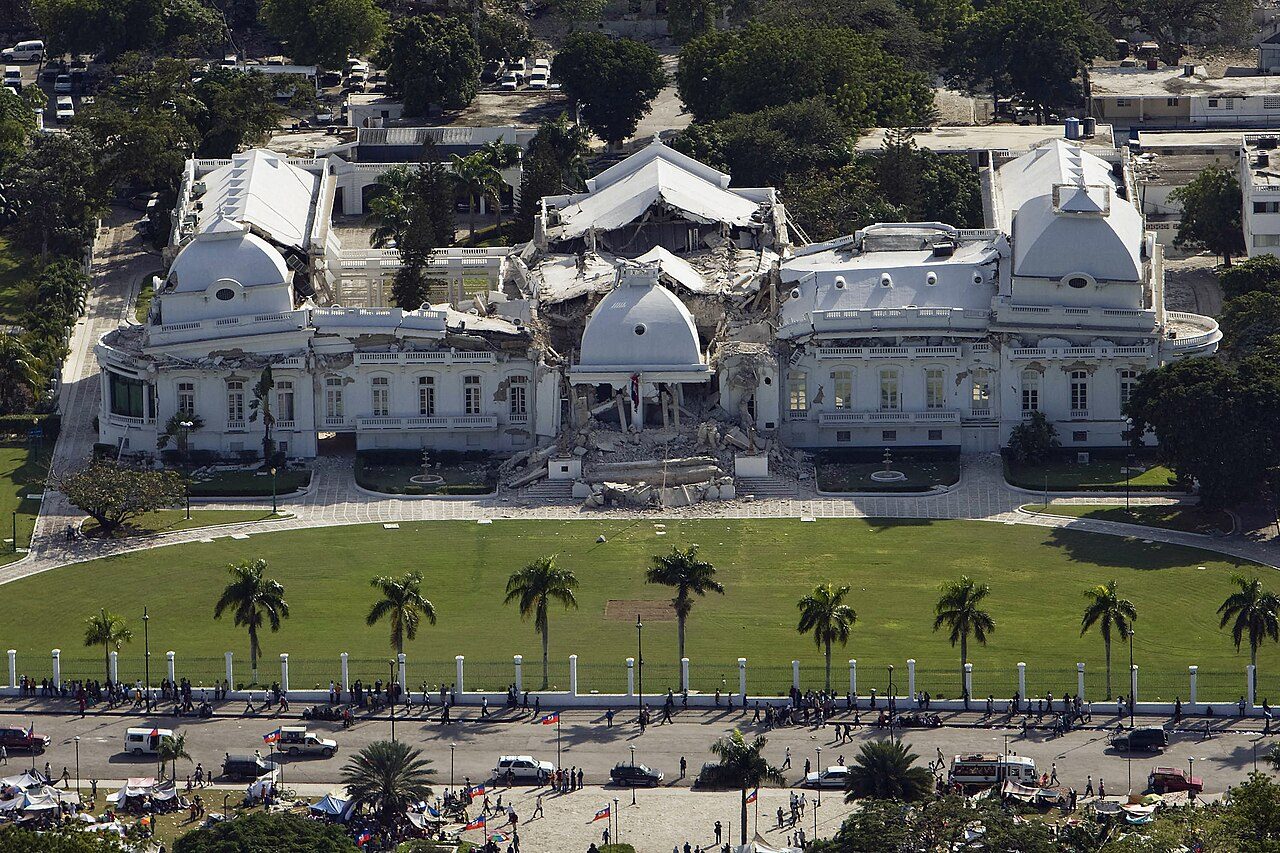
2010 is remembered above all for 12 January, when a magnitude 7.0 earthquake struck near Port-au-Prince and devastated Haiti's capital — officially put at 316,000 dead, with other estimates lower. Three months later the Deepwater Horizon rig exploded in the Gulf of Mexico and its well flowed for 87 days, and in December a Tunisian street vendor's protest set fire, literally, to the fuse of the Arab Spring.
At a Glance
- Defining event
- Haiti earthquake, 12 January — magnitude 7.0 near Port-au-Prince
- The toll
- Officially put at 316,000 dead; other estimates range from about 100,000 to 160,000
- The spill
- Deepwater Horizon blowout, 20 April — 11 killed; the well flows for 87 days
- The rescue
- Last of 33 Chilean miners winched to the surface on 13 October, after 69 days underground
- Opened the year
- Burj Khalifa, the world's tallest building, officially opened in Dubai on 4 January
- Closed the year
- Mohamed Bouazizi's self-immolation on 17 December ignites the Tunisian revolution
The defining story: Haiti's earthquake and the Gulf's oil
At 4:53 in the afternoon of 12 January 2010, the ground beneath western Haiti moved. A magnitude 7.0 earthquake, centred roughly 25 kilometres west-southwest of Port-au-Prince at a depth of only about 13 kilometres, struck along the Enriquillo fault system. Because the quake was shallow and close to a densely built capital, the shaking was catastrophic: the U.S. Geological Survey estimated that some three million people were exposed to severe or violent shaking. Within seconds much of Port-au-Prince — its cathedral, its hospitals, its schools, its ministries and its National Palace, whose collapsed cupola became the defining image of the disaster — lay in ruins.
The human cost defies easy counting, and the figures still differ. The Haitian government officially put the death toll at 316,000; other studies have estimated between roughly 100,000 and 160,000 deaths. What is not disputed is the scale: hundreds of thousands injured, more than a million people left homeless, and a capital whose basic institutions — government, police, the United Nations mission, whose headquarters collapsed killing its leadership — were themselves among the victims. The response became one of the largest international relief efforts ever mounted, converging on a country whose single airport and damaged port could barely receive it, and reconstruction was slowed in the years that followed by a cholera epidemic, political instability and the sheer depth of the damage.
Three months later, disaster struck from a different direction. On the night of 20 April, the Deepwater Horizon drilling rig in the Gulf of Mexico — finishing the Macondo exploration well for BP, weeks behind schedule and millions over budget — suffered a blowout when a misread pressure test declared the well secure. At about 9:45 p.m. mud and gas rushed up the riser and ignited; eleven of the 126 crew were killed and never found, and the rest escaped by lifeboat and helicopter. The rig sank two days later, and for 87 days the well poured oil from the seabed — more than three million barrels by a federal court's later finding, the largest accidental marine oil spill in history — until a cap shut it on 15 July.
Around those two disasters the year kept turning. In April Iceland's Eyjafjallajökull volcano sent an ash plume more than eight kilometres high and closed most of Europe's airspace for a week, in what Britannica calls the largest interruption in commercial airline service since the Second World War, with more than 100,000 flights cancelled. In October the last of 33 Chilean miners was winched to the surface after 69 days trapped half a mile underground — the year's great rescue set against its great losses. And on 17 December a Tunisian street vendor, Mohamed Bouazizi, set himself on fire in protest at police harassment; his act ignited the Tunisian revolution and the Arab Spring, whose consequences belonged to the year that followed.
Timeline of 2010
- 4 January
The Burj Khalifa in Dubai, the tallest building in the world, is officially opened.
- 12 January
A magnitude 7.0 earthquake devastates Haiti, killing more than 300,000 people by the official count.
- 7 March
Kathryn Bigelow becomes the first woman to win the Academy Award for Best Director, for The Hurt Locker.
- 8 April
Presidents Obama and Medvedev sign the New START treaty in Prague, cutting deployed strategic nuclear warheads.
- 14 April
Iceland's Eyjafjallajökull volcano begins the ash eruption that will close most of Europe's airspace for a week.
- 20 April
A blowout overwhelms the Deepwater Horizon rig in the Gulf of Mexico; 11 of her 126 crew are killed.
- 11 May
David Cameron becomes British prime minister after Gordon Brown resigns, ending thirteen years of Labour government.
- 11 June
The first football World Cup held in Africa kicks off in Johannesburg, South Africa.
- 31 August
President Obama formally ends the American combat mission in Iraq.
- 6 October
Instagram is released; the photo-sharing app gains an estimated 25,000 users on its first day.
- 13 October
The last of 33 Chilean miners is winched to the surface after 69 days trapped in the San José mine.
- 17 December
Tunisian street vendor Mohamed Bouazizi sets himself on fire in protest; his act ignites the Tunisian revolution and the Arab Spring.
- 22 December
President Obama signs the repeal of 'Don't Ask, Don't Tell', opening the way for gay Americans to serve openly in the military.
Why 2010 still matters
Haiti's earthquake changed how the world thinks about seismic risk in the Caribbean. Geologists had warned that the Enriquillo fault was locked and accumulating strain — a warning that arrived too late for a city built as if the ground would never move — and 12 January is now Haiti's day of remembrance, marked each year at the hour the earth shook. The ruined National Palace was not demolished until 2012 and the cathedral remained a ruin far longer: symbols of a recovery measured in decades, not news cycles. Deepwater Horizon rewrote its industry in the same way: investigations spread the blame across BP's decisions, Transocean's maintenance, Halliburton's cement and permissive regulators, a federal court put the discharge at about 3.19 million barrels, and BP's total costs passed 65 billion dollars, with deepwater drilling rules in the Gulf rewritten in the aftermath.
The year's beginnings compounded just as surely. WikiLeaks began publishing classified American documents in February and released hundreds of thousands more in October — the largest leak of state secrets in American history to that date — changing the politics of secrecy permanently. Instagram, released on 6 October, began the decade's reordering of photography and fame. The ash cloud's week of closed skies forced aviation to build the measurement-based rules that govern volcanic ash today. And Bouazizi's act on 17 December, the year's last great event, was really the next era's first: within weeks Tunisia's president had fled, and the Arab Spring was under way.
2010 on The History Trail
The Haiti earthquake and the Deepwater Horizon blowout are told in full on The History Trail, with the ash cloud that grounded a continent.
- January 12 in History — The Haiti earthquake devastates Port-au-Prince.
- April 20 in History — The Deepwater Horizon explosion and the 87-day spill.
- 2010 Eruptions of Eyjafjallajökull — The Icelandic ash eruption that closed Europe's airspace.
- April 14 in History — Eyjafjallajökull begins the ash eruption that grounds European aviation.
- October 13 in History — The last of 33 Chilean miners reaches the surface after 69 days.
- December 17 in History — Bouazizi's protest ignites the Tunisian revolution and the Arab Spring.
Sources
- Encyclopaedia Britannica — On This Day: January 12
- U.S. Geological Survey — The Mw 7.0 Haiti Earthquake of January 12, 2010 (Open-File Report 2010-1048)
- Encyclopaedia Britannica — On This Day: April 20
- U.S. Coast Guard — Report of Investigation: Deepwater Horizon
- Encyclopaedia Britannica — On This Day: April 14
- Encyclopaedia Britannica — On This Day: October 13
- Encyclopaedia Britannica — On This Day: December 17
- Encyclopaedia Britannica — On This Day: January 4
The facts on this page were checked against these sources on 19 November 2026. The History Trail's permanent pages are researched and written for this site; the live profiles elsewhere on The History Trail are assembled automatically from Wikipedia and Wikidata.
About the Author
Researched and written by the The History Trail Editorial Team — the accountable editorial function behind this site's permanent story pages. The team works from the published sources cited on each page; it does not invent historians, reviewers or credentials, and it corrects errors openly.
Fact Check
Every load-bearing fact on this page traces to one of the sources listed above, and significant claims link to their source in the text. Our checking method is described on the methodology page; errors can be reported via the corrections page.
Sources & Citations
Cite this page as: The History Trail Editorial Team, The History Trail — this article's title, publication and update dates are shown beneath its headline. The full source list appears under Sources above; the site's source standards are on the sources page.