
Things
Google was founded in 1998 by Larry Page and Sergey Brin, two Stanford graduate students whose BackRub search engine ranked web pages by the links pointing to them. Financed by a $100,000 cheque and run from a borrowed garage, it became the world's dominant search company and, since 2015, the core business of Alphabet.
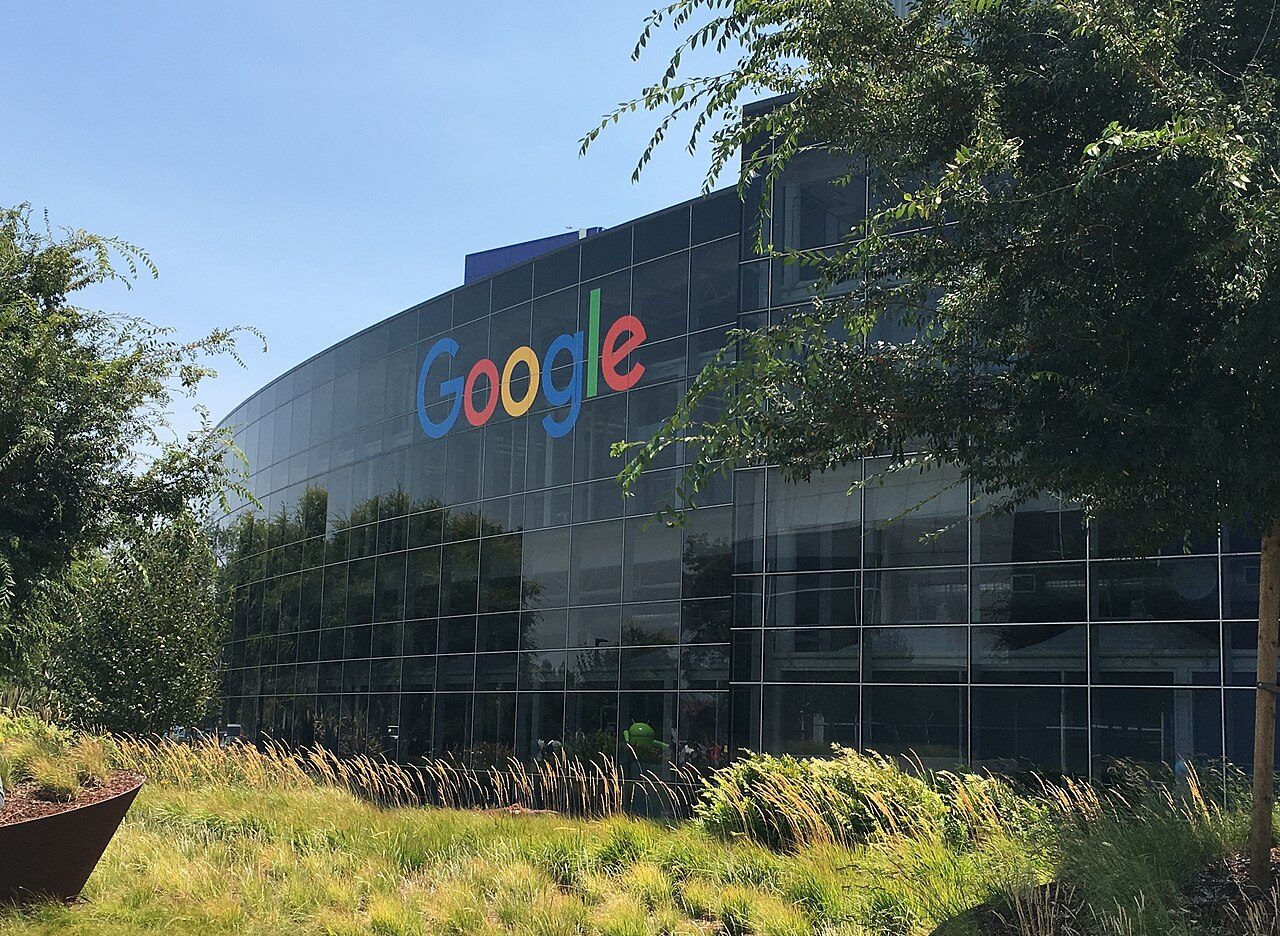
At a Glance
- Founded
- Incorporated September 1998, Menlo Park, California
- Founders
- Larry Page and Sergey Brin, Stanford University graduate students
- Original name
- BackRub (1996), renamed Google, a play on the mathematical term googol
- First office
- Susan Wojcicki's garage in Menlo Park, California
- Headquarters
- The Googleplex, Mountain View, California
- Initial public offering
- 2004 — raised $1.66 billion, with shares sold by public auction
- Parent company
- Alphabet Inc., since the 2015 reorganisation
A Partnership Struck at Stanford
Google was founded in 1998 by Larry Page and Sergey Brin, graduate students at Stanford University who had met the previous year when Brin, already a student there, was assigned to show the visiting Page around. By some accounts they disagreed about nearly everything at that first meeting, but within a year they were working together from their dorm rooms on a new kind of search engine. They called it BackRub, because it judged a web page by its backlinks — the links other pages made to it.
The idea behind BackRub was simple and powerful. Most search engines of the time ranked pages largely by how often a search term appeared on them. Page and Brin instead treated a link as a vote: a page linked to by many others was probably valuable, and a link from an important page counted for more than one from an obscure page. Their PageRank method turned the web's own structure into a measure of importance, and the results were strikingly better than those of rival search engines.
A Cheque, a Garage and a Misspelling
BackRub was soon renamed Google, a play on googol, the mathematical term for the number one followed by a hundred zeros — a name meant to reflect the founders' mission to organise the world's information and make it universally accessible and useful. The domain google.com was registered in September 1997. In August 1998 Andy Bechtolsheim, a co-founder of Sun Microsystems, wrote Page and Brin a cheque for $100,000, and Google Inc. was officially born.
With that investment the newly incorporated team moved out of the dorms and into its first office: a garage in suburban Menlo Park, California, owned by Susan Wojcicki, who would later become chief executive of YouTube. The garage had clunky desktop computers, a ping pong table and bright blue carpet. Google quickly outgrew it, raised about $1 million from investors, family and friends, and then, in mid-1999, a $25 million round of venture capital — by which time it was already answering half a million search queries a day.
Timeline
- 1996
Page and Brin build BackRub at Stanford, a search engine that ranks pages by analysing the links between them.
- 15 September 1997
The domain google.com is registered, and BackRub takes its new name, Google.
- September 1998
After Andy Bechtolsheim's $100,000 investment, Google Inc. is incorporated and the team moves into Susan Wojcicki's garage in Menlo Park.
- 2000
Google becomes the search engine behind Yahoo!, then one of the web's most popular sites, and its growth accelerates sharply.
- 1 April 2004
Gmail launches with a gigabyte of free storage per user — hundreds of times more than rival webmail services offered.
- 2004
Google's initial public offering raises $1.66 billion; shares are sold by public auction, an unusual method meant to give ordinary investors an equal footing.
- 2005
Google Maps and Google Earth launch, and Google acquires Android Inc., a small start-up that had not yet released any products.
- 2006
Unable to overtake the fast-growing YouTube with its own Google Video service, Google buys YouTube for $1.65 billion in stock and keeps it running separately.
- October 2008
The T-Mobile G1 goes on sale — the first phone running the Android operating system; Google also releases its Chrome browser in 2008.
- August 2015
Google is reorganised as a subsidiary of a new holding company, Alphabet Inc., with search, advertising, maps, Android and YouTube remaining under Google.
From a Search Box to a System
Search remained the core of Google's success, but the company steadily built a system around it. Gmail, launched in 2004, applied Google's search thinking to email: instead of filing or deleting messages to stay under a tiny storage limit, users could keep everything and search it. Google Maps and Google Earth, both launched in 2005 after the acquisition of the mapping company Keyhole, turned location into another searchable index. Advertising tied to search requests funded it all, and by 2004 Google was handling some 200 million searches a day.
Two acquisitions reshaped the company most. Buying Android Inc. in 2005 gave Google the foundation of a free, open-source mobile operating system; promoted through the Open Handset Alliance from 2007, Android powered the first G1 phone in 2008 and went on to run the majority of the world's smartphones. Buying YouTube in 2006 for $1.65 billion made Google the owner of the web's dominant video platform, which it wisely left to operate under its own name. Together with Chrome, launched in 2008, these products moved Google from a website users visited to the layer through which much of the internet is reached.
Inside Alphabet
In August 2015 the founders reorganised the company under a new holding company, Alphabet Inc., with Google — search, advertising, apps, maps, Android and YouTube — as its largest subsidiary and its more experimental ventures separated out. The structure acknowledged what Google had become: not one product but a family of them, several used by billions of people. Britannica notes that more than 70 percent of worldwide online search requests are handled by Google, and that its name entered the language as a verb for searching the internet itself.
That scale has brought sustained scrutiny of Google's dominance in search and advertising and of how it handles users' data, alongside its central place in daily digital life. The company that began as two students ranking links in a dorm room now sits underneath how much of the world finds information, navigates, communicates and watches video — an outcome no one in the Menlo Park garage, ping pong table and all, could seriously have predicted in 1998.
Sources
- Google — How we started and where we are today (official company history)
- Encyclopaedia Britannica — Google: History, Products, Services, & Alphabet
- Encyclopaedia Britannica — Google Earth and Google Maps; Android; YouTube; Alphabet
- Wikipedia — History of Google
The facts on this page were checked against these sources on 19 November 2026. The History Trail's permanent pages are researched and written for this site; the live profiles elsewhere on The History Trail are assembled automatically from Wikipedia and Wikidata.
About the Author
Researched and written by the The History Trail Editorial Team — the accountable editorial function behind this site's permanent story pages. The team works from the published sources cited on each page; it does not invent historians, reviewers or credentials, and it corrects errors openly.
Fact Check
Every load-bearing fact on this page traces to one of the sources listed above, and significant claims link to their source in the text. Our checking method is described on the methodology page; errors can be reported via the corrections page.
Sources & Citations
Cite this page as: The History Trail Editorial Team, The History Trail — this article's title, publication and update dates are shown beneath its headline. The full source list appears under Sources above; the site's source standards are on the sources page.