
Years
1927 in History
1927 is remembered for the thirty-three and a half hours of 20–21 May, when Charles Lindbergh, a 25-year-old airmail pilot who had not slept, flew the Spirit of St. Louis alone and nonstop from New York to Paris — the flight that convinced the world aviation had a future. The year also refounded the BBC as a public corporation, produced the last Model T Ford, executed Sacco and Vanzetti, and premiered The Jazz Singer, the first feature film with spoken dialogue.
At a Glance
- Defining event
- Lindbergh's solo nonstop transatlantic flight, 20–21 May — 33 hours 30 minutes
- The prize
- The $25,000 Orteig Prize, unclaimed for eight years and fatal to several rivals
- Broadcasting remade
- The BBC is refounded as a public corporation under Royal Charter, 1 January
- An era ends
- The 15 millionth and last Model T Ford leaves the factory, 26 May
- Talkies arrive
- The Jazz Singer premieres in New York, 6 October — the silent era begins to end
- Closed the year
- Tokyo's Ginza subway line opens, 30 December — the first underground railway in Asia
The defining story: alone over the Atlantic
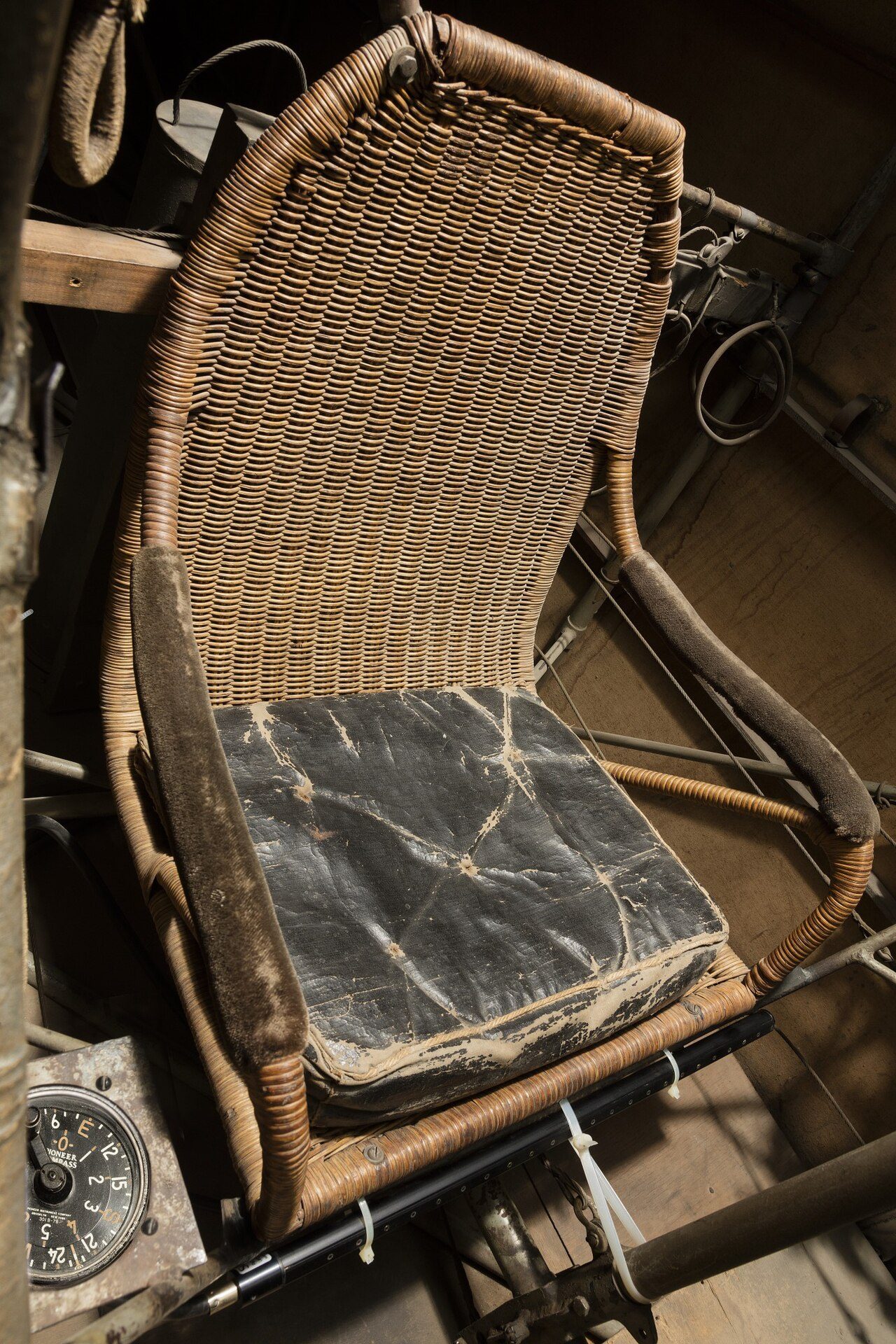
In 1919 the New York hotelier Raymond Orteig offered $25,000 to the first aviators to fly nonstop between New York and Paris. The prize went unclaimed for eight years, and several men died trying to win it; in the spring of 1927 the French aces Nungesser and Coli vanished over the Atlantic a fortnight before Lindbergh flew. Early in 1927 a 25-year-old airmail pilot named Charles A. Lindbergh persuaded a group of St. Louis businessmen to back his own attempt — one man, one engine, against the smart money on big multi-engine machines with crews of three. The Ryan NYP monoplane built for him in San Diego, the Spirit of St. Louis, was designed under his close supervision, its fuselage lengthened to carry an enormous load of fuel.
At 7:52 on the morning of 20 May 1927, Lindbergh — who had not slept the night before — coaxed the heavily overloaded monoplane off the muddy runway of Roosevelt Field, Long Island, cleared the telephone wires at the far end by a few feet, and pointed it out over the Atlantic. Ahead lay some 3,610 miles of ocean, with no radio and no parachute. To save weight and to protect him in a crash, the main fuel tanks were placed ahead of the cockpit, which meant he could not see directly forward at all except through a small periscope; he navigated by compass and dead reckoning, with five sandwiches and 451 gallons of fuel.
The flight became a duel with sleep. Lindbergh fought hallucinations over the mid-Atlantic, skimmed icebergs and flew within feet of the waves to stay awake in the cold air, and made landfall over Ireland almost exactly on course — a navigational feat in itself. He crossed England and the Channel in darkness, followed the Seine, and at 10:22 p.m. Paris time on 21 May, after 33 hours and 30 minutes in the air, put the Spirit down at Le Bourget airfield, where a crowd estimated at 100,000 people surged across the field to greet him. He arrived with some 85 gallons of fuel still in his tanks — the margin he had deliberately loaded for the worst case.
President Calvin Coolidge called him a messenger of peace and goodwill who had broken down another barrier of time and space. Lindbergh returned to the United States aboard the cruiser Memphis to tumultuous welcomes, and on 13 June New York gave him a ticker-tape parade up Broadway. Within days he was the most celebrated man on the planet — and the flight did more than win a prize: it convinced investors, governments and the public that aviation had a commercial future, and triggered a worldwide boom in flying.
Timeline of 1927
- 1 January
The BBC is refounded as a public corporation under Royal Charter, with John Reith as its first Director-General.
- 7 January
Commercial transatlantic telephone service opens between New York and London.
- 11 January
A Los Angeles dinner hosted by Louis B. Mayer sets in motion the founding of the Academy of Motion Picture Arts and Sciences.
- 26 March
Italy's Mille Miglia road race is run for the first time.
- 18 May
The Bath School disaster kills forty-four in Michigan, America's deadliest school massacre.
- 20 May
Charles Lindbergh takes off from Roosevelt Field, New York, for Paris in the Spirit of St. Louis.
- 21 May
Lindbergh lands at Le Bourget, Paris, completing the first solo nonstop transatlantic flight.
- 26 May
Henry and Edsel Ford drive the 15 millionth and last Model T out of the factory, ending its production run.
- 13 June
Lindbergh, fresh from Paris, is honoured with a ticker-tape parade up Broadway in New York.
- 23 August
Nicola Sacco and Bartolomeo Vanzetti are executed in Massachusetts after a trial that divided the world.
- 18 September
The Columbia Broadcasting System — CBS — makes its first broadcast, as a radio network of sixteen stations.
- 6 October
The Jazz Singer premieres in New York, the first feature film with spoken dialogue.
- 13 November
The Holland Tunnel opens under the Hudson River, linking Manhattan with Jersey City.
Why 1927 still matters
Lindbergh's flight is the hinge between aviation as stunt and aviation as industry. Before it, long-distance flying belonged to navies, millionaires and the reckless; after it, investors, governments and ordinary passengers treated the aeroplane as transport. The Orteig Prize had killed six men in eight years; Lindbergh's method — a purpose-built aircraft, weight ruthlessly traded against fuel margin, navigation by dead reckoning executed almost perfectly — showed that the ocean could be crossed not by daring but by arithmetic. The worldwide boom his landing triggered, in airfields, airlines and aircraft orders, is why 1927 is still counted as commercial aviation's founding year.
The year's media settlements lasted just as long. On 1 January the British Broadcasting Company, a private firm of radio manufacturers, was liquidated and replaced by the British Broadcasting Corporation, a public corporation under Royal Charter with John Reith's mission — to inform, educate and entertain — written into its existence; that invention, public service broadcasting, was copied around the world. In America the same year built the commercial alternative: CBS made its first broadcast in September, and a Los Angeles dinner in January set in motion the Academy that gives the Oscars. When The Jazz Singer premiered in October, the silent era began to end within a single season.
Other 1927 endings were heavier. The last Model T — the car that had put the world on wheels — left the Ford factory on 26 May, closing mass production's first age. On 23 August Sacco and Vanzetti were executed in Massachusetts after one of America's most contested trials, a case that divided the world and has never stopped being argued. And in South Dakota, Gutzon Borglum began carving Mount Rushmore, a project that would take fourteen years — the decade carving its heroes, literally, in stone.
1927 on The History Trail
This year's featured days are Lindbergh's takeoff and his landing, with the BBC's story told in full.
- May 20 in History — Lindbergh takes off from Roosevelt Field for Paris in the Spirit of St. Louis.
- May 21 in History — Lindbergh lands at Le Bourget, completing the first solo nonstop transatlantic flight.
- BBC — How a radio company became the model for public broadcasting, refounded as a corporation in 1927.
- October 6 in History — The Jazz Singer premieres — the first feature film with spoken dialogue.
- August 23 in History — Sacco and Vanzetti are executed in Massachusetts.
- May 26 in History — The last Model T Ford leaves the factory, ending the car's production run.
Sources
- https://www.history.com/this-day-in-history/May-20
- Encyclopaedia Britannica — On This Day: May 21
- Encyclopaedia Britannica — On This Day: October 6
- Encyclopaedia Britannica — On This Day: August 23
- Encyclopaedia Britannica — On This Day: January 7
- Encyclopaedia Britannica — On This Day: November 13
The facts on this page were checked against these sources on 19 November 2026. The History Trail's permanent pages are researched and written for this site; the live profiles elsewhere on The History Trail are assembled automatically from Wikipedia and Wikidata.
About the Author
Researched and written by the The History Trail Editorial Team — the accountable editorial function behind this site's permanent story pages. The team works from the published sources cited on each page; it does not invent historians, reviewers or credentials, and it corrects errors openly.
Fact Check
Every load-bearing fact on this page traces to one of the sources listed above, and significant claims link to their source in the text. Our checking method is described on the methodology page; errors can be reported via the corrections page.
Sources & Citations
Cite this page as: The History Trail Editorial Team, The History Trail — this article's title, publication and update dates are shown beneath its headline. The full source list appears under Sources above; the site's source standards are on the sources page.