
On This Day
May 21 in History
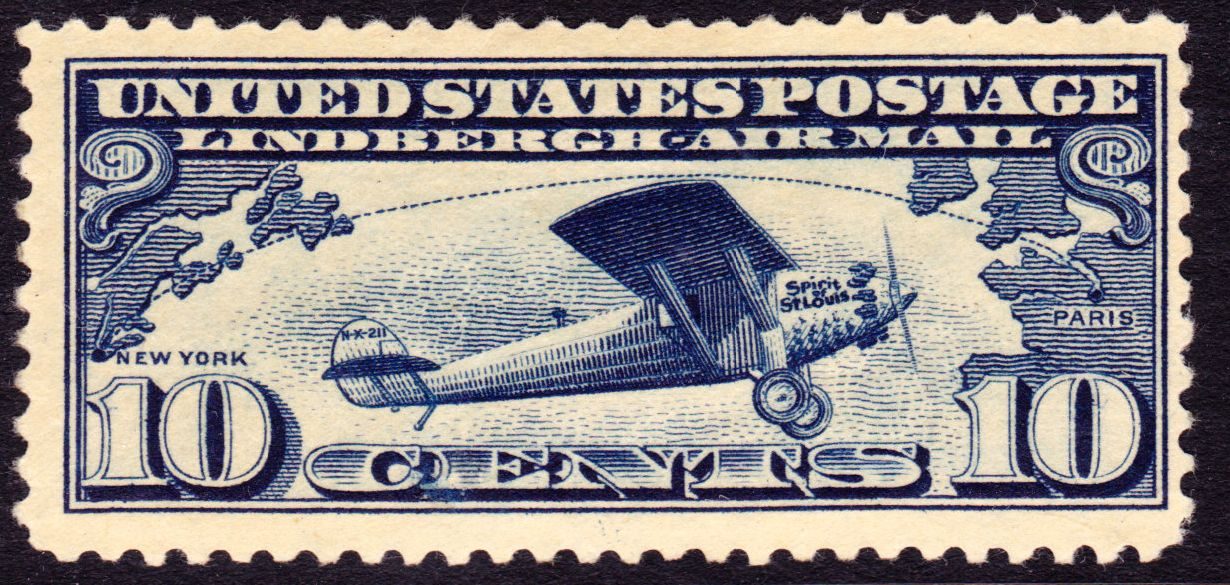
May 21 is the day Charles Lindbergh landed at Le Bourget airfield outside Paris in 1927, completing the first solo nonstop flight across the Atlantic Ocean and becoming, overnight, the most famous aviator in the world. The 33-and-a-half-hour flight from New York in the Spirit of St. Louis proved that long-distance air travel was possible and ignited a global boom in aviation. The date also marks the founding of the American Red Cross in 1881 and Amelia Earhart's own solo Atlantic crossing, exactly five years later, in 1932.
Choose another date: open the On This Day calendar to browse events, births and deaths for any day of the year.
At a Glance
- Date
- 21 May 1927
- Pilot
- Charles A. Lindbergh
- Aircraft
- Ryan NYP, the Spirit of St. Louis
- Route
- Roosevelt Field, New York, to Le Bourget, Paris
- Flight time
- 33 hours 30 minutes
- Distance
- 3,610 miles
- Prize won
- The $25,000 Orteig Prize
Events on this day
- 1542Spanish explorer Hernando de Soto dies during his expedition through the North American Southeast, on the banks of the Mississippi River.
- 1683The Ashmolean Museum, the world's first university museum, opens at the University of Oxford.
- 1758Ten-year-old Mary Campbell is abducted by Lenape warriors during the French and Indian War and spends years living among them.
- 1881Clara Barton and Adolphus Solomons found the American Red Cross in Washington, D.C.
- 1901Connecticut enacts the first state speed-limit law in the United States, capping speeds at 12 mph in cities and 15 mph in the countryside.
- 1908The first American horror film, a silent adaptation of Dr. Jekyll and Mr. Hyde, is shown to audiences in Chicago; no copy is known to survive.
- 1911French troops occupy Fez in Morocco, a move that sparks the Second Moroccan Crisis with Germany.
- 1924Chicago teenagers Nathan Leopold and Richard Loeb murder 14-year-old Bobby Franks, a crime that shocks the United States.
- 1927Charles Lindbergh lands in Paris to complete the first solo nonstop transatlantic flight — the featured story above.
- 1932Amelia Earhart lands in Ireland to become the first woman to fly solo and nonstop across the Atlantic, five years to the day after Lindbergh.
- 1956The United States drops a hydrogen bomb from an aircraft for the first time, over Namu Island at Bikini Atoll.
- 1972A man attacks Michelangelo's Pieta with a hammer inside St. Peter's Basilica in Rome, badly damaging the statue.
- 1991Former Indian prime minister Rajiv Gandhi is assassinated by a suicide bomber while campaigning in Tamil Nadu.
Born on this day
- 1471Albrecht Durer — German artist whose woodcuts and engravings made him the most famous artist of the Northern Renaissance
- 1688Alexander Pope — English poet celebrated for his satirical verse and his translation of Homer
- 1780Elizabeth Fry — English prison reformer who campaigned for humane treatment of prisoners
- 1844Henri Rousseau — French post-impressionist painter known for his dreamlike jungle scenes
- 1904Fats Waller — American jazz pianist and composer of standards such as Ain't Misbehavin'
- 1917Raymond Burr — Canadian-American actor best known as television's Perry Mason
- 1921Andrei Sakharov — Soviet physicist who helped build the hydrogen bomb and later won the Nobel Peace Prize as a dissident
- 1930Malcolm Fraser — Australian politician who served as prime minister from 1975 to 1983
Died on this day
- 1542Hernando de Soto — Spanish explorer who led the first European expedition deep into the southeastern part of North America
- 1991Rajiv Gandhi — former prime minister of India, assassinated while campaigning for re-election
- 2000John Gielgud — English actor and director, one of the dominant Shakespearean stage actors of the twentieth century.
The featured story: Lindbergh flies the Atlantic alone, 21 May 1927
In 1919 the New York hotelier Raymond Orteig offered a prize of $25,000 to the first aviators to fly nonstop between New York and Paris. The prize went unclaimed for eight years, and several men died trying to win it. Early in 1927 a 25-year-old airmail pilot named Charles A. Lindbergh persuaded a group of St. Louis businessmen to back his own attempt. The aircraft built for him by Ryan Airlines in San Diego, the Ryan NYP monoplane Spirit of St. Louis, was designed by Donald Hall under Lindbergh's close supervision, with its wingspan stretched and its fuselage lengthened to carry an enormous load of fuel.
Lindbergh took off from Roosevelt Field, Long Island, on the morning of 20 May 1927, alone. Ahead of him lay some 3,610 miles of ocean. To save weight and to protect him in a crash, the main fuel tanks were placed ahead of the cockpit, which meant he could not see directly forward at all except through a small periscope. Through the night he fought drowsiness, fog and icing, skimmed the waves to stay awake, and made landfall over Ireland before crossing England and the Channel into France.
At about half past ten on the evening of 21 May, after 33 hours and 30 minutes in the air, Lindbergh landed safely at Le Bourget airfield near Paris, where a crowd estimated at 100,000 people surged across the field to greet him. President Calvin Coolidge called him a messenger of peace and goodwill who had broken down another barrier of time and space. Within days Lindbergh was the most celebrated man on the planet, and his flight did more than win a prize: it convinced investors, governments and the public that aviation had a commercial future.
Lindbergh returned to the United States aboard the cruiser Memphis to tumultuous welcomes in Washington and New York, then toured the country in the Spirit of St. Louis before flying it to Washington for the last time on 30 April 1928 and presenting it to the Smithsonian Institution. The little silver monoplane still hangs in the National Air and Space Museum, and the flight it made on 20-21 May 1927 remains the defining feat of the heroic age of aviation.

Why this date matters
May 21 is a date of journeys and thresholds. It holds two of the great Atlantic crossings of the early air age, Lindbergh's arrival in Paris in 1927 and Earhart's landing in Ireland five years later to the day, alongside older acts of exploration and loss in Hernando de Soto's death on the Mississippi. It is also a day of foundations and firsts: the Ashmolean Museum opening in 1683, the American Red Cross in 1881, the first American speed limits and the first American horror film. Beginnings and endings run through it together, from a museum's first visitors to the assassination of Rajiv Gandhi in 1991.
Sources
- Encyclopaedia Britannica — On This Day: May 21
- HISTORY — This Day in History: May 21
- Smithsonian National Air and Space Museum — Ryan NYP Spirit of St. Louis (via DPLA)
- Wikimedia Commons — Spirit of St. Louis 1927 airmail stamp file page

The facts on this page were checked against these sources on 19 November 2026. The History Trail's permanent pages are researched and written for this site; the live profiles elsewhere on The History Trail are assembled automatically from Wikipedia and Wikidata.
About the Author
Researched and written by the The History Trail Editorial Team — the accountable editorial function behind this site's permanent story pages. The team works from the published sources cited on each page; it does not invent historians, reviewers or credentials, and it corrects errors openly.
Fact Check
Every load-bearing fact on this page traces to one of the sources listed above, and significant claims link to their source in the text. Our checking method is described on the methodology page; errors can be reported via the corrections page.
Sources & Citations
Cite this page as: The History Trail Editorial Team, The History Trail — this article's title, publication and update dates are shown beneath its headline. The full source list appears under Sources above; the site's source standards are on the sources page.