
On This Day
May 20 in History
At 7:52 a.m. on 20 May 1927, Charles Lindbergh, a 25-year-old airmail pilot who had not slept, took off from Roosevelt Field, New York, in the single-engine Spirit of St. Louis and flew into the Atlantic alone. Thirty-three and a half hours later he landed in Paris, the first person to fly solo and nonstop across the ocean. May 20 is also the day da Gama reached India, blue jeans were patented, and Columbus died.
Choose another date: open the On This Day calendar to browse events, births and deaths for any day of the year.
At a Glance
- The pilot
- Charles A. Lindbergh, 25, a U.S. airmail pilot backed by St Louis businessmen
- The aircraft
- The Spirit of St. Louis, a single-engine Ryan NYP monoplane built in sixty days, carrying 451 gallons of fuel
- The prize
- The $25,000 Orteig Prize for the first nonstop New York–Paris flight — a contest that had already killed six aviators
- The takeoff
- 7:52 a.m., 20 May 1927, Roosevelt Field, Long Island — clearing the wires at the runway's end by feet
- The flight
- 3,600 miles in 33 hours 30 minutes, navigated by compass and dead reckoning, without sleep
- The landing
- 10:22 p.m., 21 May, Le Bourget, Paris, before a crowd estimated at 150,000
Events on this day
- 1498Vasco da Gama's fleet anchors off Calicut on the Malabar Coast, completing the first sea voyage from Europe to India around Africa.
- 1609Thomas Thorpe publishes Shakespeare's Sonnets in London, apparently without the author's involvement — the origin of centuries of speculation.
- 1862President Abraham Lincoln signs the Homestead Act, offering 160 acres of public land to settlers who farm it for five years.
- 1873Levi Strauss and Jacob Davis receive the U.S. patent for work trousers reinforced with copper rivets — the birth of blue jeans.
- 1882Germany, Austria-Hungary and Italy sign the Triple Alliance, one of the armed blocs that will face each other in 1914.
- 1927Charles Lindbergh takes off from Roosevelt Field for Paris in the Spirit of St. Louis — the featured story above.
- 1932Amelia Earhart takes off from Harbour Grace, Newfoundland, exactly five years after Lindbergh, to become the first woman to fly solo across the Atlantic.
- 1941German paratroopers invade Crete in the first major airborne assault in history, taking the island at heavy cost.
- 2002East Timor becomes independent, the first new sovereign state of the twenty-first century, after centuries of Portuguese rule and Indonesian occupation.
Born on this day
- 1799Honoré de Balzac — French novelist whose cycle La Comédie humaine mapped a whole society in ninety works.
- 1806John Stuart Mill — English philosopher of liberty and utilitarianism, author of On Liberty.
- 1882Sigrid Undset — Norwegian novelist of Kristin Lavransdatter, winner of the Nobel Prize in Literature.
- 1908James Stewart — American actor of Mr. Smith Goes to Washington and It's a Wonderful Life, and a decorated bomber pilot.
- 1944Joe Cocker — English singer with the gravel voice, famous for his Woodstock performance.
- 1946Cher — American singer and actress whose career has reinvented itself across six decades.
Died on this day
- 1506Christopher Columbus — Genoese navigator of the 1492 Atlantic crossing, dead at Valladolid, still insisting he had reached Asia.
- 1834Marquis de Lafayette — French aristocrat who fought for American independence and became a hero of two revolutions.
- 2002Stephen Jay Gould — American palaeontologist and essayist who reshaped the public understanding of evolution, dead at 60.
- 2012Robin Gibb — English singer-songwriter of the Bee Gees, dead at 62.
The featured story: Lindbergh takes off for Paris, 20 May 1927
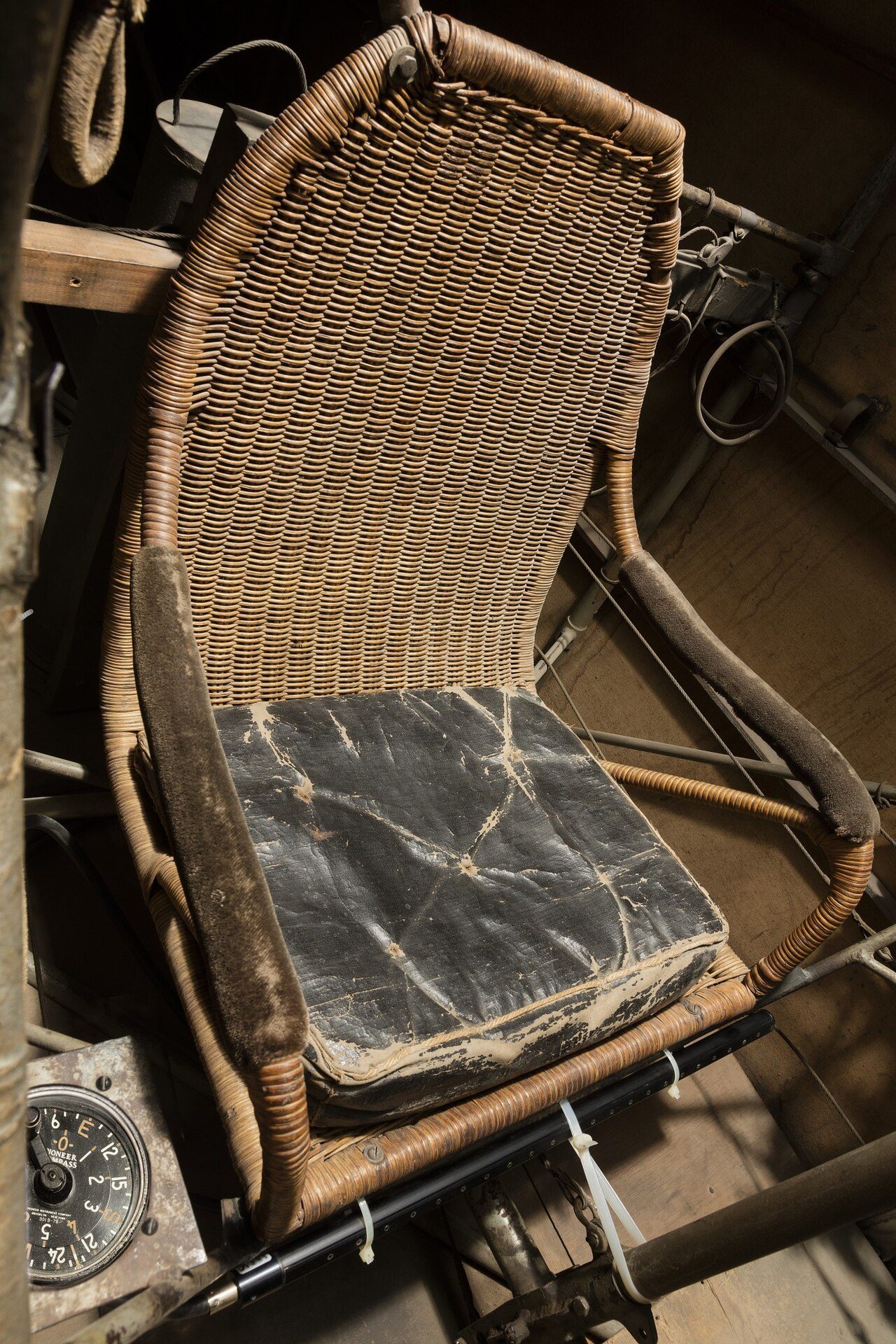
At 7:52 on the morning of 20 May 1927, a 25-year-old airmail pilot named Charles Lindbergh coaxed a heavily overloaded silver monoplane off the muddy runway of Roosevelt Field, Long Island, cleared the telephone wires at the far end by a few feet, and pointed the Spirit of St. Louis out over the Atlantic. He had not slept the night before. Ahead of him lay 3,600 miles of ocean, no radio, no parachute, no front windshield worth the name — he navigated by compass and dead reckoning, with a periscope for looking forward — and a $25,000 prize offered by hotelier Raymond Orteig for the first nonstop flight between New York and Paris.
The prize had already killed six men. Through the spring of 1927 a field of famous rivals — Commander Byrd, the French aces Nungesser and Coli, who vanished over the Atlantic a fortnight before Lindbergh flew — had chased the Orteig Prize, and the smart money was on the big multi-engine machines with crews of three. Lindbergh, backed by St Louis businessmen and flying a single-engine Ryan monoplane built to his specifications in sixty days, was the outsider's outsider: one man, one engine, five sandwiches and 451 gallons of fuel, some of it in a tank mounted in front of him precisely where the view should be, to keep the centre of gravity safe.
The flight became a duel with sleep. Lindbergh fought hallucinations over the mid-Atlantic, skimmed icebergs to stay awake in the cold air, hallucinated companions in the fuselage, and at one point flew within feet of the waves. He made landfall over Ireland almost exactly on course — a navigational feat in itself — crossed England and the Channel in darkness, followed the Seine, and at 10:22 p.m. Paris time on 21 May, thirty-three and a half hours after takeoff, put the Spirit down at Le Bourget airfield into the arms of an estimated 150,000 people, who tore pieces of fabric from the plane as souvenirs and carried its pilot shoulder-high. 'Well,' Lindbergh said, 'I made it.'
The flight remade aviation's standing in the world. Lindbergh became, arguably, the first global media celebrity of the electronic age, and the 'Lindbergh boom' that followed tripled American aircraft production, filled flying schools, and convinced investors and the public that air travel had a future. The Spirit of St. Louis hangs today in the Smithsonian, and the flight's template — one person, one machine, an ocean, and nerve — was consciously repeated five years later to the day, when Amelia Earhart took off from Newfoundland on 20 May 1932 to become the first woman to fly the Atlantic solo. The date itself had become an aviation anniversary by design.
Why this date matters
May 20 is aviation's feast day, and it earned the title by symmetry: Lindbergh takes off on it in 1927 and Earhart, deliberately, on the same date five years later — the calendar itself being used to make a point about who gets to cross oceans. But the date's reach is longer than flight. On it, da Gama closes the sea route to India in 1498, jeans are patented in 1873, Shakespeare's sonnets escape into print in 1609, and Columbus — the man who started the Atlantic age — dies on it in 1506, wrong about where he had been. May 20 is about departures, and about how long their consequences take to land.
Sources
- Encyclopaedia Britannica — On This Day: May 20
- HISTORY — What Happened on May 20
- Encyclopaedia Britannica — Charles Lindbergh
- Smithsonian National Air and Space Museum — Ryan NYP Spirit of St. Louis
The facts on this page were checked against these sources on 19 November 2026. The History Trail's permanent pages are researched and written for this site; the live profiles elsewhere on The History Trail are assembled automatically from Wikipedia and Wikidata.
About the Author
Researched and written by the The History Trail Editorial Team — the accountable editorial function behind this site's permanent story pages. The team works from the published sources cited on each page; it does not invent historians, reviewers or credentials, and it corrects errors openly.
Fact Check
Every load-bearing fact on this page traces to one of the sources listed above, and significant claims link to their source in the text. Our checking method is described on the methodology page; errors can be reported via the corrections page.
Sources & Citations
Cite this page as: The History Trail Editorial Team, The History Trail — this article's title, publication and update dates are shown beneath its headline. The full source list appears under Sources above; the site's source standards are on the sources page.