
Years
1926 in History
1926 is remembered for two machines that previewed the century and one mystery that outlasted it: John Logie Baird's first public demonstration of a true television system in London on 26 January, Robert Goddard's first liquid-fuelled rocket, launched from a Massachusetts farm on 16 March, and the eleven days in December when Agatha Christie, the most famous crime writer in Britain, vanished — and was found in a Harrogate hotel, registered under her husband's lover's surname, saying she remembered nothing.
At a Glance
- Defining mystery
- Agatha Christie disappears on 3 December and is recognised at a Harrogate hotel on 14 December, after eleven missing days
- First demonstration
- John Logie Baird gives the first public demonstration of a true television system, in London, 26 January
- First flight
- Robert Goddard launches the world's first liquid-fuelled rocket at Auburn, Massachusetts, 16 March
- Born this year
- Elizabeth II, on 21 April — queen from 1952 to 2022, the longest-reigning monarch in British history
- Over the pole
- The airship Norge completes the first verified flight over the North Pole, 12 May
- Across the Channel
- Gertrude Ederle becomes the first woman to swim the English Channel, 6 August — faster than any man had yet done it
The defining story: the eleven missing days of Agatha Christie
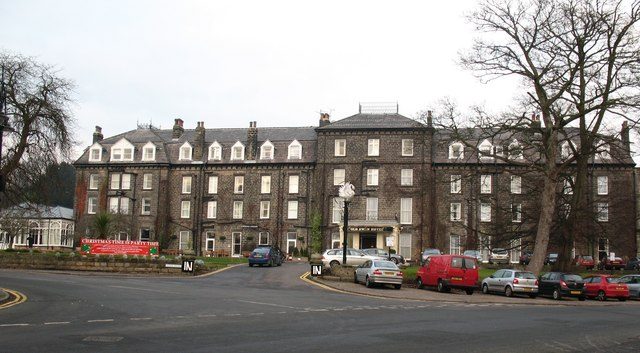
Agatha Christie disappeared on the night of Friday 3 December 1926, driving away alone from Styles, her home at Sunningdale in Berkshire, after her marriage had collapsed. She was 36, and famous: The Murder of Roger Ackroyd, published that year, had made her reputation. The next morning her Morris car was found abandoned at Newlands Corner in Surrey, halfway down a grassy slope with its bonnet buried in bushes; inside were a fur coat, a dressing case of clothes and her driving licence. For eleven days Britain searched for her. On 14 December she was recognised at the Swan Hydropathic Hotel in Harrogate, where she had registered under the surname of her husband's lover. She said she remembered nothing.
The documented facts are stranger than most of her plots, and everything beyond them remains disputed a century later. The disappearance came at the end of a year of grief: Christie's mother had died in April, and her husband Archie had fallen in love with Nancy Neele and come to want a divorce. The Surrey police report, preserved at the National Archives, records that Christie had been very depressed, and that before leaving she had gone upstairs and kissed her little daughter, who was asleep. The search became a national sensation — though the police file also disproves some of the legend's furniture: about three dozen regular police searched on the two main days, and reports of aeroplanes, divers and multiple police forces were press exaggerations.
Christie herself never fully explained the episode publicly, and the explanations remain theories: the family's account of genuine amnesia — later given the clinical name of a dissociative fugue — against contemporary suspicions of a deliberate act aimed at her husband, or a publicity stunt. The police file supports none of these readings over the others. What the record establishes is a departure, an abandoned car, eleven days in Harrogate under another name, and a woman who said she could not remember. She resumed her career, married the archaeologist Max Mallowan in 1930, and wrote for another half-century — leaving this single plot unresolved.
The rest of 1926 was busy inventing the future. On 26 January the Scottish inventor John Logie Baird gave the first public demonstration of a true television system, in London. On 16 March Robert Goddard launched the world's first liquid-fuelled rocket from a farm at Auburn, Massachusetts. On 12 May Roald Amundsen's airship Norge completed the first verified flight over the North Pole, and on 21 April a princess was born in London who, as Elizabeth II, would reign from 1952 to 2022. On 6 August Gertrude Ederle became the first woman to swim the English Channel, in about fourteen and a half hours — faster than any man had yet done it — and the same day Warner Bros. premiered Don Juan, the first major feature film with a synchronised recorded score, opening the sound era in cinema.
Timeline of 1926
- 26 January
Scottish inventor John Logie Baird gives the first public demonstration of a true television system, in London.
- 16 March
Robert Goddard launches the world's first liquid-fuelled rocket, from a farm at Auburn, Massachusetts.
- 21 April
Elizabeth II is born — queen of the United Kingdom from 1952 to 2022, the longest-reigning monarch in British history.
- 12 May
The airship Norge completes the first verified flight over the North Pole.
- 1 June
Marilyn Monroe is born — the American film star who became the defining screen icon of the 1950s.
- 10 June
Antoni Gaudí dies in Barcelona, three days after being struck by a tram — the Catalan architect of the Sagrada Família.
- 6 August
Gertrude Ederle becomes the first woman to swim the English Channel, in about fourteen and a half hours; Warner Bros. premieres Don Juan, the first major feature film with a synchronised recorded score.
- 23 August
Rudolph Valentino, the Italian-born silent-film idol, dies at 31, sparking mass mourning among fans.
- 14 October
A. A. Milne's Winnie-the-Pooh is published, introducing Christopher Robin and the animals of the Hundred Acre Wood.
- 31 October
Harry Houdini, the escape artist, dies in Detroit of peritonitis from a ruptured appendix, nine days after being punched in the stomach by a student in Montreal.
- 11 November
The United States Numbered Highway System is approved, creating the famed Route 66 among its designated highways.
- 3 December
Agatha Christie drives away from her Berkshire home at night; her car is found abandoned the next morning, and Britain searches for her for eleven days.
- 5 December
Claude Monet dies at 86 at Giverny — the founder of French Impressionism, among the water lilies he had painted for thirty years.
Why 1926 still matters
Baird's and Goddard's demonstrations were easy to underestimate in 1926 — a flickering mechanical image in a London room, a small rocket over a Massachusetts farm — and together they describe the century that followed: television became the dominant medium of the age, and liquid-fuelled rocketry, the line Goddard opened, carried humanity to the Moon within forty-three years. The Norge's flight over the Pole closed the heroic age of exploration by air, while Ederle's Channel swim and Don Juan's recorded score marked the same transition in sport and cinema: performance, recorded and broadcast, becoming mass culture.
The births of 1926 stocked the rest of the century: a queen who reigned for seventy years, Marilyn Monroe, Miles Davis, Harper Lee, David Attenborough, Chuck Berry — and the deaths closed the nineteenth century's long tail, with Monet, Gaudí, Valentino and Houdini all gone within the year. Route 66, designated on 11 November among the new numbered highways, became the road of American migration and myth.
But the year's most durable product may be its mystery. The disappearance is the most famous real-life enigma attached to any crime writer, retold whenever Christie's life is told, and its endurance comes from the gap at its centre: the one person who could have explained it chose, for fifty more years of writing, to leave this single plot unresolved. A century on, the honest verdict is the one the police file reaches — the mystery has never been solved, and on the surviving evidence it cannot be.
1926 on The History Trail
A novelist's disappearance is this year's story on The History Trail, beside the first television and the first liquid-fuelled rocket.
- The Disappearance of Agatha Christie — The eleven missing days of December 1926, told from the police file and the record.
- January 26 in History — John Logie Baird first demonstrates television in 1926, on the day India became a republic in 1950.
- March 16 in History — Goddard launches the first liquid-fuelled rocket in 1926.
- August 6 in History — Ederle swims the Channel and Don Juan opens the sound era in 1926 — the date of Hiroshima in 1945.
- April 21 in History — Elizabeth II is born in 1926.
- November 11 in History — The U.S. Numbered Highway System, including Route 66, is approved in 1926, on Armistice Day's date.
Sources
- Encyclopaedia Britannica — On This Day: January 26
- Encyclopaedia Britannica — On This Day: March 16
- Encyclopaedia Britannica — On This Day: April 21
- Encyclopaedia Britannica — On This Day: May 12
- HISTORY — What Happened on August 6
- Encyclopaedia Britannica — On This Day: October 14
- Encyclopaedia Britannica — On This Day: November 11
The facts on this page were checked against these sources on 19 November 2026. The History Trail's permanent pages are researched and written for this site; the live profiles elsewhere on The History Trail are assembled automatically from Wikipedia and Wikidata.
About the Author
Researched and written by the The History Trail Editorial Team — the accountable editorial function behind this site's permanent story pages. The team works from the published sources cited on each page; it does not invent historians, reviewers or credentials, and it corrects errors openly.
Fact Check
Every load-bearing fact on this page traces to one of the sources listed above, and significant claims link to their source in the text. Our checking method is described on the methodology page; errors can be reported via the corrections page.
Sources & Citations
Cite this page as: The History Trail Editorial Team, The History Trail — this article's title, publication and update dates are shown beneath its headline. The full source list appears under Sources above; the site's source standards are on the sources page.