
Years
2011 in History
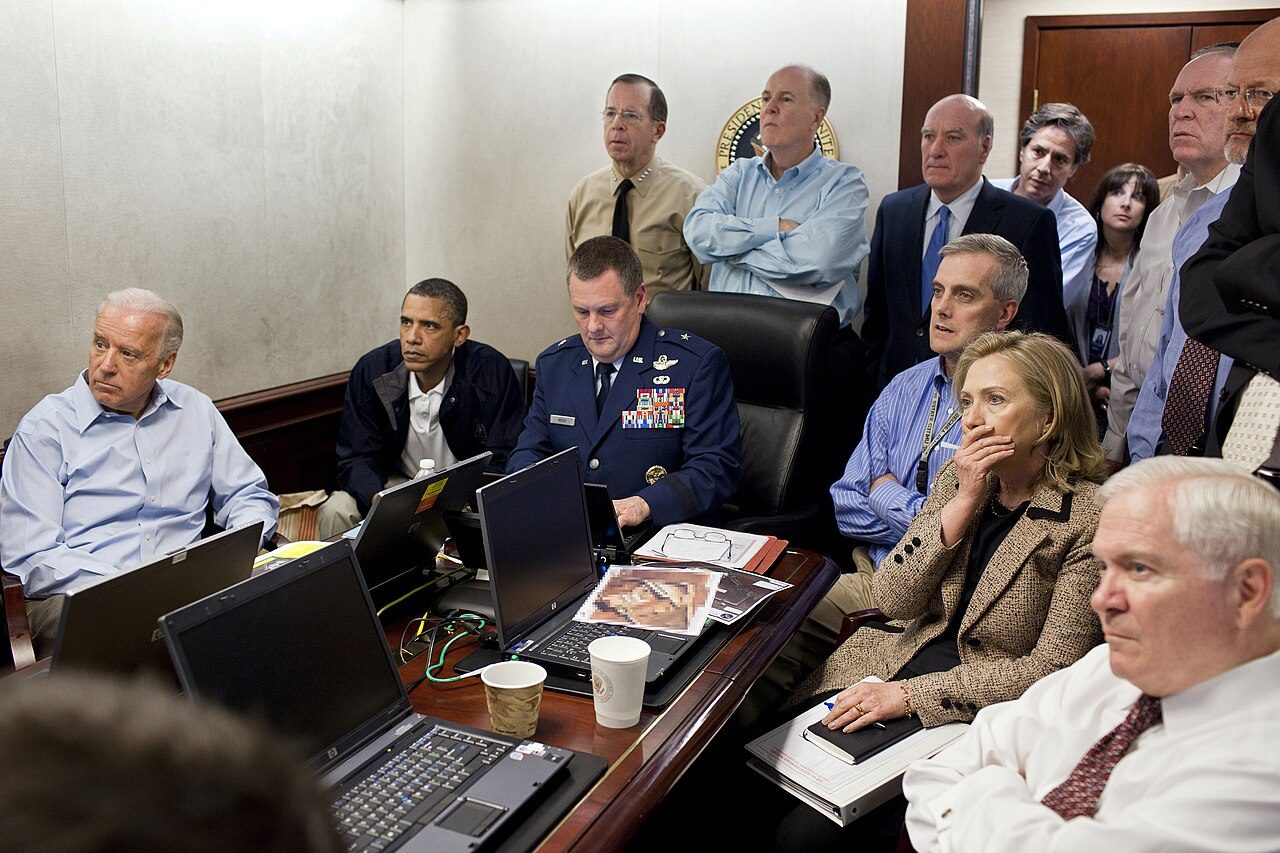
2011 is remembered for three convulsions that arrived within eight weeks of each other: Egypt's 25 January Revolution, which ended Hosni Mubarak's thirty-year rule in eighteen days; the Tōhoku earthquake and tsunami of 11 March, which killed 19,759 people in Japan and caused the Fukushima nuclear meltdowns; and the raid of 2 May in which U.S. Navy SEALs killed Osama bin Laden in Abbottabad, ending a manhunt of almost ten years.
At a Glance
- Defining event
- Osama bin Laden killed by U.S. forces in Abbottabad, 2 May 2011
- The disaster
- Tōhoku earthquake and tsunami, 11 March — magnitude 9.1; 19,759 dead
- The revolution
- Mubarak resigns on 11 February, after eighteen days of protest in Egypt
- The new country
- South Sudan becomes independent on 9 July, the world's newest country
- Opened the year
- Tunisia's Ben Ali flees on 14 January as the Jasmine Revolution ends his 23-year rule
- Closed the year
- Kim Jong Il dies on 17 December; Kim Jong Un succeeds him in North Korea
The defining story: the manhunt ends in Abbottabad
For almost ten years after the September 11 attacks of 2001, Osama bin Laden was the most wanted man in the world, and for most of that time he seemed unfindable. The trail that finally led to him ran not through a cave in Afghanistan but through a courier. As the Central Intelligence Agency recounts, its officers identified a trusted courier, Abu Ahmed al-Kuwaiti, and followed that thread to a large, unusually guarded compound in Abbottabad, a garrison town in northern Pakistan — high walls, little contact with the outside world, and residents who burned their rubbish rather than put it out. President Barack Obama authorised the raid, Operation Neptune Spear, on 29 April 2011, choosing a helicopter assault by special forces over bombing, which could not have confirmed the target's identity.
On the night of 1–2 May, 23 members of SEAL Team 6 flew from Jalalabad in Afghanistan in two stealth-modified Black Hawk helicopters. One helicopter clipped a wall and crash-landed inside the compound; nobody was killed in the crash, and the SEALs continued on foot, clearing the buildings floor by floor. In a third-floor room they found and shot bin Laden. The whole raid took about forty minutes; four other people died, among them the courier and one of bin Laden's sons. His body was flown to the aircraft carrier USS Carl Vinson and buried in the Arabian Sea within a day. Obama announced the killing late on 1 May in Washington — already the small hours of 2 May in Pakistan — and crowds gathered outside the White House and at Ground Zero in New York.
The raid closed a year that had opened with the Arab world remaking itself. On 14 January Tunisia's president Zine al-Abidine Ben Ali fled the country as the Jasmine Revolution ended his 23-year rule. On 25 January — National Police Day, chosen deliberately by protesters organised through social media — Egyptians marched against Mubarak's thirty years of emergency rule and occupied Cairo's Tahrir Square. On 31 January the army announced it would not fire on demonstrators, and on 11 February, eighteen days after the first march, Mubarak resigned and handed power to the armed forces. In March antigovernment protests erupted across Syria, the beginning of an uprising that descended into civil war, and in October Libya's Muammar Gaddafi was captured and killed near Sirte.
Between the revolutions came the year's natural catastrophe. At 2:46 p.m. on 11 March, a magnitude 9.1 megathrust earthquake off Japan's Tōhoku coast hurled a tsunami up to 40.5 metres high at the shore, sweeping away whole towns and killing 19,759 people, with 6,242 injured and 2,553 still missing in Japan's finalised official figures. At the Fukushima Daiichi plant the tsunami flooded the emergency generators, three reactors suffered meltdowns, and surrounding towns were evacuated — some of whose residents have never been able to return. Revolutions, a tsunami and a manhunt: 2011 compressed a decade's worth of history into twelve months.
Timeline of 2011
- 14 January
Tunisia's president Zine al-Abidine Ben Ali flees the country as the Jasmine Revolution ends his 23-year rule.
- 25 January
Protests erupt across Egypt against the rule of Hosni Mubarak, beginning the 25 January Revolution.
- 11 February
Egyptian President Hosni Mubarak resigns after weeks of mass protests and hands power to the armed forces.
- 22 February
A magnitude-6.3 earthquake strikes Christchurch, New Zealand, killing more than 180 people.
- 11 March
A magnitude 9.1 earthquake off Japan's Tōhoku coast triggers a tsunami that kills 19,759 people and causes the Fukushima nuclear disaster.
- 15 March
Antigovernment protests erupt across Syria, the beginning of an uprising that descends into civil war.
- 2 May
Osama bin Laden is killed by U.S. forces in Abbottabad, Pakistan, ending a manhunt of almost ten years.
- 9 July
South Sudan becomes independent of Sudan, the world's newest country, after a referendum ends decades of civil war.
- 21 July
Space Shuttle Atlantis lands in Florida, ending NASA's thirty-year shuttle programme after 135 missions.
- 22 July
Far-right terrorist Anders Behring Breivik kills 77 people in Oslo and at a youth camp on the island of Utøya.
- 17 September
Occupy Wall Street protesters camp in New York's Zuccotti Park, launching a global movement against inequality.
- 20 October
Libya's deposed dictator Muammar Gaddafi is captured and killed by rebel fighters near Sirte.
- 17 December
North Korean leader Kim Jong Il dies; his son Kim Jong Un succeeds him.
Why 2011 still matters
Japan now refers to its disaster simply as 3.11, the way Americans say 9/11. It prompted a worldwide re-examination of nuclear power, a redesign of Japan's coastal defences and disaster planning, and annual ceremonies of remembrance along the Tōhoku coast — and seismologists call it the best-recorded megathrust earthquake in history, whose lessons now shape how every Pacific nation prepares for the next one. The Fukushima evacuations, and the residents who have never returned, remain its longest shadow.
The Arab Spring's hopes met a harder sequel — an elected president in Egypt in 2012, his removal in 2013, and Syria's descent into civil war — but the eighteen days in Tahrir remain the hinge of modern Egyptian history: the moment the region's most populous nation discovered that a president of thirty years could be unmade in the streets. Bin Laden's killing closed the central chapter of the post-9/11 era without ending his movement, whose affiliates — and later the rival Islamic State group — fought on. The year also retired the Space Shuttle after 135 missions, made South Sudan the world's newest country, and launched Occupy Wall Street in September: protest, in 2011, was the world's common language, from Tahrir to Zuccotti Park.
2011 on The History Trail
Egypt's revolution, the Tōhoku disaster and the Abbottabad raid are all told in full on The History Trail.
- January 25 in History — Egypt's January 25 Revolution begins in Tahrir Square.
- March 11 in History — The Tōhoku earthquake and tsunami strike Japan.
- 2011 Tōhoku Earthquake and Tsunami — The quake, the waves and the Fukushima meltdowns.
- May 2 in History — Osama bin Laden is killed in Abbottabad, ending a ten-year manhunt.
- February 11 in History — Hosni Mubarak resigns after eighteen days of protest.
- Tsunami — How tsunamis form and strike — the force behind both 2004 and 2011.
Sources
- Encyclopaedia Britannica — On This Day: January 25
- Encyclopaedia Britannica — Egypt: Unrest in 2011 and the January 25 Revolution
- U.S. Geological Survey — M 9.1: 2011 Great Tohoku Earthquake, Japan
- Encyclopaedia Britannica — On This Day: March 11
- Central Intelligence Agency — The Final Chapter in the Hunt for Bin Ladin
- Encyclopaedia Britannica — Killing of Osama bin Laden
- Encyclopaedia Britannica — On This Day: May 2
- Encyclopaedia Britannica — On This Day: February 11
The facts on this page were checked against these sources on 19 November 2026. The History Trail's permanent pages are researched and written for this site; the live profiles elsewhere on The History Trail are assembled automatically from Wikipedia and Wikidata.
About the Author
Researched and written by the The History Trail Editorial Team — the accountable editorial function behind this site's permanent story pages. The team works from the published sources cited on each page; it does not invent historians, reviewers or credentials, and it corrects errors openly.
Fact Check
Every load-bearing fact on this page traces to one of the sources listed above, and significant claims link to their source in the text. Our checking method is described on the methodology page; errors can be reported via the corrections page.
Sources & Citations
Cite this page as: The History Trail Editorial Team, The History Trail — this article's title, publication and update dates are shown beneath its headline. The full source list appears under Sources above; the site's source standards are on the sources page.