
Years
2012 in History
2012 is remembered above all for 4 July, when scientists at CERN announced the discovery of a particle consistent with the Higgs boson, the long-sought keystone of the Standard Model of physics. It was also the year NASA's Curiosity rover landed on Mars, the Titanic sinking reached its centenary, and the first video passed a billion views on YouTube.
At a Glance
- Defining event
- CERN announces a particle consistent with the Higgs boson, 4 July 2012
- The centenary
- April 2012 marks 100 years since the Titanic sank on the night of 14–15 April 1912
- The landing
- NASA's Curiosity rover lands in Gale Crater on Mars, 6 August
- The farewell
- Neil Armstrong, the first person to walk on the Moon, dies on 25 August at 82
- Opened the year
- Costa Concordia capsizes off Giglio on 13 January, killing 32 people
- Closed the year
- PSY's 'Gangnam Style' becomes the first YouTube video viewed one billion times, 21 December
The defining story: the Higgs boson found
The Large Hadron Collider had been built to answer one question above all: whether the Higgs boson, proposed in 1964 as the particle that gives others mass, actually existed. The machine had circulated its first beam in September 2008, shut itself down for more than a year after a helium accident nine days later, and returned to set energy records and collide beams from 2010. On 4 July 2012, in an auditorium at CERN, scientists announced to the world what the collisions had produced: a new particle consistent with the Higgs boson, the missing piece of the Standard Model. Its theorist Peter Higgs, aged 83, was in the auditorium, in tears, to hear it — the keystone of a theory nearly half a century old, found at last.
The discovery crowned a year in which exploration ran in every direction. On 6 August NASA's Curiosity rover landed in Gale Crater on Mars, beginning its long exploration of the planet's past habitability. On 25 August NASA announced that Voyager 1 had crossed the heliopause — the first human-made object to enter interstellar space. On 14 October Felix Baumgartner jumped from a balloon capsule some 39 kilometres above New Mexico, freefalling faster than the speed of sound to a safe landing. And in London's Olympic summer, Michael Phelps won his 19th Olympic medal on 31 July, becoming the most decorated Olympian in history.
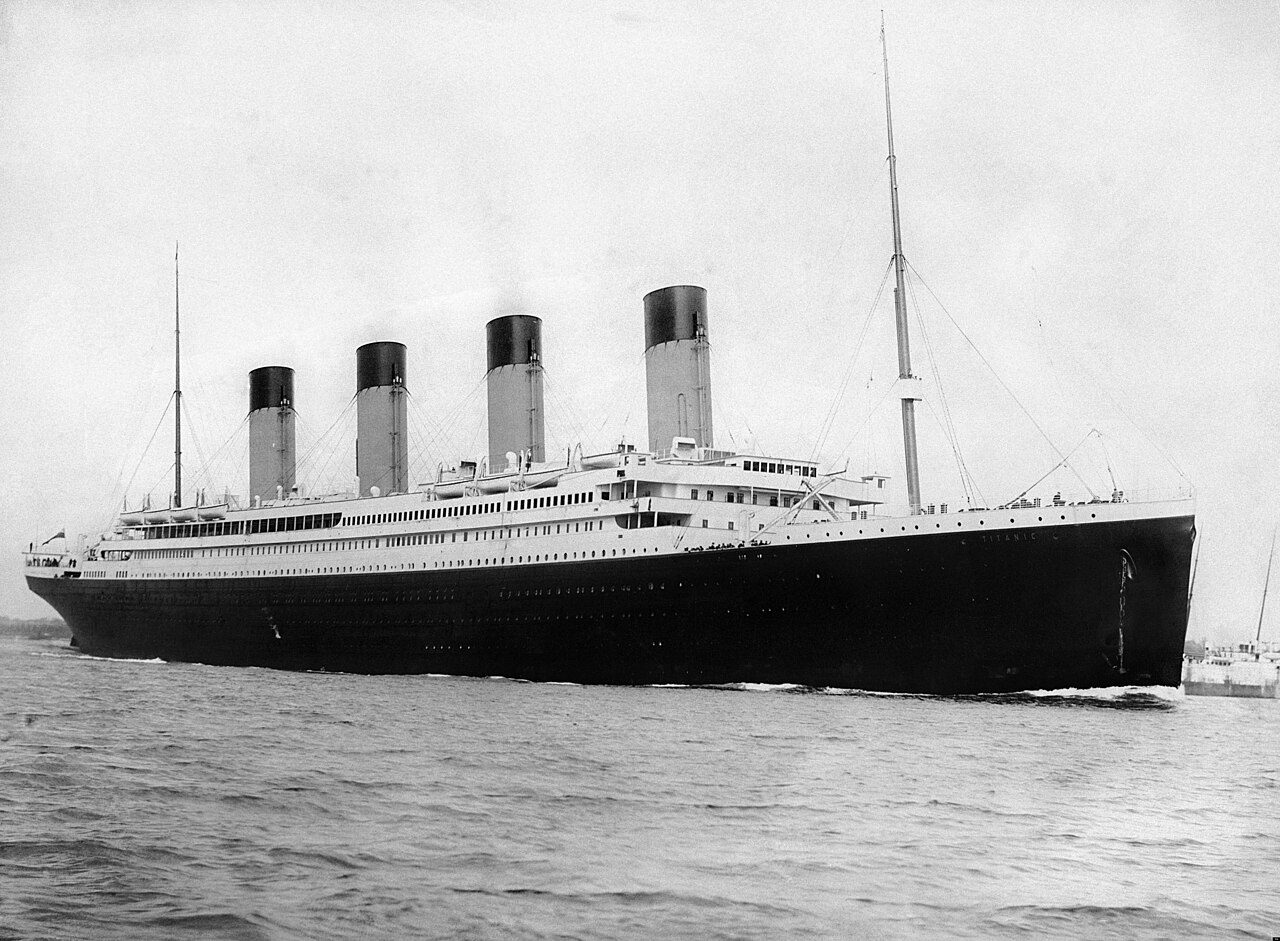
The year's hero image belongs to memory rather than discovery. In April 2012 the world marked the centenary of the Titanic's sinking on the night of 14–15 April 1912 — the disaster at the centre of James Cameron's 1997 film, still the defining popular account of the ship. The photograph on this page shows the real liner departing Southampton on 10 April 1912, days before the sinking whose hundredth anniversary fell in this year. Commemoration and exploration shared 2012's calendar in a sadder pairing too: on 25 August, the same day NASA announced Voyager 1's crossing into interstellar space, Neil Armstrong — the first person to walk on the Moon — died at 82. The man who took humanity's first step onto another world died on the day its farthest machine left the Sun's domain.
Politics and grief filled the rest of the year. Mohamed Morsi was sworn in as Egypt's first democratically elected president on 30 June, Liu Yang became China's first woman in space on 16 June, and Xi Jinping became China's paramount leader on 15 November. Encyclopaedia Britannica announced the end of its print edition after 244 years on 13 March, going digital-only. Cyclist Lance Armstrong was stripped of his seven Tour de France titles in October over doping. And on 14 December a gunman killed 26 people, including 20 children, at Sandy Hook Elementary School in Newtown, Connecticut — one of the deadliest school shootings in American history, and the year's darkest day.
Timeline of 2012
- 13 January
The cruise ship Costa Concordia strikes a reef off the Italian island of Giglio and capsizes, killing 32 people.
- 11 February
Whitney Houston, one of the best-selling recording artists of all time, is found dead in Beverly Hills at 48.
- 26 February
Trayvon Martin, an unarmed seventeen-year-old, is shot dead in Sanford, Florida, igniting a national argument about race and self-defence law.
- 13 March
Encyclopaedia Britannica announces the end of its print edition after 244 years, going digital-only.
- 16 June
Liu Yang flies aboard Shenzhou 9 and becomes China's first woman in space.
- 30 June
Mohamed Morsi is sworn in as president of Egypt, the country's first democratically elected head of state.
- 4 July
Scientists at CERN announce the discovery of a particle consistent with the Higgs boson.
- 31 July
Michael Phelps wins his 19th Olympic medal in London, becoming the most decorated Olympian in history.
- 6 August
NASA's Curiosity rover lands in Gale Crater on Mars.
- 25 August
Neil Armstrong, the first person to walk on the Moon, dies at 82 — the day NASA announces Voyager 1 has entered interstellar space.
- 14 October
Felix Baumgartner jumps from a balloon capsule some 39 kilometres above New Mexico, freefalling faster than the speed of sound.
- 22 October
Cyclist Lance Armstrong is stripped of his seven Tour de France titles and banned from the sport for life over doping.
- 15 November
Xi Jinping succeeds Hu Jintao as general secretary of the Chinese Communist Party, becoming China's paramount leader.
- 14 December
A gunman kills 26 people, including 20 children, at Sandy Hook Elementary School in Newtown, Connecticut.
Why 2012 still matters
The Higgs announcement completed the Standard Model, the framework that describes the fundamental particles and forces — a theory assembled over half a century and confirmed, piece by piece, by machines of increasing scale. The Large Hadron Collider that found it still runs, upgraded repeatedly, and is expected to operate into the 2040s, testing the completed model for cracks that might point to new physics. Curiosity's Mars landing began a rover mission that has explored Gale Crater ever since, and Voyager 1, launched in 1977, still signals home from interstellar space: 2012's exploration stories are, unusually, still running.
The year also redrew reputations and records. Lance Armstrong's seven Tour titles were erased in a single October ruling, Britannica's print edition ended after 244 years as reading moved online for good, and 'Gangnam Style' passing a billion YouTube views on 21 December marked the moment a single video could circle the planet. The Titanic centenary reminded the world that anniversaries are a form of history too — the 1912 disaster, retold by Cameron's film to a generation, drew fresh memorials a century on. Sandy Hook, by contrast, left an argument about guns in America that the year opened and no year since has closed.
2012 on The History Trail
The Higgs discovery, the Mars landing and the Titanic story behind this year's hero image are all on The History Trail.
- July 4 in History — CERN announces a particle consistent with the Higgs boson.
- August 6 in History — NASA's Curiosity rover lands in Gale Crater on Mars.
- August 25 in History — Neil Armstrong dies, as Voyager 1 enters interstellar space.
- October 14 in History — Felix Baumgartner freefalls faster than the speed of sound.
- December 14 in History — The Sandy Hook Elementary School shooting in Newtown, Connecticut.
- Titanic (1997 film) — Cameron's film of the 1912 sinking, whose centenary fell in 2012.
Sources
- Encyclopaedia Britannica — On This Day: July 4
- Encyclopaedia Britannica — On This Day: August 25
- HISTORY — What Happened on August 25
- Encyclopaedia Britannica — On This Day: March 13
- Encyclopaedia Britannica — On This Day: June 16
- Encyclopaedia Britannica — On This Day: October 14
- Encyclopaedia Britannica — On This Day: December 14
- Encyclopaedia Britannica — On This Day: January 13
The facts on this page were checked against these sources on 19 November 2026. The History Trail's permanent pages are researched and written for this site; the live profiles elsewhere on The History Trail are assembled automatically from Wikipedia and Wikidata.
About the Author
Researched and written by the The History Trail Editorial Team — the accountable editorial function behind this site's permanent story pages. The team works from the published sources cited on each page; it does not invent historians, reviewers or credentials, and it corrects errors openly.
Fact Check
Every load-bearing fact on this page traces to one of the sources listed above, and significant claims link to their source in the text. Our checking method is described on the methodology page; errors can be reported via the corrections page.
Sources & Citations
Cite this page as: The History Trail Editorial Team, The History Trail — this article's title, publication and update dates are shown beneath its headline. The full source list appears under Sources above; the site's source standards are on the sources page.