
On This Day
March 11 in History
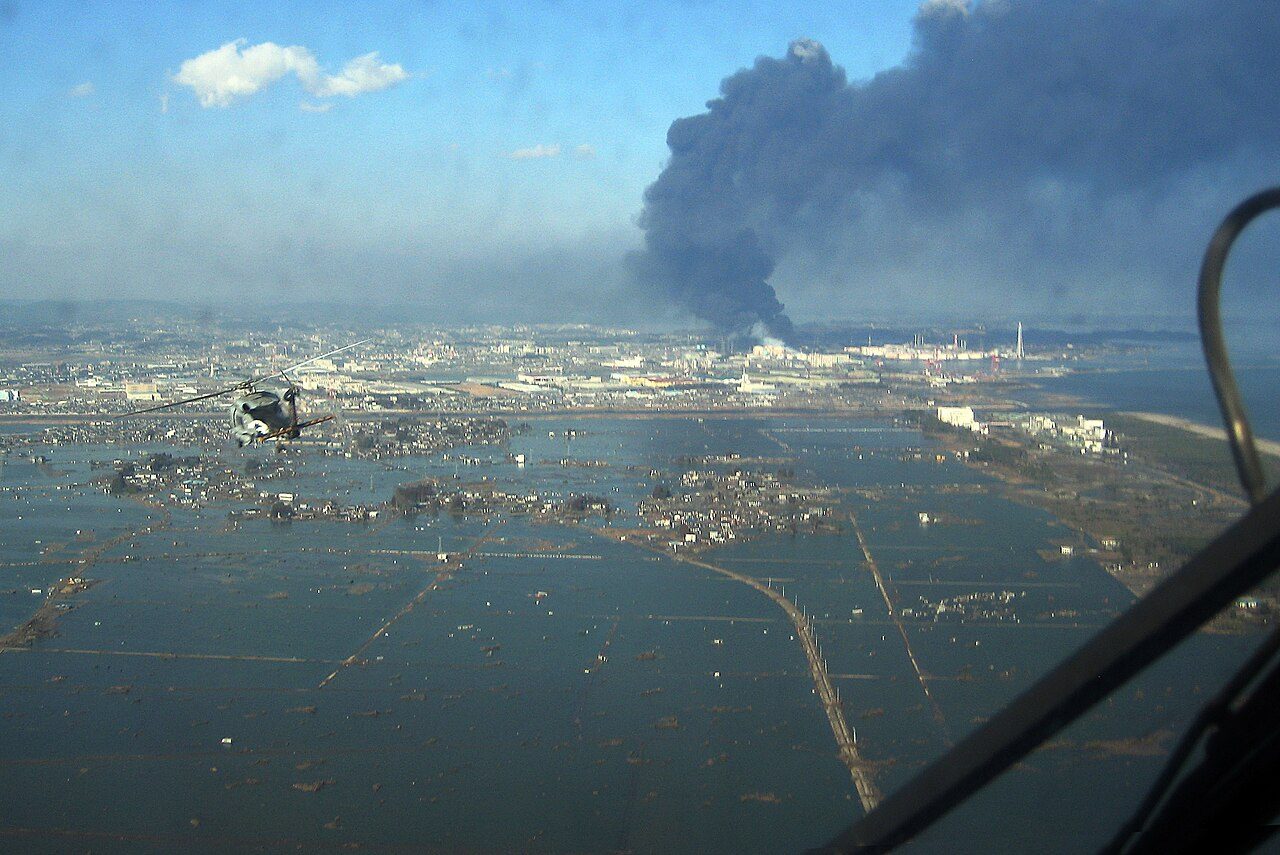
On 11 March 2011, at 2:46 in the afternoon local time, the most powerful earthquake ever recorded in Japan tore along the seabed off the country's north-eastern Tōhoku coast. The tsunami it unleashed killed nearly 20,000 people and triggered the Fukushima nuclear disaster. March 11 is also the day of the Great Blizzard of 1888, the Madrid train bombings of 2004 and the Broadway opening of A Raisin in the Sun in 1959.
Choose another date: open the On This Day calendar to browse events, births and deaths for any day of the year.
At a Glance
- Magnitude
- 9.1 — the U.S. Geological Survey's final figure, upgraded from 9.0 in July 2016; the strongest earthquake recorded in Japan
- Time and place
- 14:46 local time, 11 March 2011; epicentre about 72 km east of the Oshika Peninsula, off the Tōhoku coast
- Tsunami
- Waves reached up to 40.5 metres at Miyako in Iwate Prefecture and travelled kilometres inland
- Human cost
- Official Japanese figures released in 2021 put the toll at 19,759 dead, 6,242 injured and 2,553 missing
- Nuclear disaster
- Flooding knocked out cooling at the Fukushima Daiichi plant, causing meltdowns in three reactors
- Cause
- Thrust faulting on the subduction zone where the Pacific plate dives beneath northern Japan at about 83 mm a year (USGS)
Events on this day
- 1669Mount Etna begins to erupt near Catania, Sicily, at the start of one of the volcano's most destructive historical episodes.
- 1779The United States Congress establishes the Army Corps of Engineers.
- 1811Luddites riot in Nottingham, England, in protests against the mechanised textile machinery they blame for destroying their livelihoods.
- 1824The U.S. Bureau of Indian Affairs is created within the War Department.
- 1861Delegates meeting in Montgomery, Alabama, adopt the Permanent Constitution of the Confederate States.
- 1888The Great Blizzard of 1888 strikes the U.S. East Coast, killing more than 400 people and dropping up to 55 inches of snow in places.
- 1942General Douglas MacArthur leaves Corregidor in the Philippines on President Roosevelt's orders, leaving some 90,000 U.S. and Filipino troops behind to face the Japanese advance.
- 1959Lorraine Hansberry's A Raisin in the Sun opens on Broadway; at 29, Hansberry becomes the first Black woman to have a play produced on Broadway.
- 1985Mikhail Gorbachev is chosen to lead the Soviet Communist Party, beginning the era of glasnost and perestroika.
- 2004Coordinated bombings aboard commuter trains in Madrid kill more than 190 people — Britannica puts the toll at 191 — and injure around 1,800, three days before a Spanish general election.
- 2011A magnitude 9.1 earthquake off Japan's Tōhoku coast triggers a tsunami that kills nearly 20,000 people and causes the Fukushima nuclear disaster — the featured story above.
- 2020The World Health Organization declares COVID-19 a pandemic; the same day, President Donald Trump addresses the United States from the Oval Office and restricts travel from Europe.
Born on this day
- 1544Torquato Tasso — Italian poet of the late Renaissance, author of the epic Gerusalemme liberata (Jerusalem Delivered).
- 1898Dorothy Gish — American actress, one of the leading stars of the silent screen alongside her sister Lillian.
- 1903Lawrence Welk — American bandleader and television host famed for his 'champagne music'.
- 1916Ezra Jack Keats — American author and illustrator of children's books, creator of The Snowy Day.
- 1931Rupert Murdoch — Australian-born media proprietor who built News Corporation into a global empire of newspapers and television.
- 1952Douglas Adams — English comic writer, creator of The Hitchhiker's Guide to the Galaxy.
Died on this day
- 222Elagabalus — Roman emperor, assassinated at the age of 18 and succeeded by his cousin Severus Alexander.
- 1874Charles Sumner — American politician, a longtime United States senator from Massachusetts and a leading voice against slavery.
- 1955Alexander Fleming — Scottish bacteriologist who discovered penicillin and shared the 1945 Nobel Prize for its development.
- 2006Slobodan Milošević — Serbian and Yugoslav leader who died in detention at The Hague while on trial for war crimes.
The featured story: the Tōhoku earthquake and tsunami, 11 March 2011
At 2:46 on the afternoon of Friday 11 March 2011, the seabed off Japan's north-eastern Tōhoku coast tore along a subduction zone where the Pacific plate dives beneath northern Japan. The U.S. Geological Survey ultimately assessed the megathrust earthquake at magnitude 9.1 — it had first been reported at 7.9 and was revised upward repeatedly — with its epicentre about 72 kilometres east of the Oshika Peninsula. The shaking lasted around six minutes. It was the most powerful earthquake ever recorded in Japan and the fourth most powerful anywhere since modern record-keeping began in 1900, and it had been preceded, two days earlier, by a magnitude 7.2 foreshock that in hindsight was only a warning.
The quake's true weapon was the sea. The displaced seabed hurled a tsunami at the Tōhoku coast that reached a height of 40.5 metres at Miyako in Iwate Prefecture and pushed kilometres inland across the Sendai plain, sweeping away whole towns, ports, trains and roads. Japan's official figures, finalised in 2021, record 19,759 people dead, 6,242 injured and 2,553 still missing — the overwhelming majority of them drowned. Hundreds of thousands were driven from their homes, and the disaster became the costliest natural catastrophe in recorded history.
At the Fukushima Daiichi nuclear power plant, the tsunami overtopped the sea wall and flooded the emergency generators that kept the reactors cool. Three reactors suffered meltdowns, hydrogen explosions wrecked their buildings, and radioactive material escaped into the air and sea, forcing the evacuation of surrounding towns — some of whose residents have never been able to return. The USGS notes that the nuclear crisis set off that afternoon is still affecting people's lives in parts of the region.
Japan now refers to the disaster simply as 3.11, the way Americans say 9/11. It prompted a worldwide re-examination of nuclear power, a redesign of Japan's coastal defences and disaster planning, and annual ceremonies of remembrance along the Tōhoku coast. Seismologists call it the best-recorded megathrust earthquake in history: thousands of instruments captured the rupture in detail, and the lessons bought at such cost now shape how every Pacific nation prepares for the next one.
Why this date matters
March 11 is a day on which the modern world has repeatedly been ambushed. A freak blizzard paralysed America's East Coast in 1888; terrorists struck Madrid's commuter trains in 2004; the sea itself rose against Japan in 2011; and in 2020 a virus was formally declared a pandemic, changing daily life on every continent within weeks. Yet the same date also holds quieter beginnings — a Black woman's play reaching Broadway in 1959, a reformer taking power in Moscow in 1985. It is a reminder that history's hinge days are rarely announced in advance: they arrive on ordinary Fridays, in ordinary weather, and are only recognised afterwards.
Sources
- Encyclopaedia Britannica — On This Day: March 11
- HISTORY — What Happened on March 11
- U.S. Geological Survey — M 9.1: 2011 Great Tohoku Earthquake, Japan
- Wikipedia — 2011 Tōhoku earthquake and tsunami
The facts on this page were checked against these sources on 19 November 2026. The History Trail's permanent pages are researched and written for this site; the live profiles elsewhere on The History Trail are assembled automatically from Wikipedia and Wikidata.
About the Author
Researched and written by the The History Trail Editorial Team — the accountable editorial function behind this site's permanent story pages. The team works from the published sources cited on each page; it does not invent historians, reviewers or credentials, and it corrects errors openly.
Fact Check
Every load-bearing fact on this page traces to one of the sources listed above, and significant claims link to their source in the text. Our checking method is described on the methodology page; errors can be reported via the corrections page.
Sources & Citations
Cite this page as: The History Trail Editorial Team, The History Trail — this article's title, publication and update dates are shown beneath its headline. The full source list appears under Sources above; the site's source standards are on the sources page.