
On This Day
February 11 in History
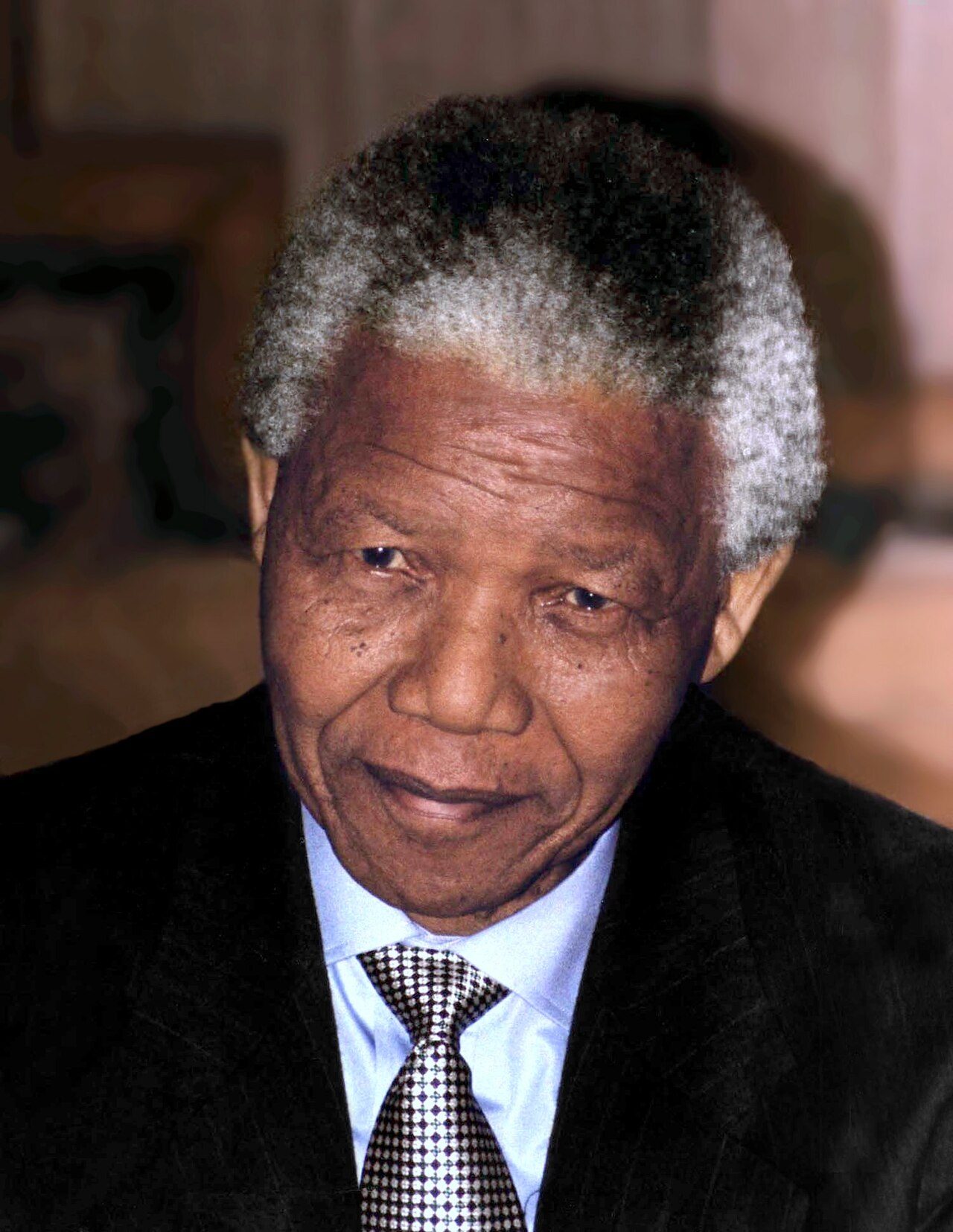
On 11 February 1990 Nelson Mandela, the leader of the movement against South Africa's apartheid system, walked out of Victor Verster Prison a free man after 27 years in jail. His release, watched around the world, began the negotiated end of apartheid and, four years later, his election as South Africa's first Black president. February 11 is also the day the Yalta Conference ended, Julia Child first cooked on television, and Margaret Thatcher took over the Conservative Party.
Choose another date: open the On This Day calendar to browse events, births and deaths for any day of the year.
At a Glance
- Arrested
- 1962 — Mandela is arrested and later sentenced, first to five years and then, at the Rivonia Trial in 1964, to life imprisonment
- The prison years
- 27 years in all — 18 of them on Robben Island, then Pollsmoor Prison, and finally Victor Verster Prison near Cape Town
- Release ordered
- President F. W. de Klerk lifts the ban on the African National Congress and orders Mandela's release in February 1990
- Release day
- 11 February 1990 — Mandela walks out of Victor Verster Prison holding the hand of his wife, Winnie, his fist raised
- Nobel Peace Prize
- 1993 — Mandela and de Klerk share the prize for their work to end apartheid
- President
- 10 May 1994 — after South Africa's first democratic election, Mandela becomes president
Events on this day
- 1778Voltaire returns to Paris after 28 years of exile, and some 300 visitors come to see the aged writer in the days that follow.
- 1805Sacagawea, the Shoshone interpreter and guide travelling with the Lewis and Clark expedition, gives birth to her first child, Jean Baptiste Charbonneau.
- 1858Marie-Bernarde Soubirous, a 14-year-old girl from Lourdes in southern France, reports the first of 18 visions of the Virgin Mary in a grotto by the river.
- 1878The Boston Bicycle Club, the first organisation for recreational cyclists in the United States, is formed.
- 1916Women's rights activist Emma Goldman is arrested in New York City for lecturing and distributing information about birth control.
- 1929The Lateran Treaty between Italy and the Holy See creates Vatican City as an independent state within Rome.
- 1945The Yalta Conference ends after a week of bargaining between Roosevelt, Churchill and Stalin over the shape of postwar Europe.
- 1963Julia Child's cooking show The French Chef debuts on public television in Boston, introducing French cooking to American viewers.
- 1970Japan launches Ohsumi, its first satellite, becoming the world's fourth space power after the Soviet Union, the United States and France.
- 1975Margaret Thatcher is elected leader of Britain's Conservative Party, the first woman to lead a major British political party.
- 1989Barbara Harris is consecrated in Boston, becoming the first woman bishop in the Anglican Communion.
- 1990Nelson Mandela is released from prison in South Africa after 27 years — the featured story above.
- 2011Egyptian President Hosni Mubarak resigns after weeks of mass protests and hands power to the armed forces.
- 2020The World Health Organization officially names the new coronavirus disease COVID-19.
Born on this day
- 1847Thomas Edison — American inventor of the phonograph and a practical electric light system, holder of more than a thousand patents.
- 1930Mary Quant — British fashion designer who popularised the miniskirt and made London the centre of 1960s youth fashion.
- 1936Burt Reynolds — American film star of Deliverance, Smokey and the Bandit and Boogie Nights.
- 1962Sheryl Crow — American singer-songwriter whose hits include All I Wanna Do and If It Makes You Happy.
- 1964Sarah Palin — American politician, governor of Alaska and the 2008 Republican vice-presidential nominee.
- 1969Jennifer Aniston — American actress who became a household name as Rachel in the sitcom Friends.
Died on this day
- 1650René Descartes — French philosopher and mathematician, author of the Discourse on Method and the phrase I think, therefore I am.
- 1948Sergei Eisenstein — Soviet film director whose Battleship Potemkin transformed the language of cinema editing.
- 1963Sylvia Plath — American poet and novelist, author of The Bell Jar, dead in London at 30.
- 2012Whitney Houston — American singer, one of the best-selling recording artists of all time, found dead in Beverly Hills at 48.
The featured story: Nelson Mandela is released from prison, 11 February 1990
On the afternoon of 11 February 1990, Nelson Mandela walked through the gates of Victor Verster Prison, near Cape Town, holding the hand of his wife, Winnie, and raising a clenched fist to the crowds. He was 71 years old. He had been a prisoner for 27 years — longer than many of the people cheering him had been alive — and for most of that time South Africans had been forbidden even to publish his photograph. The man who emerged, grey-haired and smiling, was the leader of the African National Congress and the living symbol of resistance to apartheid, the system of racial segregation that had governed South Africa since 1948.
Mandela, a lawyer, had helped found the ANC's youth league in 1944 and had campaigned against apartheid for two decades before his arrest in 1962. Convicted first of incitement, he was tried again in 1964 at the Rivonia Trial, where he told the court he cherished the ideal of a democratic and free society and was prepared to die for it. He was sentenced to life imprisonment instead. He spent 18 years on Robben Island, breaking rocks in a limestone quarry, before transfers to Pollsmoor Prison and finally, in 1988, to a house at Victor Verster, where secret talks with the government had already begun.
His release was the work of a new president. F. W. de Klerk, who took office in 1989, concluded that apartheid could not survive and that Mandela was the one man who could negotiate its end. In a speech on 2 February 1990 de Klerk lifted the ban on the ANC, suspended executions and promised Mandela's unconditional release. Nine days later it happened, live on television around the world. That evening, from the balcony of Cape Town's City Hall, Mandela told a vast crowd that his long walk was not yet over, and committed himself to negotiation rather than revenge.
What followed was one of the fastest peaceful transformations of the century. Talks between the ANC and the government, through breakdowns and violence, produced an interim constitution and South Africa's first election open to all races. In 1993 Mandela and de Klerk shared the Nobel Peace Prize. On 27 April 1994 millions of South Africans voted for the first time, and on 10 May Mandela was inaugurated as president. The prisoner of 11 February 1990 had become, in four years, the head of the state that jailed him — and had persuaded both sides to build a democracy instead of fighting a civil war.
Why this date matters
February 11 keeps producing moments when an old order quietly gives way. In 1929 the Lateran Treaty settled a 59-year quarrel by creating the world's smallest state. In 1945 the Yalta Conference ended with three leaders redrawing Europe — an order that lasted until Mandela's generation dismantled its assumptions. In 1975 Margaret Thatcher broke a political mould in Britain, in 1989 Barbara Harris broke one in the church, and in 2011 Hosni Mubarak fell after 30 years in power. Above them all stands 1990: the day a man the world had not been allowed to see for 27 years walked into the open, and a system began to end without the war so many had feared.
Sources
- Encyclopaedia Britannica — On This Day: February 11
- HISTORY — What Happened on February 11
- HISTORY — Nelson Mandela released from prison
- Smithsonian Magazine — February Anniversaries
- SAnews (South African Government) — Mandela released from prison
The facts on this page were checked against these sources on 19 November 2026. The History Trail's permanent pages are researched and written for this site; the live profiles elsewhere on The History Trail are assembled automatically from Wikipedia and Wikidata.
About the Author
Researched and written by the The History Trail Editorial Team — the accountable editorial function behind this site's permanent story pages. The team works from the published sources cited on each page; it does not invent historians, reviewers or credentials, and it corrects errors openly.
Fact Check
Every load-bearing fact on this page traces to one of the sources listed above, and significant claims link to their source in the text. Our checking method is described on the methodology page; errors can be reported via the corrections page.
Sources & Citations
Cite this page as: The History Trail Editorial Team, The History Trail — this article's title, publication and update dates are shown beneath its headline. The full source list appears under Sources above; the site's source standards are on the sources page.