
Years
1948 in History
1948 is the year the postwar world took its modern shape. The State of Israel was proclaimed and immediately invaded, Berlin was blockaded and supplied by air, the World Health Organization and Britain's National Health Service were founded, and the United Nations adopted the Universal Declaration of Human Rights. It was also the year Mahatma Gandhi was assassinated, weeks after the partition of India he had opposed.
At a Glance
- Defining event
- The Berlin Blockade, from 24 June — the Cold War's first great crisis, answered by the Berlin Airlift
- Opened the year
- Burma independent on 4 January; Mahatma Gandhi assassinated in New Delhi on 30 January
- New state
- Israel proclaimed by David Ben-Gurion on 14 May, and invaded by Arab armies the next day
- Health landmarks
- The World Health Organization founded on 7 April; Britain's National Health Service launched on 5 July
- Rights landmark
- The Universal Declaration of Human Rights adopted on 10 December — 48 votes in favour, none against, eight abstentions
- A peninsula divided
- South Korea proclaimed on 15 August and North Korea on 9 September, completing Korea's division
The defining story: the Berlin Blockade and a world remade
Three years after the Second World War ended, the victorious allies were falling out and the old empires were dissolving. The year opened with decolonisation: on 4 January Burma, now Myanmar, became independent of Britain with U Nu as its first prime minister, and on 4 February Ceylon, later Sri Lanka, followed. Then, on 30 January, Mahatma Gandhi was assassinated in New Delhi, shot by the Hindu nationalist Nathuram Godse as he walked to evening prayers. The leader of India's independence movement died at 78, weeks after the partition he had opposed. On that same day, in Ohio, Orville Wright died at 76 — the man who, with his brother Wilbur, had invented the aeroplane.
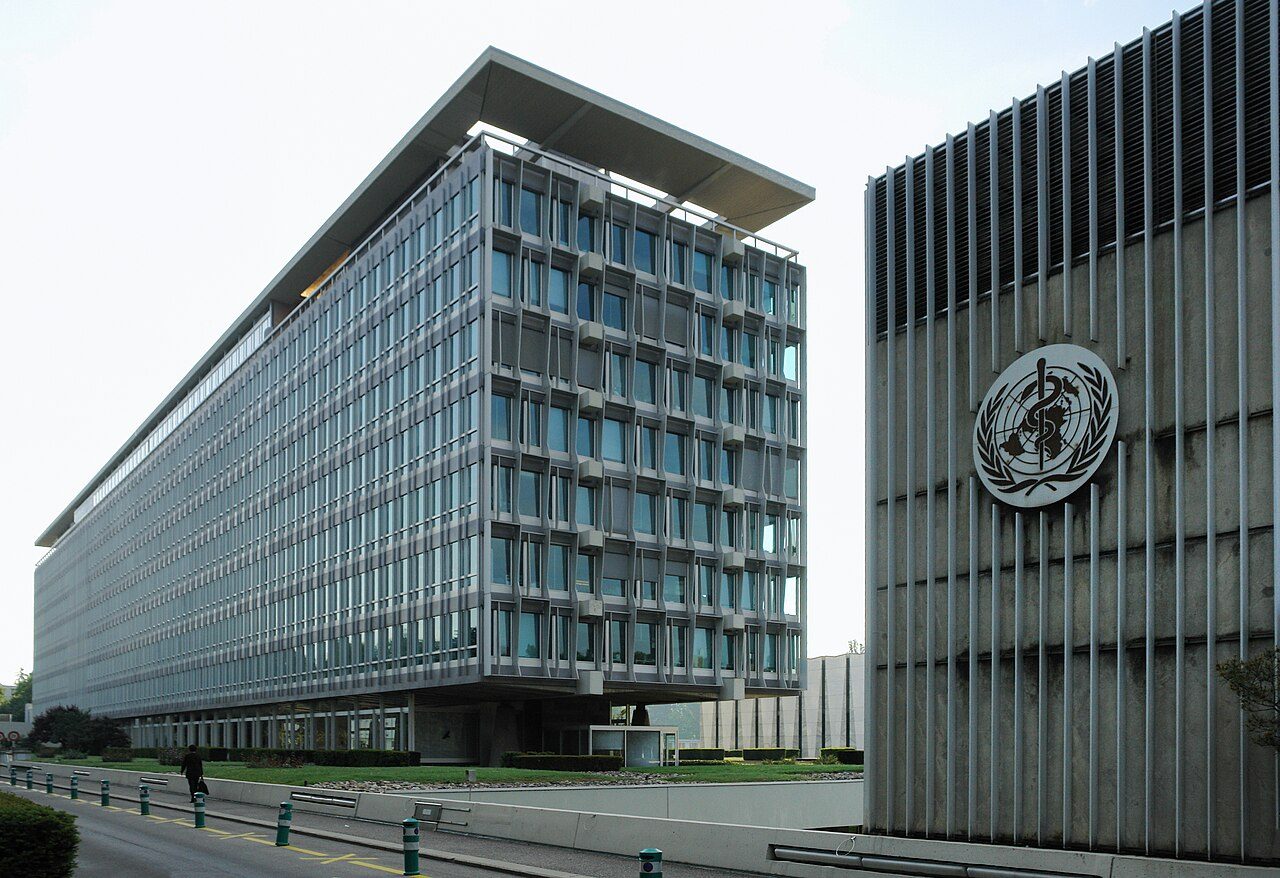
In the West, the response to Soviet power was organisation. On 17 March Britain, France and the Benelux countries signed the Treaty of Brussels, a mutual-defence pact that laid the groundwork for NATO. On 3 April President Harry Truman signed the Marshall Plan into law, committing the United States to rebuilding war-shattered Europe. A new kind of institution-building ran alongside the military kind: on 7 April the World Health Organization was founded, its constitution defining health as complete physical, mental and social well-being, and on 5 July Britain launched the National Health Service, providing healthcare free at the point of use to the whole population.
The year's most contested founding came on 14 May, when David Ben-Gurion proclaimed the establishment of the State of Israel in Tel Aviv as the British Mandate expired. The United States recognised the new state within minutes. The next day the armies of Egypt, Syria, Transjordan, Lebanon and Iraq invaded, beginning the first Arab-Israeli war — a conflict whose questions, the on-site record notes, remain unresolved.
Six weeks later the Cold War produced its first great crisis. On 24 June the Soviet Union blocked all land access to West Berlin, hoping to force the Western allies out of the city, which sat deep inside the Soviet occupation zone. The Western answer began on 26 June: the Berlin Airlift, which supplied the city by air for eleven months until the blockade was lifted in May 1949. Meanwhile another division hardened in Asia — South Korea was proclaimed in Seoul on 15 August with Syngman Rhee as president, and North Korea in Pyongyang on 9 September. The year closed in Paris on 10 December, where the UN General Assembly adopted the Universal Declaration of Human Rights: 48 votes in favour, none against, eight abstentions — the first global proclamation of the rights of every human being.
Timeline of 1948
- 4 January
Burma — now Myanmar — becomes independent of Britain, with U Nu as its first prime minister.
- 30 January
Mahatma Gandhi is assassinated in New Delhi by Nathuram Godse as he walks to evening prayers.
- 4 February
Ceylon, later Sri Lanka, gains independence from Britain.
- 17 March
Britain, France and the Benelux countries sign the Treaty of Brussels, laying groundwork for NATO.
- 3 April
President Truman signs the Marshall Plan into law, committing the United States to rebuilding Europe.
- 7 April
The World Health Organization is founded as its constitution enters into force.
- 14 May
David Ben-Gurion proclaims the establishment of the State of Israel in Tel Aviv.
- 24 June
The Soviet Union blocks all land routes to West Berlin, beginning the Berlin Blockade.
- 26 June
The Western allies begin the Berlin Airlift, flying supplies into the blockaded city.
- 5 July
Britain's National Health Service is launched, providing healthcare free at the point of use.
- 26 July
President Truman signs Executive Order 9981, ordering the desegregation of the US armed forces.
- 15 August
The Republic of Korea — South Korea — is proclaimed in Seoul, with Syngman Rhee as president.
- 9 September
North Korea is proclaimed in Pyongyang, completing the Korean peninsula's division.
- 10 December
The UN General Assembly adopts the Universal Declaration of Human Rights in Paris.
Why 1948 still matters
Almost every structure that still organises international life was either founded or stress-tested in 1948. The World Health Organization, born that April, went on to declare smallpox eradicated in 1980 — the first disease deliberately wiped from the Earth — and the definition of health it adopted, well-being rather than merely the absence of disease, still frames arguments about what health systems are for. Britain's National Health Service, launched the same summer, became the working model of healthcare free at the point of use.
The Berlin Blockade set the Cold War's template: a crisis fought with logistics rather than armies, which the on-site record shows accelerated exactly what Moscow hoped to prevent — the founding of the Federal Republic of Germany and the NATO alliance in 1949. The division of Korea proclaimed that autumn has never been undone, and the war that began in the Middle East in May 1948 opened questions of borders and refugees that remain unresolved three-quarters of a century later.
Above all, the Universal Declaration of Human Rights gave the century a measuring stick. Legally it bound no one, yet it seeded the binding covenants that followed, the constitutions of most new nations, and the idea that how a state treats its own citizens is the world's business. The year that began with Gandhi's murder ended with the world proclaiming, for the first time, the rights of every human being — and the distance between those two facts is the story of the modern age.
1948 on The History Trail
The year's biggest stories have full pages of their own on The History Trail.
- April 7 in History — the World Health Organization is founded, defining health as complete well-being.
- May 14 in History — David Ben-Gurion proclaims the State of Israel as the British Mandate expires.
- June 24 in History — the Berlin Blockade begins, and the airlift answers it.
- December 10 in History — the Universal Declaration of Human Rights is adopted in Paris.
- Universal Declaration of Human Rights — the thirty articles proclaimed on 10 December 1948.
- World Health Organization — the UN health agency founded on 7 April 1948.
- Cold War — the confrontation whose first great crisis was the Berlin Blockade.
Sources
- Encyclopaedia Britannica — On This Day: January 30
- Encyclopaedia Britannica — On This Day: April 3
- Encyclopaedia Britannica — On This Day: April 7
- Encyclopaedia Britannica — Israel
- HISTORY — What Happened on May 14
- Encyclopaedia Britannica — On This Day: June 24
The facts on this page were checked against these sources on 19 November 2026. The History Trail's permanent pages are researched and written for this site; the live profiles elsewhere on The History Trail are assembled automatically from Wikipedia and Wikidata.
About the Author
Researched and written by the The History Trail Editorial Team — the accountable editorial function behind this site's permanent story pages. The team works from the published sources cited on each page; it does not invent historians, reviewers or credentials, and it corrects errors openly.
Fact Check
Every load-bearing fact on this page traces to one of the sources listed above, and significant claims link to their source in the text. Our checking method is described on the methodology page; errors can be reported via the corrections page.
Sources & Citations
Cite this page as: The History Trail Editorial Team, The History Trail — this article's title, publication and update dates are shown beneath its headline. The full source list appears under Sources above; the site's source standards are on the sources page.