
Years
1904 in History
1904 is remembered above all for 27 October, when New York City opened its first subway — 9.1 miles from City Hall to 145th Street — and Mayor George B. McClellan drove the first train himself, refusing to hand over the controls. The same year settled an old imperial rivalry with the Entente Cordiale, renamed a New York square for a newspaper, and gave London its first Peter Pan.
At a Glance
- Defining event
- New York City's first subway opens, 27 October 1904 — 9.1 miles from City Hall to 145th Street
- The first driver
- Mayor George B. McClellan drove the first train himself, refusing to hand over the controls
- Diplomacy of the year
- France and Britain sign the Entente Cordiale, 8 April, laying the ground for their First World War alliance
- A square renamed
- New York's Longacre Square becomes Times Square on 8 April, after the New York Times tower rising there
- Fire of the year
- The Great Baltimore Fire burns for some thirty hours from 7 February, destroying much of the business district
- Born this year
- J. Robert Oppenheimer (22 April), Salvador Dalí (11 May) and Pablo Neruda (12 July)
The defining story: the first subway
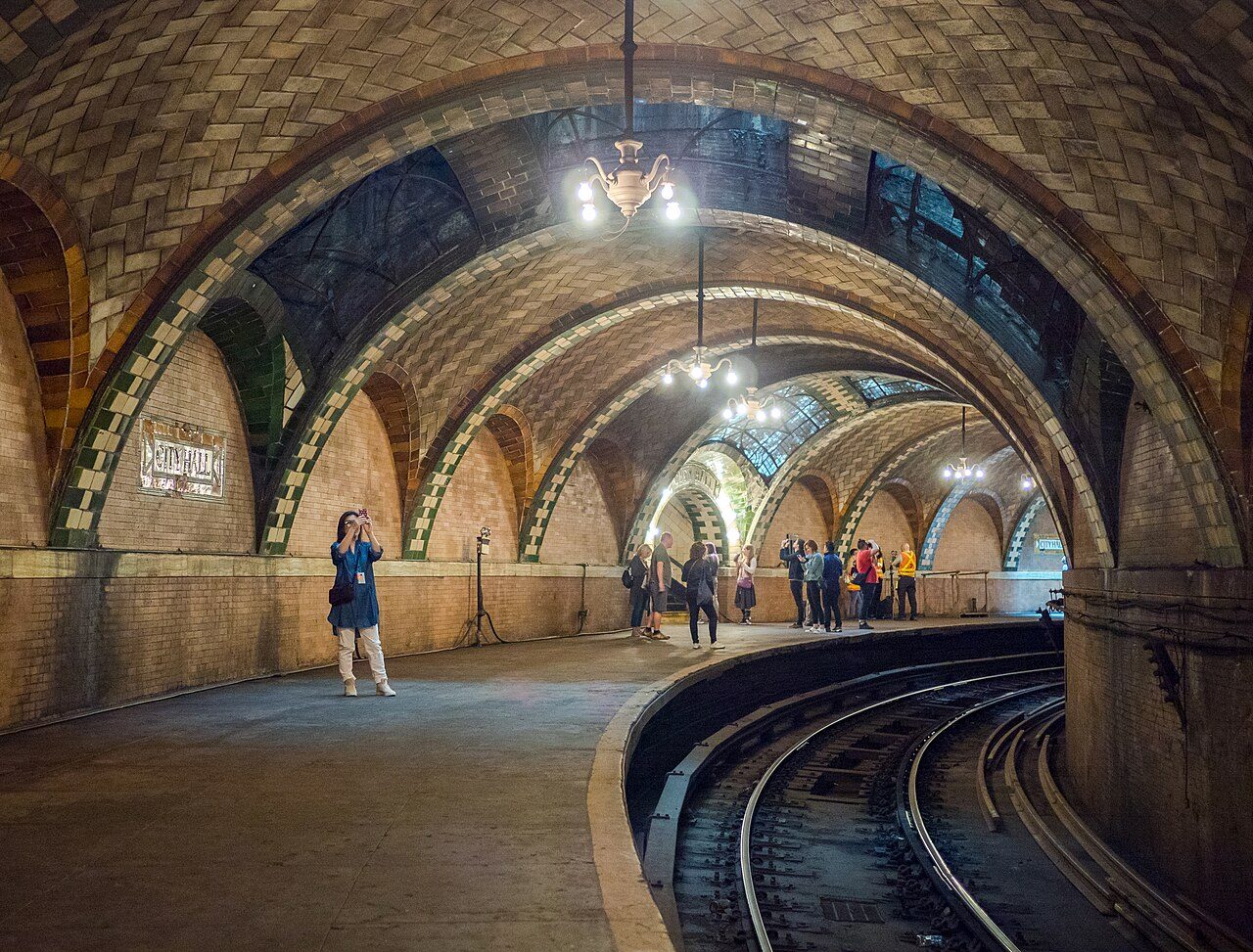
On 27 October 1904 New York City opened its first subway: 9.1 miles of line from City Hall, at the southern tip of Manhattan, to 145th Street. The southern terminus was the showpiece City Hall station, a vaulted, tiled chamber built to be admired as much as used. Mayor George B. McClellan was given the honour of starting the first train — and, as the day's record tells it, drove it himself and refused to hand over the controls, carrying his ceremonial role the length of the line. A city that had been growing upward, on the frame of its elevated railways, had now learned to grow downward as well.
The subway crowned a year in which New York was naming its future. On 8 April the city had renamed Longacre Square as Times Square, after the New York Times tower rising there — the same day, by coincidence, that France and the United Kingdom signed the Entente Cordiale in Europe, settling their colonial disputes and laying the ground for the alliance they would carry into the First World War. A square named for a newspaper and a pact between old enemies: 8 April 1904 quietly arranged both a city's geography and a continent's.
Fire supplied the year's American counterpoint. On 7 February the Great Baltimore Fire began; it burned for some thirty hours and destroyed much of the city's business district — the kind of urban catastrophe the age of wood, coal and narrow streets still produced regularly, and which cities answered with codes, hydrants and, eventually, subways of brick and steel. In Milan a week later, Puccini's Madama Butterfly premiered at La Scala and failed so badly that the composer withdrew it and rewrote it — the year's neatest proof that a first night is a verdict only until revision.
The year closed in a London theatre. On 27 December J. M. Barrie's Peter Pan opened at the Duke of York's Theatre, introducing Wendy, the Lost Boys and Neverland. Between a mayor driving a train underground in October and a boy who would not grow up taking flight in December, 1904 had stated its two themes: the modern city, engineered and lit; and the refusal, in imagination at least, to live entirely inside it.
Timeline of 1904
- 7 February
The Great Baltimore Fire begins, burning for some thirty hours and destroying much of the city's business district.
- 17 February
Puccini's Madama Butterfly premieres at La Scala, Milan — and fails so badly that Puccini withdraws and rewrites it.
- 1 March
Glenn Miller, the bandleader whose orchestra will define the sound of the swing era, is born.
- 8 April
France and the United Kingdom sign the Entente Cordiale; in New York, Longacre Square is renamed Times Square.
- 22 April
J. Robert Oppenheimer, who will direct the Los Alamos laboratory that built the first atomic bomb, is born.
- 1 May
Antonín Dvořák, composer of the New World Symphony, dies in Prague at 62.
- 11 May
Salvador Dalí, the Spanish Surrealist painter, is born.
- 3 June
Charles Drew, the American surgeon who pioneered large-scale blood banks, is born.
- 12 July
Pablo Neruda, Chilean poet and future Nobel laureate in literature, is born.
- 15 July
Anton Chekhov, Russian playwright and master of the short story, dies of tuberculosis at 44.
- 22 August
Deng Xiaoping, the Chinese leader who will open China's economy to the world after 1978, is born.
- 27 October
New York City's first subway line opens, running 9.1 miles from City Hall to 145th Street.
- 27 December
J. M. Barrie's Peter Pan opens at the Duke of York's Theatre in London, introducing Wendy, the Lost Boys and Neverland.
Why 1904 still matters
The subway made the modern New York possible. A city of five boroughs consolidated only six years earlier needed to move millions of people daily over distances walking could not serve; the 9.1 miles of 1904 became the skeleton of the largest urban transit system of its age, and the pattern — public works, private operation, a mayor at the controls for the cameras — became the template of the infrastructure age. City Hall station itself closed in 1945 and survives as a preserved ghost station, the ornate fossil of the system's first day.
The Entente Cordiale mattered at the opposite scale. Two empires that had competed across Africa and Asia for a century settled their disputes in a single instrument, and in doing so built one side of the alliance structure that would fight the First World War ten years later. Times Square, renamed the same day, took the other path to fame: the New Year's Eve ball drop that would make it the world's most famous square began only a few years afterwards, in the decade this renaming opened.
The births of 1904 read like the cast list of the mid-century: Oppenheimer, who would direct Los Alamos; Dalí and Neruda; Graham Greene and Deng Xiaoping; Cary Grant, Balanchine and Count Basie. A year remembered for a train ride also, quietly, stocked the century with the people who would define its science, its art and its politics.
1904 on The History Trail
The first New York subway leads this year on The History Trail, with the Entente Cordiale, the Great Baltimore Fire and Peter Pan's first flight.
- October 27 in History — New York City's first subway opens, the featured story of the year.
- April 8 in History — The Entente Cordiale is signed, and Longacre Square becomes Times Square.
- February 7 in History — The Great Baltimore Fire begins its thirty-hour burn.
- February 17 in History — Madama Butterfly fails at La Scala, and Puccini withdraws it to rewrite.
- December 27 in History — Peter Pan opens in London, introducing Wendy and Neverland.
- The Times Square Ball Drop — The New Year ritual of the square renamed in 1904.
- Hamburger — The sandwich whose American career belongs to this fair-going era.
Sources
- Encyclopaedia Britannica — On This Day: October 27
- HISTORY — What Happened on October 27
- Encyclopaedia Britannica — On This Day: April 8
- HISTORY — What Happened on April 8
- Encyclopaedia Britannica — On This Day: February 7
- Encyclopaedia Britannica — On This Day: February 17
- Encyclopaedia Britannica — On This Day: December 27
- Encyclopaedia Britannica — On This Day: April 22
The facts on this page were checked against these sources on 19 November 2026. The History Trail's permanent pages are researched and written for this site; the live profiles elsewhere on The History Trail are assembled automatically from Wikipedia and Wikidata.
About the Author
Researched and written by the The History Trail Editorial Team — the accountable editorial function behind this site's permanent story pages. The team works from the published sources cited on each page; it does not invent historians, reviewers or credentials, and it corrects errors openly.
Fact Check
Every load-bearing fact on this page traces to one of the sources listed above, and significant claims link to their source in the text. Our checking method is described on the methodology page; errors can be reported via the corrections page.
Sources & Citations
Cite this page as: The History Trail Editorial Team, The History Trail — this article's title, publication and update dates are shown beneath its headline. The full source list appears under Sources above; the site's source standards are on the sources page.