
On This Day
February 17 in History
On 17 February 1996, in Philadelphia, world chess champion Garry Kasparov won the sixth and final game against Deep Blue, IBM's chess computer, to take their match by four points to two. A week earlier Deep Blue had become the first machine to beat a reigning world champion in a classical game; Kasparov's recovery made February 17 the last day on which humanity's champion could still be said to rule chess outright. February 17 is also Michael Jordan's birthday and the day China invaded Vietnam in 1979.
Choose another date: open the On This Day calendar to browse events, births and deaths for any day of the year.
At a Glance
- The challenger
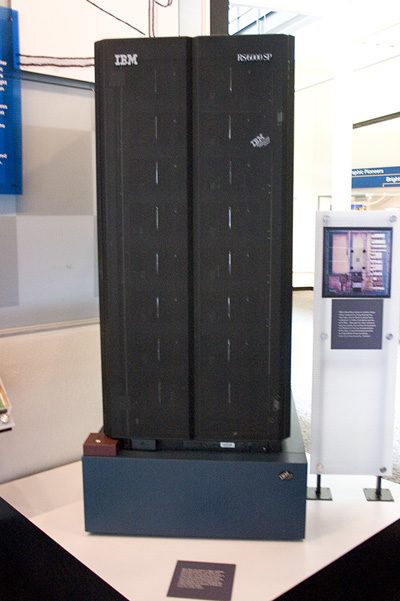
- Deep Blue — an IBM RS/6000 supercomputer with custom chess processors, able to examine some 200 million positions a second in its upgraded form
- Game one
- 10 February 1996 — Deep Blue wins, the first computer victory over a reigning world champion under classical time controls
- The comeback
- Kasparov wins games two, five and six and draws games three and four, adjusting his style to confuse the machine
- The result
- 17 February 1996 — Kasparov wins the match 4–2 (three wins, two draws, one loss)
- Kasparov's verdict
- He said he could work out the computer's priorities and adjust his play, while it could not do the same to him
- The sequel
- May 1997 — a faster Deep Blue wins the rematch 3½–2½, the first computer match victory over a world champion
Events on this day
- 1801The U.S. House of Representatives breaks an electoral deadlock and chooses Thomas Jefferson as president over Aaron Burr.
- 1864The Confederate submarine H. L. Hunley torpedoes the USS Housatonic off Charleston — the first time a submarine sinks a warship — and is itself lost with its crew.
- 1865Union forces under General Sherman occupy Columbia, South Carolina, and much of the city burns in the night.
- 1904Puccini's opera Madama Butterfly premieres at La Scala, Milan — and fails so badly that Puccini withdraws and rewrites it.
- 1913The Armory Show opens in New York, introducing American audiences to modern art, from Duchamp to Matisse, to outrage and fascination.
- 1947The Voice of America begins broadcasting to the Soviet Union, opening with the words Hello! This is New York calling.
- 1972The 15,007,034th Volkswagen Beetle is built, passing the Ford Model T as the most-produced car in history.
- 1979China invades northern Vietnam, beginning a sharp month-long border war between the two communist neighbours.
- 1996Garry Kasparov defeats IBM's Deep Blue in the final game to win their six-game match — the featured story above.
- 1998The United States beats Canada 3–1 to win the first Olympic women's ice hockey gold medal, at Nagano.
- 2008Kosovo unilaterally declares independence from Serbia.
Born on this day
- 1888Otto Stern — German-American physicist who won the Nobel Prize for his work on molecular beams and the proton's magnetic moment.
- 1936Jim Brown — American football star of the Cleveland Browns, widely judged the greatest running back in the game's history, later an actor and activist.
- 1955Mo Yan — Chinese novelist, author of Red Sorghum, who in 2012 became the first Chinese citizen to win the Nobel Prize in Literature.
- 1963Michael Jordan — American basketball player who led the Chicago Bulls to six NBA championships and became the sport's global emblem.
- 1991Ed Sheeran — English singer-songwriter, one of the best-selling musicians of the streaming era.
Died on this day
- 1600Giordano Bruno — Italian philosopher, burned at the stake in Rome for his heretical views, including a universe of infinite worlds.
- 1673Molière — France's greatest comic playwright, who collapsed on stage playing the hypochondriac in his own Le Malade imaginaire and died hours later.
- 1982Thelonious Monk — American jazz pianist and composer, a founder of bebop, dead in New Jersey at 64.
- 2021Rush Limbaugh — American conservative radio host, the most listened-to talk-radio voice in the country, dead at 70.
The featured story: Kasparov defeats Deep Blue, 17 February 1996
The match in Philadelphia in February 1996 was staged as a question: could a machine defeat the best human at the game humans had chosen as the emblem of pure intellect? IBM's Deep Blue was a supercomputer built for one task, examining chess positions at a rate no mind could match. Garry Kasparov, world champion since 1985 and rated the strongest player in history, was its opposite — intuitive, emotional, theatrical. In the first game, on 10 February, the machine played with unsettling strength and won: the first time a computer had beaten a reigning world champion under normal tournament conditions. Kasparov later called the defeat shattering.
What happened next is why 17 February, not the 10th, is this page's featured date. Kasparov studied the machine the way he would a human rival — except that its weaknesses were of a new kind. It had no plan, only evaluation; it could be lured into closed positions where long-term judgement mattered more than calculation, and it could not learn from game to game. Kasparov changed his openings, played patient, anti-computer chess, and won the second game. Two draws followed. Then he won the fifth, and on 17 February he won the sixth and last, sealing the match four points to two.
His explanation of the victory has become the match's epitaph. He could figure out the computer's priorities, he said, and adjust his play accordingly; it could not do the same to him. For one more year, adaptability — the human champion's ability to change his mind about what the game required — held off brute calculation. The result was celebrated as a victory for human intuition, and Kasparov collected the winner's prize as the man who had beaten the machine.
Everyone involved knew the reprieve was temporary. IBM took Deep Blue away, doubled its speed and sharpened its evaluation, and in May 1997, in New York, the upgraded machine won the rematch by three and a half points to two and a half — the first computer to defeat a world champion in a match. Kasparov, furious and convinced he had seen flashes of human intervention, never got a third match; IBM retired Deep Blue to museums. But the order of events matters: the machine's era in chess began not with a triumph but with a defeat, on 17 February 1996, at the hands of a champion who won by treating the computer as an opponent to be understood rather than an oracle to be feared.
Why this date matters
February 17 delights in contests of new against old. A submarine sinks a warship for the first time in 1864; modern art storms New York in 1913; the Beetle outsells the Model T in 1972; China and Vietnam, allies a decade earlier, go to war in 1979. Its births run from a Nobel physicist to Michael Jordan to Ed Sheeran — three kinds of fame in three centuries' styles. And its centrepiece is the purest contest of all: one man, one machine, six games, and a result that told the world the future was coming but had not, quite, arrived.
Sources
- Encyclopaedia Britannica — On This Day: February 17
- HISTORY — What Happened on February 17
- Encyclopaedia Britannica — Deep Blue
The facts on this page were checked against these sources on 19 November 2026. The History Trail's permanent pages are researched and written for this site; the live profiles elsewhere on The History Trail are assembled automatically from Wikipedia and Wikidata.
About the Author
Researched and written by the The History Trail Editorial Team — the accountable editorial function behind this site's permanent story pages. The team works from the published sources cited on each page; it does not invent historians, reviewers or credentials, and it corrects errors openly.
Fact Check
Every load-bearing fact on this page traces to one of the sources listed above, and significant claims link to their source in the text. Our checking method is described on the methodology page; errors can be reported via the corrections page.
Sources & Citations
Cite this page as: The History Trail Editorial Team, The History Trail — this article's title, publication and update dates are shown beneath its headline. The full source list appears under Sources above; the site's source standards are on the sources page.