
Years
1902 in History
1902 is remembered above all for 8 May, when Mount Pelée erupted on Martinique, destroyed the city of Saint-Pierre and killed some 30,000 people in minutes — one of the deadliest volcanic disasters ever recorded. The same year ended the Boer War, saw the Curies isolate radium in Paris, and opened with the first Rose Bowl game in Pasadena.
At a Glance
- Defining event
- Mount Pelée erupts on Martinique, 8 May 1902, destroying Saint-Pierre and killing some 30,000 people in minutes
- War ends
- The Treaty of Vereeniging, signed at Pretoria on 31 May, ends the Boer War between Britain and the Boer republics
- Science of the year
- Marie and Pierre Curie isolate a sample of radium in Paris, 20 April, refining it from tonnes of pitchblende
- Alliance of the year
- Britain and Japan sign the Anglo-Japanese Alliance, 30 January — the first alliance between a European power and an Asian nation on equal terms
- Wonder lost
- The Campanile of St Mark's Square in Venice collapses on 14 July, demolishing the adjoining loggetta
- Born this year
- Charles Lindbergh (4 February), Ansel Adams (20 February) and John Steinbeck (27 February)
The defining story: Saint-Pierre in minutes
Saint-Pierre, on the French Caribbean island of Martinique, was a prosperous port city in the shadow of Mount Pelée. On 8 May 1902 the mountain erupted, and the city was destroyed and some 30,000 people killed in minutes — a death toll that makes Pelée one of the deadliest volcanic eruptions in recorded history. A city that had begun the morning as the commercial capital of its island simply ceased to exist, its harbour full of burned ships, in a catastrophe whose speed is the essential fact: there was no siege, no battle, no warning that anyone acted on in time — a mountain, a morning, and a city gone.
Three weeks later the year's other great ending was negotiated rather than suffered. On 31 May, at Pretoria, the Treaty of Vereeniging ended the Boer War between Britain and the Boer republics — a grinding conflict that had outlasted the century it began in and had taught the British Empire hard lessons about fighting an enemy who would not stand still. The peace brought the republics under the Crown, on terms whose consequences for South Africa's peoples would run for the rest of the century.
Science, meanwhile, was handling the century's most dangerous substance by the tonne. On 20 April, in their Paris laboratory, Marie and Pierre Curie isolated a sample of radium, refining it from tonnes of pitchblende — the laborious extraction that turned the element they had announced in 1898 from a spectral line into a substance you could weigh. The same laboratory patience, applied across tonnes of ore for a fraction of a gram of glowing salt, defined the heroic age of radioactivity — and its costs, which the Curies' own generation would pay without yet understanding them.
Diplomacy quietly redrew the world's alignments. On 30 January Britain and Japan signed the Anglo-Japanese Alliance — the first alliance between a European power and an Asian nation on equal terms. It announced Japan's arrival as a great power and freed Britain to concentrate its fleets nearer home; within a few years it would form part of the scaffolding of the First World War's alliance system. And on 14 July Venice watched its most famous tower fall: the Campanile of St Mark's Square collapsed, demolishing the adjoining loggetta — a landmark of a thousand years reduced, in an afternoon, to a pile of bricks that the city resolved to rebuild exactly where it had stood.
Timeline of 1902
- 1 January
The first Rose Bowl game is played at Pasadena, California: Michigan defeats Stanford 49–0.
- 28 January
The Carnegie Institution of Washington is founded with Andrew Carnegie's gift of $10 million to advance scientific research.
- 30 January
Britain and Japan sign the Anglo-Japanese Alliance, the first alliance between a European power and an Asian nation on equal terms.
- 4 February
Charles Lindbergh, who will make the first solo nonstop transatlantic flight in 1927, is born.
- 27 February
John Steinbeck, novelist of The Grapes of Wrath and Of Mice and Men, is born.
- 6 March
The Madrid Football Club — later Real Madrid — is founded.
- 20 April
Marie and Pierre Curie isolate a sample of radium in their Paris laboratory, refining it from tonnes of pitchblende.
- 8 May
Mount Pelée erupts on Martinique, destroying Saint-Pierre and killing some 30,000 people in minutes.
- 31 May
The Treaty of Vereeniging, signed in Pretoria, ends the Boer War.
- 14 July
The Campanile of St Mark's Square in Venice collapses, demolishing the adjoining loggetta.
- 29 September
Émile Zola, author of 'J'Accuse…!', dies.
- 13 November
Joseph Conrad's Heart of Darkness is first published in book form.
Why 1902 still matters
Pelée remains the standing lesson in volcanic risk: a modern city, a known mountain, and a death toll of some 30,000 achieved in minutes. Every evacuation argument since has been conducted in its shadow: a known volcano, a prosperous city, and minutes to decide. The figure is 'some 30,000' because, as at Galveston two years earlier, the catastrophe destroyed the means of counting as it destroyed the city.
Vereeniging closed the last great colonial war of the nineteenth century and opened the South African question of the twentieth: union under the Crown followed within the decade, on foundations that excluded the majority of the country's people from the settlement's benefits. The Anglo-Japanese Alliance, meanwhile, is the hinge on which the old diplomacy turned toward the alliance blocs of 1914 — the first time a European great power had treated an Asian state as an equal partner, signed not out of sentiment but out of naval arithmetic.
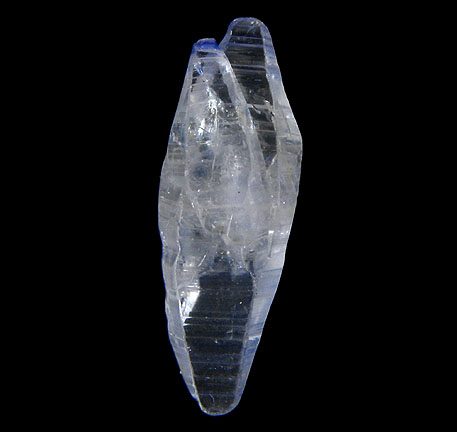
And the Curies' radium sample — weighed, bottled, glowing — turned a Paris announcement of 1898 into physical fact. In the same city in 1902, Auguste Verneuil published his flame-fusion process for growing crystals from powder, the method by which synthetic sapphire has been produced commercially ever since: the year's Paris laboratories were manufacturing both a new element's sample and a new way of making gems — nature, increasingly, was something science could produce as well as find.
1902 on The History Trail
Pelée's eruption leads this year on The History Trail, with the Boer War's end, the Curies' radium and the fall of Venice's Campanile.
- May 8 in History — Mount Pelée erupts and destroys Saint-Pierre.
- May 31 in History — The Treaty of Vereeniging ends the Boer War.
- April 20 in History — Marie and Pierre Curie isolate a sample of radium in Paris.
- January 30 in History — Britain and Japan sign the Anglo-Japanese Alliance.
- July 14 in History — The Campanile of St Mark's Square in Venice collapses.
- January 1 in History — The first Rose Bowl game is played at Pasadena.
- Sapphire — Ceylon gravels, Kashmir's brief season and Verneuil's 1902 laboratory flame.
Sources
- Encyclopaedia Britannica — On This Day: May 8
- HISTORY — What Happened on May 8
- HISTORY — This Day in History: May 31
- Encyclopaedia Britannica — On This Day: April 20
- Encyclopaedia Britannica — On This Day: January 30
- Encyclopaedia Britannica — On This Day: January 28
- Wikipedia — July 14 (events, births and deaths lists)
- Encyclopaedia Britannica — On This Day: November 13
The facts on this page were checked against these sources on 19 November 2026. The History Trail's permanent pages are researched and written for this site; the live profiles elsewhere on The History Trail are assembled automatically from Wikipedia and Wikidata.
About the Author
Researched and written by the The History Trail Editorial Team — the accountable editorial function behind this site's permanent story pages. The team works from the published sources cited on each page; it does not invent historians, reviewers or credentials, and it corrects errors openly.
Fact Check
Every load-bearing fact on this page traces to one of the sources listed above, and significant claims link to their source in the text. Our checking method is described on the methodology page; errors can be reported via the corrections page.
Sources & Citations
Cite this page as: The History Trail Editorial Team, The History Trail — this article's title, publication and update dates are shown beneath its headline. The full source list appears under Sources above; the site's source standards are on the sources page.