
Years
1988 in History
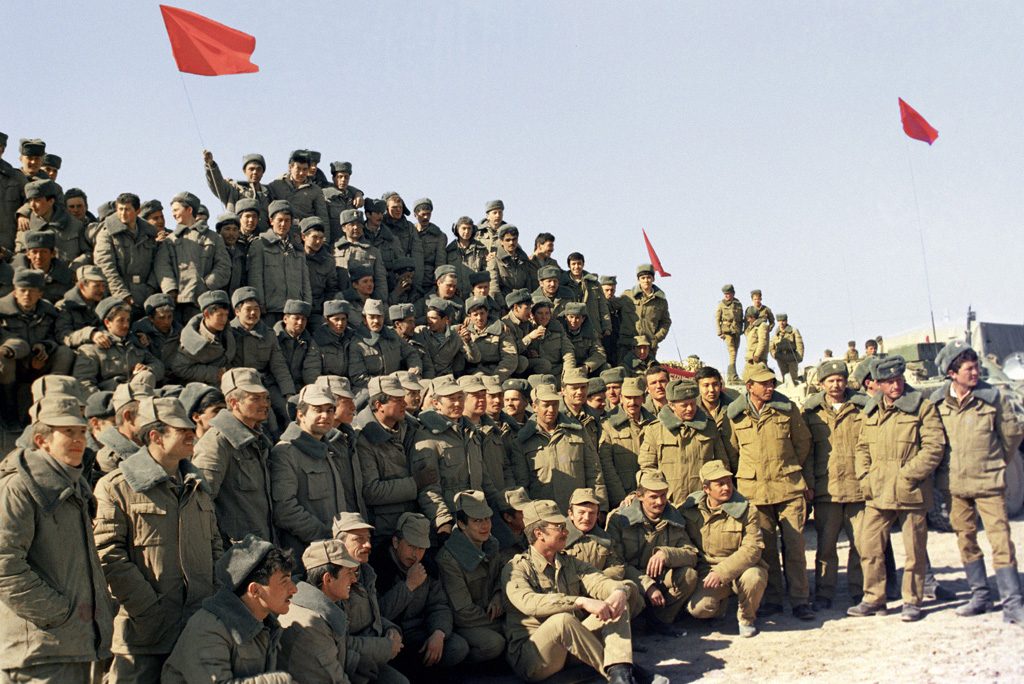
1988 is remembered as one of the Cold War's closing acts: on 15 May, under the Geneva Accords, Soviet forces began pulling out of Afghanistan after more than eight years of war, starting a nine-month withdrawal. The year also brought the first World AIDS Day, Benazir Bhutto's election victory in Pakistan, and the bombing of Pan Am Flight 103 over Lockerbie.
At a Glance
- Defining event
- Soviet withdrawal from Afghanistan begins, 15 May, under the Geneva Accords
- The war it ended
- More than eight years of war; the pullout was completed in February 1989
- New first
- Benazir Bhutto's party wins Pakistan's election, 16 November — the first woman to lead a Muslim-majority country
- Global health
- The first World AIDS Day is observed on 1 December
- Terrorism
- A bomb destroys Pan Am Flight 103 over Lockerbie on 21 December, killing 270 people in all
- Return to flight
- The shuttle Discovery lifts off on 29 September, NASA's return to flight after Challenger
The defining story: an empire begins its retreat
On 15 May 1988 Soviet armoured columns began rolling north out of Afghanistan toward the border river crossings, past Afghan children waving flags and soldiers riding on top of their vehicles with flowers in the barrels of their guns. It was the first stage of a withdrawal, made under the Geneva Accords, that would end nine months later — and with it one of the Cold War's defining failures: the Soviet Union's war in Afghanistan, begun in December 1979 to prop up a communist government in Kabul, was being abandoned in full view of the world.
The invasion had been meant to be quick. Instead the Soviet 40th Army — some 115,000 troops at its height — found itself fighting a guerrilla war across some of the most difficult terrain on earth, against mujahideen fighters supplied with money and weapons by the United States, Pakistan and Saudi Arabia, including, from 1986, Stinger anti-aircraft missiles that stripped the Soviets of command of the air. An estimated one million Afghans died, millions more fled as refugees, and more than 15,000 Soviet soldiers were killed — figures the Soviet public learned only slowly, as zinc coffins came home to a country told almost nothing.
The withdrawal was staged as an orderly completion, not a defeat. The Geneva Accords gave the 40th Army exactly nine months to leave, and its commander, Boris Gromov, arranged to be the last man out, walking the Friendship Bridge alone on foot on 15 February 1989 — a staged image of an orderly exit meant to counter the word nobody in Moscow would use. But whatever the choreography, a superpower had marched into Afghanistan, fought for nine years, and marched out again without achieving its aims.
The retreat was one of several signs in 1988 that an old order was loosening. In Algiers on 15 November Yasser Arafat proclaimed the establishment of a Palestinian state; the same day the Soviet space shuttle Buran made its first and only flight, uncrewed, orbiting the Earth twice. In September Margaret Thatcher had delivered her Bruges speech, setting out British resistance to a centralised European super-state. And on 29 September the shuttle Discovery had lifted off on mission STS-26, NASA's return to flight after the Challenger disaster — the other superpower, too, was closing a chapter.
Timeline of 1988
- 26 January
Andrew Lloyd Webber's The Phantom of the Opera opens on Broadway in New York, beginning a run of 35 years.
- 24 February
The U.S. Supreme Court rules unanimously that parody of public figures is protected speech, throwing out Jerry Falwell's lawsuit against Hustler magazine.
- 15 May
Soviet forces begin their withdrawal from Afghanistan under the Geneva Accords.
- 3 July
The U.S. warship Vincennes shoots down Iran Air Flight 655 over the Persian Gulf, killing all 290 people aboard, in a case of mistaken identity.
- 8 August
The 8888 Uprising peaks in Burma; more than 3,000 people are killed in the suppression, by the British government's account.
- 17 August
Muhammad Zia-ul-Haq, president of Pakistan, is killed when his aircraft crashes near Bahawalpur in circumstances never explained.
- 20 September
Margaret Thatcher delivers her Bruges speech, setting out British resistance to a centralised European super-state.
- 29 September
The shuttle Discovery lifts off on mission STS-26, NASA's return to flight after the Challenger disaster.
- 15 November
In Algiers, Yasser Arafat proclaims the establishment of a Palestinian state.
- 16 November
Benazir Bhutto's party wins Pakistan's general election; she becomes the first woman to lead a Muslim-majority country.
- 1 December
The first World AIDS Day is observed, making 1 December the annual focus of the global campaign against HIV and AIDS.
- 7 December
An earthquake devastates the Spitak region of Soviet Armenia; official estimates put the death toll at about 25,000.
- 21 December
A bomb destroys Pan Am Flight 103 over Lockerbie, Scotland, killing all 259 people on board and 11 people on the ground.
- 22 December
Chico Mendes, Brazilian rubber tapper and environmental campaigner, is assassinated for defending the Amazon rainforest.
Why 1988 still matters
The Afghan withdrawal was the Cold War's retreat made visible. A war launched in 1979 to hold a client state had instead consumed an estimated million Afghan lives and more than 15,000 Soviet soldiers, and its ending in 1988–89 removed one of the great obstacles between Moscow and Washington. Within three years the Soviet Union itself was gone; the columns crossing the Friendship Bridge were an early picture of that ending, taken while the state that sent them still existed.
The year's other firsts compounded quietly. Benazir Bhutto's victory made her the first woman to lead a Muslim-majority country, a precedent set in Pakistan weeks after the death of President Zia-ul-Haq in an unexplained air crash. The first World AIDS Day, on 1 December, gave the global campaign against HIV and AIDS a permanent annual focus. And the Soviet Buran shuttle flew once, uncrewed and perfectly — a triumph of a system that would never fly it again.
Against the loosening came the year's shocks: Iran Air Flight 655 shot down by the USS Vincennes in a case of mistaken identity, killing all 290 aboard; the 8888 Uprising in Burma suppressed with more than 3,000 killed, by the British government's account; an earthquake in Soviet Armenia officially estimated at about 25,000 dead; and, four days before Christmas, Pan Am 103 over Lockerbie, for which Libya later accepted responsibility and paid compensation. 1988 was a year of endings that arrived by timetable and by bomb alike.
1988 on The History Trail
The Soviet retreat from Afghanistan leads this year on The History Trail.
- May 15 in History — Soviet forces begin their withdrawal from Afghanistan — the featured story of 1988.
- December 21 in History — Pan Am Flight 103 is destroyed over Lockerbie.
- December 1 in History — The first World AIDS Day is observed.
- November 16 in History — Benazir Bhutto's party wins Pakistan's general election.
- September 29 in History — Discovery lifts off on NASA's return to flight after Challenger.
- World Health Organization — The History Trail's story of the World Health Organization.
- Wildfire — The History Trail's story of wildfire.
Sources
- Encyclopaedia Britannica — On This Day: May 15
- Encyclopaedia Britannica — On This Day: December 21
- Encyclopaedia Britannica — On This Day: December 1
- Wikimedia — On This Day feed: November 16
The facts on this page were checked against these sources on 19 November 2026. The History Trail's permanent pages are researched and written for this site; the live profiles elsewhere on The History Trail are assembled automatically from Wikipedia and Wikidata.
About the Author
Researched and written by the The History Trail Editorial Team — the accountable editorial function behind this site's permanent story pages. The team works from the published sources cited on each page; it does not invent historians, reviewers or credentials, and it corrects errors openly.
Fact Check
Every load-bearing fact on this page traces to one of the sources listed above, and significant claims link to their source in the text. Our checking method is described on the methodology page; errors can be reported via the corrections page.
Sources & Citations
Cite this page as: The History Trail Editorial Team, The History Trail — this article's title, publication and update dates are shown beneath its headline. The full source list appears under Sources above; the site's source standards are on the sources page.