
Years
1932 in History
1932 is remembered for a flight timed to make a point: on 20 May, exactly five years after Lindbergh, Amelia Earhart took off from Harbour Grace, Newfoundland, and landed in Ireland the next day — the first woman to fly solo and nonstop across the Atlantic. The same Depression year elected Franklin D. Roosevelt president of the United States, saw the Lindbergh baby kidnapped, founded a Danish wooden-toy workshop called Lego, and opened the Sydney Harbour Bridge and Radio City Music Hall.
At a Glance
- Defining event
- Amelia Earhart flies solo and nonstop across the Atlantic, 20–21 May — the first woman to do so, five years to the day after Lindbergh
- Political turn
- Franklin D. Roosevelt defeats Herbert Hoover to become president, 8 November, as the Great Depression deepens
- Crime of the century
- Charles Lindbergh's 20-month-old son is kidnapped from the family home in New Jersey, 1 March; the baby is later found murdered
- Founded
- Ole Kirk Christiansen begins making wooden toys in Billund, Denmark, in 1932 — the workshop that becomes Lego
- Broadcasting
- The BBC begins experimental Empire Service broadcasting, 22 August — the ancestor of the World Service
- Independence
- Iraq becomes independent of Britain, 3 October — the first League of Nations mandate in the Middle East to gain independence
The defining story: Earhart flies the Atlantic alone
May 20 was aviation's feast day, and it earned the title by symmetry. On 20 May 1927 Charles Lindbergh had taken off from New York and flown solo and nonstop to Paris, the first person to cross the Atlantic alone. Five years later, to the day, Amelia Earhart deliberately repeated the date: she took off from Harbour Grace, Newfoundland, on 20 May 1932, aiming to become the first woman to fly solo across the Atlantic. She had crossed before — in 1928, as a passenger, a qualification she had always insisted on. This time there was no pilot beside her and no qualification to make.
She landed in Ireland on 21 May, the first woman to fly solo and nonstop across the Atlantic, five years to the day after Lindbergh's crossing. The flight made her the most famous woman aviator in the world and converted the 1928 passenger trip into a completed argument: what she had first done in someone else's aeroplane, she had now done in her own hands. In August she did it again across a continent, taking off from Los Angeles on 24 August and landing in Newark the next day — the first woman to fly solo nonstop across the United States.
The America she flew over was at the bottom of the Great Depression, and its politics turned in November. On 8 November Franklin D. Roosevelt defeated Herbert Hoover to become president, winning the mandate that would produce the New Deal. The year's crime had come in March: on 1 March Charles Lindbergh's 20-month-old son was kidnapped from the family home in Hopewell, New Jersey, and later found murdered — a crime that transfixed the country whose hero the father was. The courts, meanwhile, produced one of the year's most durable precedents on 7 November, when the U.S. Supreme Court overturned the Scottsboro convictions in Powell v. Alabama, a landmark ruling on the right to counsel.
The wider world was rearranging itself more quietly. On 24 June a bloodless coup in Siam ended the absolute monarchy and began Thailand's constitutional era; on 23 September the kingdoms of Hejaz and Nejd were unified by royal decree as the Kingdom of Saudi Arabia; on 3 October Iraq became independent of Britain. On 19 March the Sydney Harbour Bridge opened in Australia, then the world's widest long-span bridge, and on 27 December Radio City Music Hall opened in New York — the largest indoor theatre of its age, staging spectacle designed to defy the Depression gloom. In Denmark, a master carpenter named Ole Kirk Christiansen, as the Depression cut demand for furniture, began in 1932 to make wooden toys alongside stepladders and ironing boards in Billund.
Timeline of 1932
- 12 January
Hattie Caraway of Arkansas becomes the first woman elected to the United States Senate, winning the seat she had first filled by appointment.
- 26 February
Johnny Cash is born — the American singer-songwriter, the Man in Black, whose songs crossed country, rock and gospel.
- 27 February
Elizabeth Taylor is born — the English-American actress who became one of the defining screen figures of the twentieth century.
- 1 March
Charles Lindbergh's 20-month-old son is kidnapped from the family home in Hopewell, New Jersey; the baby is later found murdered.
- 19 March
The Sydney Harbour Bridge opens in Australia, then the world's widest long-span bridge.
- 20 May
Amelia Earhart takes off from Harbour Grace, Newfoundland, exactly five years after Lindbergh, to become the first woman to fly solo across the Atlantic.
- 21 May
Amelia Earhart lands in Ireland — the first woman to fly solo and nonstop across the Atlantic.
- 24 June
A bloodless coup in Siam ends the absolute monarchy and begins Thailand's constitutional era.
- 22 August
The BBC begins experimental Empire Service broadcasting, the ancestor of the World Service.
- 23 September
The kingdoms of Hejaz and Nejd are unified by royal decree as the Kingdom of Saudi Arabia under Abdulaziz Ibn Saud.
- 3 October
Iraq becomes independent of Britain, the first League of Nations mandate in the Middle East to gain independence.
- 8 November
Franklin D. Roosevelt defeats Herbert Hoover to become president, as the Great Depression deepens.
- 27 December
Radio City Music Hall opens in New York, the largest indoor theatre of its age, with a stage show designed to defy the Depression gloom.
Why 1932 still matters
Earhart's flight matters because of its deliberate symmetry. She chose Lindbergh's own date, five years on, to answer the qualification attached to her 1928 crossing — and the May 20 record on this site notes that the calendar itself was being used to make a point about who gets to cross oceans. The solo crossing made her a global figure and set the terms of the career that ended, five years later, over the Pacific; the transcontinental flight that August confirmed it was no single feat. In an era when aviation records were the public measure of courage and machinery, she held the two largest solo records a woman could hold.
Roosevelt's election was the year's other hinge. Won at the Depression's depth on 8 November, it transferred American government to the man who would hold it for twelve years and remake its relationship to the economy; the New Deal, the wartime presidency and the modern federal state all begin with that vote. Powell v. Alabama, decided the day before the election, quietly extended the Constitution the other way — the Scottsboro ruling on the right to counsel became a foundation stone of American criminal procedure.
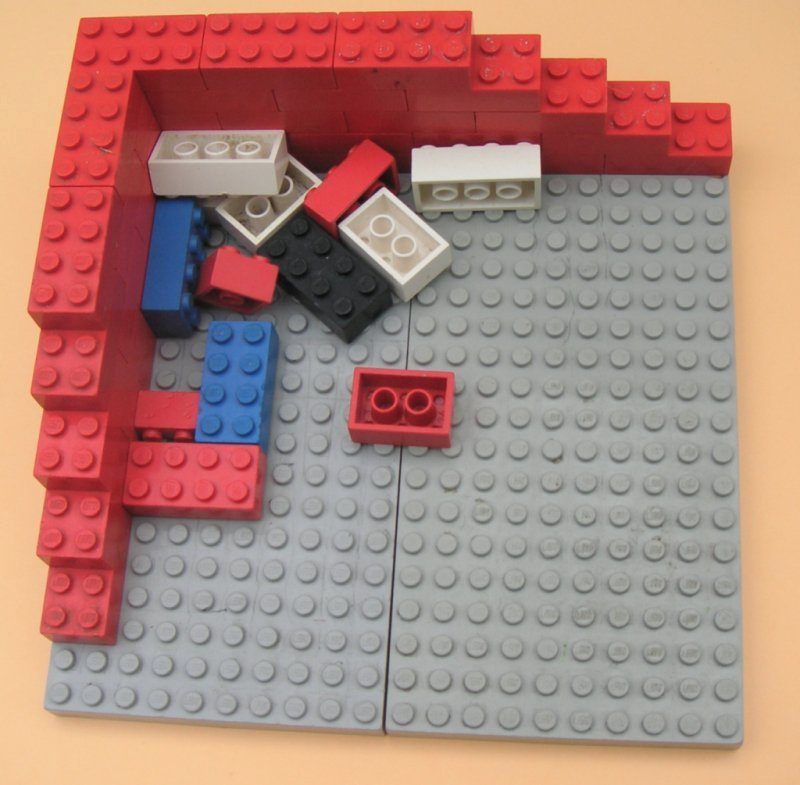
And in Billund, the carpenter's sideline became a parable of the Depression itself. Lego's founder began making wooden toys in 1932 because furniture would not sell; the company he started kept making them through the Second World War, switched to plastic, and patented the stud-and-tube brick in 1958 that a brick made today still fits. The biggest toy system on Earth began as one workshop's answer to the same collapse that elected Roosevelt.
1932 on The History Trail
Earhart's solo crossing frames this year on The History Trail, with a carpenter's workshop in Denmark beside it.
- May 20 in History — Earhart takes off in 1932, five years to the day after Lindbergh took off for Paris in 1927.
- May 21 in History — Earhart lands in Ireland in 1932, the first woman to fly the Atlantic solo.
- November 8 in History — Roosevelt is elected president in 1932, on the day Röntgen discovered X-rays in 1895.
- March 19 in History — The Sydney Harbour Bridge opens in 1932.
- Lego — Wooden toys, a 1958 patent and a near-collapse — the company founded in Billund in 1932.
- BBC — How a radio company became the model for public broadcasting; its Empire Service began in 1932.
Sources
- Encyclopaedia Britannica — On This Day: May 20
- HISTORY — This Day in History: May 21
- Encyclopaedia Britannica — On This Day: November 8
- Encyclopaedia Britannica — On This Day: March 19
- Encyclopaedia Britannica — On This Day: January 12
- Encyclopaedia Britannica — On This Day: October 3
- Encyclopaedia Britannica — On This Day: November 24
- Encyclopaedia Britannica — On This Day: December 27
The facts on this page were checked against these sources on 19 November 2026. The History Trail's permanent pages are researched and written for this site; the live profiles elsewhere on The History Trail are assembled automatically from Wikipedia and Wikidata.
About the Author
Researched and written by the The History Trail Editorial Team — the accountable editorial function behind this site's permanent story pages. The team works from the published sources cited on each page; it does not invent historians, reviewers or credentials, and it corrects errors openly.
Fact Check
Every load-bearing fact on this page traces to one of the sources listed above, and significant claims link to their source in the text. Our checking method is described on the methodology page; errors can be reported via the corrections page.
Sources & Citations
Cite this page as: The History Trail Editorial Team, The History Trail — this article's title, publication and update dates are shown beneath its headline. The full source list appears under Sources above; the site's source standards are on the sources page.