
Years
1931 in History
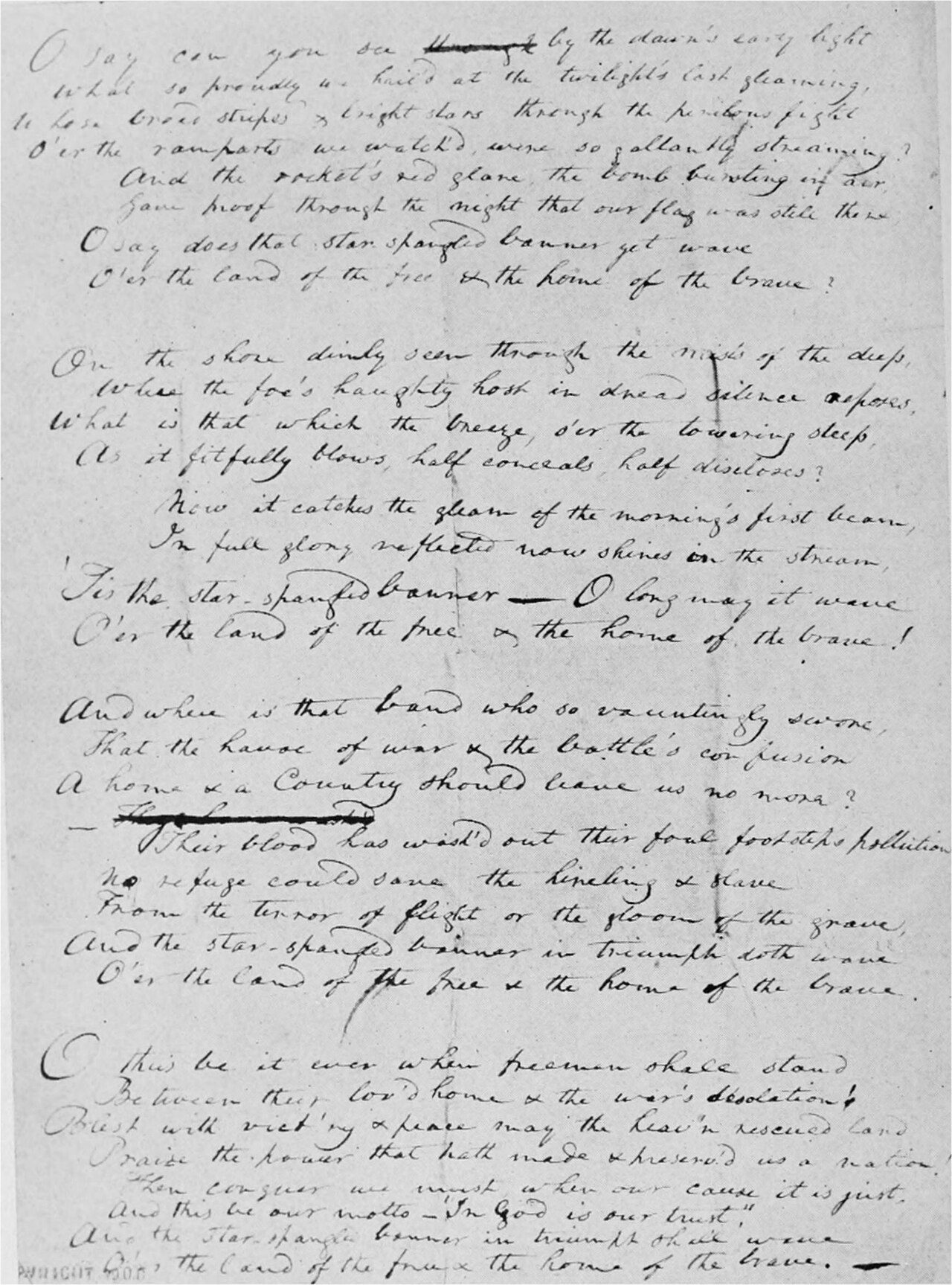
1931 is remembered for the day a song became a law: on 3 March President Herbert Hoover signed the act of Congress making 'The Star-Spangled Banner' — written by Francis Scott Key in 1814 — the official national anthem of the United States, 117 years after it was composed. The same Depression year opened the Empire State Building, then the tallest building in the world, convicted Al Capone of tax evasion, buried Thomas Edison, and closed with the Statute of Westminster granting the British dominions full legislative independence.
At a Glance
- Defining event
- 'The Star-Spangled Banner' becomes the official U.S. national anthem, 3 March, signed into law by President Hoover
- Skyline
- The Empire State Building, then the tallest building in the world, opens in New York City, 1 May
- Downfall
- A Chicago jury convicts Al Capone of tax evasion, 17 October — the charge that finally brings down America's most famous gangster
- Empire loosened
- The Statute of Westminster, 11 December, grants full legislative independence to the self-governing dominions of the British Empire
- Lost
- Thomas Edison dies on 18 October, holder of more than a thousand patents
- Born this year
- Mikhail Gorbachev on 2 March, James Dean on 8 February, Toni Morrison on 18 February, Desmond Tutu on 7 October
The defining story: a song becomes an anthem
The song was born in a single night of war. On 13–14 September 1814, during the War of 1812, the Maryland lawyer Francis Scott Key was detained aboard a British vessel in Baltimore Harbor while negotiating a prisoner's release, and from the deck he watched the Royal Navy bombard Fort McHenry through the night. At dawn the fort's enormous garrison flag was still flying, and Key began a poem on the back of a letter: 'O say can you see, by the dawn's early light…' Within weeks it was in print, set to a tune Americans already knew. For more than a century the song then lived without any official standing — sung at patriotic occasions, adopted by the Navy for ceremonies in 1889, ordered by President Woodrow Wilson for military occasions in 1916 — while the United States, well into the twentieth century, had no national anthem in law.
The gap was closed by campaigning: veterans' organisations and Maryland's congressmen pressed for years, with petitions, to make the song official. On 3 March 1931 President Herbert Hoover signed the congressional act designating 'The Star-Spangled Banner' as the national anthem of the United States. The country that adopted it was deep in the Great Depression — which made the rest of 1931's record read like a deliberate counter-argument. On 1 May the Empire State Building opened in New York City, then the tallest building in the world: a tower raised in the worst economy in American history, as if to insist that the skyline, at least, would not retreat.
The year's law-and-order story ended a legend. On 17 October a Chicago jury convicted Al Capone of tax evasion — the charge that finally brought down America's most famous gangster, whose empire of bootlegging had survived every prosecution aimed at its violence. The October 17 date record groups him with the day's older surrenders: a gangster's empire ending not in a shoot-out but in a tax court. Eight days earlier in the calendar of the year's losses, on 18 October, Thomas Edison died — the inventor of the phonograph and the practical light bulb, holder of more than a thousand patents, whose laboratories had done as much as any institution to build the electric century Capone's Chicago ran on.
Beyond America, the old order was being formally renegotiated. On 10 February New Delhi was formally inaugurated as the capital of British India. On 11 December the Statute of Westminster was enacted, granting full legislative independence to the self-governing dominions of the British Empire — the legal instrument that converted an empire of command into a commonwealth of formally equal states. The year's cinema fixed its monsters and gangsters for a generation: Warner Bros. released The Public Enemy on 23 April, the film that made James Cagney a star and set the template for the gangster movie, and on 21 November James Whale's Frankenstein, starring Boris Karloff, defined the horror film.
Timeline of 1931
- 10 February
New Delhi is formally inaugurated as the capital of British India.
- 27 February
The Twenty-second Amendment to the U.S. Constitution is ratified, limiting presidents to two terms in office.
- 2 March
Mikhail Gorbachev is born — the last leader of the Soviet Union, whose reforms of glasnost and perestroika ended the Cold War.
- 3 March
'The Star-Spangled Banner' becomes the official national anthem of the United States, as President Hoover signs the congressional act.
- 23 April
Warner Bros. releases The Public Enemy, the film that makes James Cagney a star and sets the template for the gangster movie.
- 1 May
The Empire State Building, then the tallest building in the world, opens in New York City.
- 5 May
Coal miners and company men fight the Battle of Evarts in Harlan County, Kentucky, leaving four dead in 'Bloody Harlan'.
- 5 October
Clyde Pangborn and Hugh Herndon complete the first nonstop flight across the Pacific, from Japan to Washington state.
- 17 October
A Chicago jury convicts Al Capone of tax evasion — the charge that finally brings down America's most famous gangster.
- 18 October
Thomas Edison dies — American inventor of the phonograph and the practical light bulb, holder of more than a thousand patents.
- 24 October
The George Washington Bridge, then the longest suspension bridge in the world at 4,760 feet, is dedicated.
- 21 November
James Whale's film Frankenstein, starring Boris Karloff as the monster, is released in the United States and defines the horror film for a generation.
- 11 December
The Statute of Westminster is enacted, granting full legislative independence to the self-governing dominions of the British Empire.
Why 1931 still matters
The anthem's adoption matters because it shows nations choosing their symbols deliberately, and late. The United States had fought wars, buried presidents and raised flags to Key's song for 117 years before making it official — and the version it adopted is performed, by universal custom, in shortened form, one verse of the four Key wrote. The 1931 act closed the question of what the anthem was, without settling the argument about what it means, which the song's mostly unsung later verses keep alive.
The Statute of Westminster was the year's other great act of definition, and its consequences ran for half a century: the dominions' legislative independence, enacted on 11 December 1931, became the legal foundation on which the modern Commonwealth stands, and the December 11 record reads the date as one on which old orders hand over to new ones — power surrendered, transferred or laid down rather than seized. The Empire State Building, opened in a Depression, became the standing proof that the decade's despair and its ambition were the same country's.
And Capone's conviction taught a durable lesson of American law enforcement: the gangster who could not be convicted of his violence was convicted of his accounts. The tax charge became the template for pursuing organised crime through its paperwork — the same decade in which The Public Enemy and Frankenstein taught cinema how to picture the gangster and the monster it had just, in real life, begun to process through the courts.
1931 on The History Trail
An anthem adopted is this year's featured story on The History Trail, with the skyscraper and the statute beside it.
- March 3 in History — 'The Star-Spangled Banner' becomes the U.S. national anthem in 1931 — 117 years after Key wrote it.
- May 1 in History — The Empire State Building opens in 1931, on May Day's date.
- October 17 in History — Al Capone is convicted of tax evasion in 1931, on the date of Burgoyne's surrender at Saratoga in 1777.
- December 11 in History — The Statute of Westminster is enacted in 1931, on the date Edward VIII's abdication took effect in 1936.
- October 18 in History — Thomas Edison dies in 1931.
- New York City — The city that opened the Empire State Building and the George Washington Bridge in a single Depression year.
Sources
- HISTORY — What Happened on March 3
- Encyclopaedia Britannica — On This Day: May 1
- Encyclopaedia Britannica — On This Day: October 17
- Encyclopaedia Britannica — On This Day: December 11
- Encyclopaedia Britannica — On This Day: February 10
- Smithsonian Institution — The Star-Spangled Banner (National Museum of American History)
- Encyclopaedia Britannica — On This Day: November 21
The facts on this page were checked against these sources on 19 November 2026. The History Trail's permanent pages are researched and written for this site; the live profiles elsewhere on The History Trail are assembled automatically from Wikipedia and Wikidata.
About the Author
Researched and written by the The History Trail Editorial Team — the accountable editorial function behind this site's permanent story pages. The team works from the published sources cited on each page; it does not invent historians, reviewers or credentials, and it corrects errors openly.
Fact Check
Every load-bearing fact on this page traces to one of the sources listed above, and significant claims link to their source in the text. Our checking method is described on the methodology page; errors can be reported via the corrections page.
Sources & Citations
Cite this page as: The History Trail Editorial Team, The History Trail — this article's title, publication and update dates are shown beneath its headline. The full source list appears under Sources above; the site's source standards are on the sources page.