
Things
New York City
New York City is the largest city in the United States, built at the mouth of the Hudson River on land long inhabited by the Lenape. The Dutch founded New Amsterdam there in the 1620s, the English renamed it New York in 1664, and immigration through Ellis Island and a race to build the world's tallest skyscrapers made it a global city.
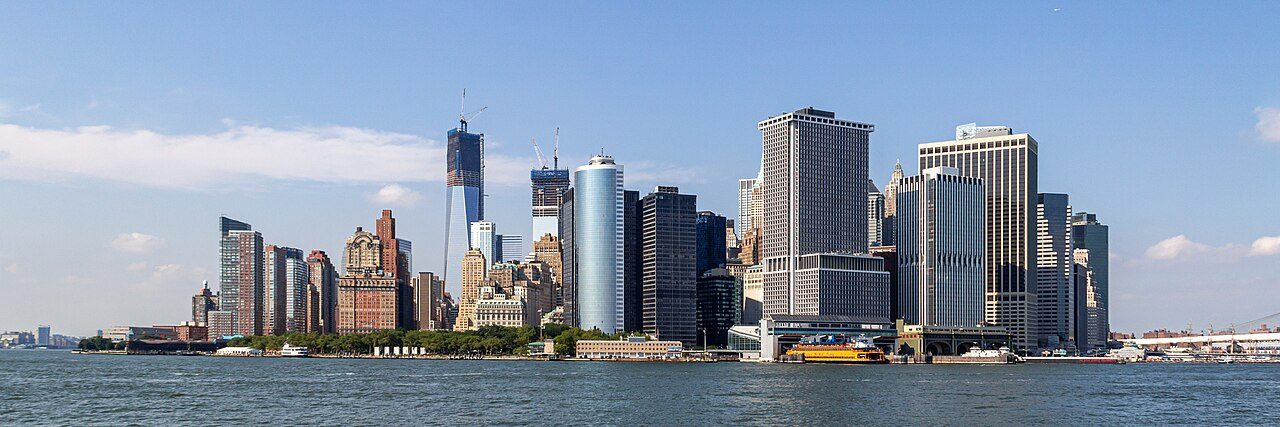
At a Glance
- Indigenous homeland
- Lenapehoking, the homeland of the Lenape; Manhattan was known as Manahatta
- Dutch settlement
- Fort Amsterdam founded in 1625 at Manhattan's southern tip; the settlement became New Amsterdam
- The 1626 record
- A letter by Pieter Schagen reports Manhattan was purchased for goods worth 60 guilders; no deed survives
- English takeover
- In 1664 the English seized New Amsterdam and renamed it New York for the Duke of York
- Ellis Island
- The federal immigration station opened 1 January 1892 and processed over 12 million people by 1954, according to the National Park Service
- Five boroughs
- Manhattan, Brooklyn, the Bronx, Queens and Staten Island, consolidated as one city in 1898
- Skyscraper race
- The Chrysler Building took the world height title in 1930; the Empire State Building, opened 1 May 1931, held it until 1970
Introduction
Britannica describes New York as the largest and most influential American metropolis, a port at the mouth of the Hudson River where the Hudson and East rivers empty into one of the world's premier harbours. Since the first United States census in 1790 it has been the country's largest city. That scale is recent. For thousands of years the site was Indigenous land, for forty years it was a small Dutch trading town, and for more than a century after the English takeover it remained a modest port. Its history is therefore not a straight rise, but a series of reinventions on the same harbour.
This page traces the documented history: Lenape life before Europeans, the Dutch colony of New Amsterdam, the English and American city that followed, the immigration gateway at Ellis Island, and the skyscraper race that gave New York its skyline. It is a history of a place, not a guide to visiting it.
Lenape Land and the Arrival of the Dutch
Before any European settlement, the area was part of Lenapehoking, the homeland of the Lenape people. Munsee-speaking Lenape lived on Manhattan, which they called Manahatta, and across what are now the five boroughs, Long Island and the lower Hudson Valley. They fished, farmed, hunted and traded along the rivers and trails, including the Wickquasgeck trail that later became Broadway. The Smithsonian's National Museum of the American Indian stresses that New York was, and remains, a Native place: the Lenape did not see land as private property that could be owned outright in the European sense.
Europeans came for trade. Giovanni da Verrazzano entered the harbour in 1524, and Henry Hudson sailed up the river that bears his name in 1609 for the Dutch. The Dutch West India Company founded New Netherland in the 1620s. In 1625 construction began on Fort Amsterdam at Manhattan's southern tip, and the settlement around it became New Amsterdam, capital of the colony. It was a company town built for the fur trade, walled against attack - the wall that later gave Wall Street its name - and governed by directors including Peter Minuit and, from 1647, Peter Stuyvesant.
From New Amsterdam to New York
In 1664 an English fleet demanded the colony's surrender. Stuyvesant, unable to rally the settlers to fight, gave up New Amsterdam without a battle. The English renamed it New York, for James, Duke of York, the king's brother. Apart from a brief Dutch recapture in 1673-74, it remained English until the American Revolution. New York was occupied by the British for most of that war, from 1776 to 1783, and then became briefly the new nation's capital: George Washington was inaugurated as the first president at Federal Hall on Wall Street on 30 April 1789.
In the nineteenth century the harbour made the city. The Erie Canal, opened in 1825, linked New York to the Great Lakes and the interior, and by the mid-1800s, Britannica notes, the city handled more than half of the country's oceangoing travellers and commercial trade. After 1900 it was the world's busiest port, a distinction it held until the 1950s. In 1898 the five boroughs - Manhattan, Brooklyn, the Bronx, Queens and Staten Island - were consolidated into the modern City of New York.
Ellis Island and the Skyscraper Race
No institution better symbolises immigrant New York than Ellis Island. The National Park Service records that Ellis Island was the first and largest federal immigration station, receiving over 12 million future Americans between 1892 and 1954. It opened on 1 January 1892; the first person processed was Annie Moore, a seventeen-year-old from County Cork, Ireland. Before Ellis Island, immigrants had been processed by the state at Castle Garden in Battery Park from 1855 to 1890. The Park Service estimates the station's peak and its afterlife plainly: abandoned in 1954, it joined the National Park System in 1965 and reopened in 1990 as the country's primary museum devoted entirely to immigration.
As immigrants filled the city, its builders reached upward. Steel frames, elevators and the 1916 zoning law, which required towers to step back as they rose, produced a new skyline. The NYC Municipal Archives describe the late-1920s race for the world's tallest building: the 1913 Woolworth Building, at 692 feet, held the title until the Chrysler Building's secretly assembled spire lifted it to 1,046 feet in 1930. The Empire State Building, opened on 1 May 1931, then took the title and, the Archives note, was not fully rented until after the Second World War - a reminder that the race was about prestige as much as office space.
Timeline
- Before 1609
Lenape communities live across Lenapehoking, including Manahatta (Manhattan), fishing, farming and trading along the Hudson and East rivers.
- 1524
Giovanni da Verrazzano becomes the first documented European to enter New York Harbour.
- 1625
Construction begins on Fort Amsterdam at Manhattan's southern tip; the settlement becomes New Amsterdam, capital of Dutch New Netherland.
- 1626
Pieter Schagen's letter reports that Manhattan was purchased from its Indigenous inhabitants for goods worth 60 guilders.
- 1664
The English seize New Amsterdam and rename it New York for the Duke of York.
- 30 April 1789
George Washington is inaugurated as the first United States president at Federal Hall in New York.
- 1825
The Erie Canal opens, linking New York City by water to the Great Lakes and the American interior.
- 1 January 1892
Ellis Island opens as a federal immigration station; Annie Moore of Ireland is the first person processed.
- 1898
Manhattan, Brooklyn, the Bronx, Queens and Staten Island are consolidated into the modern City of New York.
- 1930-1931
The Chrysler Building, then the Empire State Building (opened 1 May 1931), take the title of world's tallest building.
- 11 September 2001
Terrorist attacks destroy the World Trade Center's twin towers, for three decades a symbol of the city's global role.
Significance
New York's significance is that so much of American history passed through its harbour: Dutch colonists, English rule, the first presidency, and, above all, immigration. Britannica observes that for two centuries New York has been the largest and wealthiest American city, and that more than half the people and goods that ever entered the United States once came through its port. Its names became shorthand for whole industries - Wall Street for finance, Broadway for theatre, Madison Avenue for advertising - because the port's trade concentrated them there.
Myths and disputes
Did the Dutch buy Manhattan for $24 worth of beads? That version is a simplified legend, and this page flags it as such. The only contemporary record is Schagen's letter of November 1626, which says the island was purchased for the value of 60 guilders and does not mention beads at all. No deed survives, and the letter does not name the Indigenous participants. The $24 figure came much later, when the nineteenth-century historian John Romeyn Brodhead converted 60 guilders into dollars. Sixty guilders was worth far more than a modern $24 in any case - roughly a thousand modern dollars by common estimates.
The deeper dispute is what the exchange meant. The Smithsonian's National Museum of the American Indian explains that the Lenape did not believe land could be privately owned, like water or air, and interpreted such exchanges as gifts for the right to share the land. The Dutch recorded a permanent purchase. Without a Lenape written account, historians cannot show that both sides understood the same agreement - only that the Dutch claimed one, and that Lenape dispossession followed as settlement, disease and war drove them from their homeland.
Legacy
New York's legacy is layered into its map. Dutch names survive in Harlem, Brooklyn, Staten Island and the Bowery; Wall Street follows the line of New Amsterdam's wall; Broadway follows a Lenape trail. Ellis Island, now a museum of immigration, preserves the other founding story - the millions who arrived by ship and made the modern city. And the skyline, born of the 1920s race to the sky, remains the city's worldwide image: a harbour city that began as Lenape land and a fur-trading fort, and became a world city in commerce and outlook.
Sources
- Encyclopaedia Britannica - New York City
- National Park Service - Frequently Asked Questions: Ellis Island
- Smithsonian Magazine - The True Native New Yorkers Can Never Truly Reclaim Their Homeland
- NYC Department of Records and Information Services - Race to the Top
- Smithsonian National Museum of the American Indian - Did Native People Really Sell Manhattan?
The facts on this page were checked against these sources on 19 November 2026. The History Trail's permanent pages are researched and written for this site; the live profiles elsewhere on The History Trail are assembled automatically from Wikipedia and Wikidata.
About the Author
Researched and written by the The History Trail Editorial Team — the accountable editorial function behind this site's permanent story pages. The team works from the published sources cited on each page; it does not invent historians, reviewers or credentials, and it corrects errors openly.
Fact Check
Every load-bearing fact on this page traces to one of the sources listed above, and significant claims link to their source in the text. Our checking method is described on the methodology page; errors can be reported via the corrections page.
Sources & Citations
Cite this page as: The History Trail Editorial Team, The History Trail — this article's title, publication and update dates are shown beneath its headline. The full source list appears under Sources above; the site's source standards are on the sources page.