
On This Day
May 1 in History
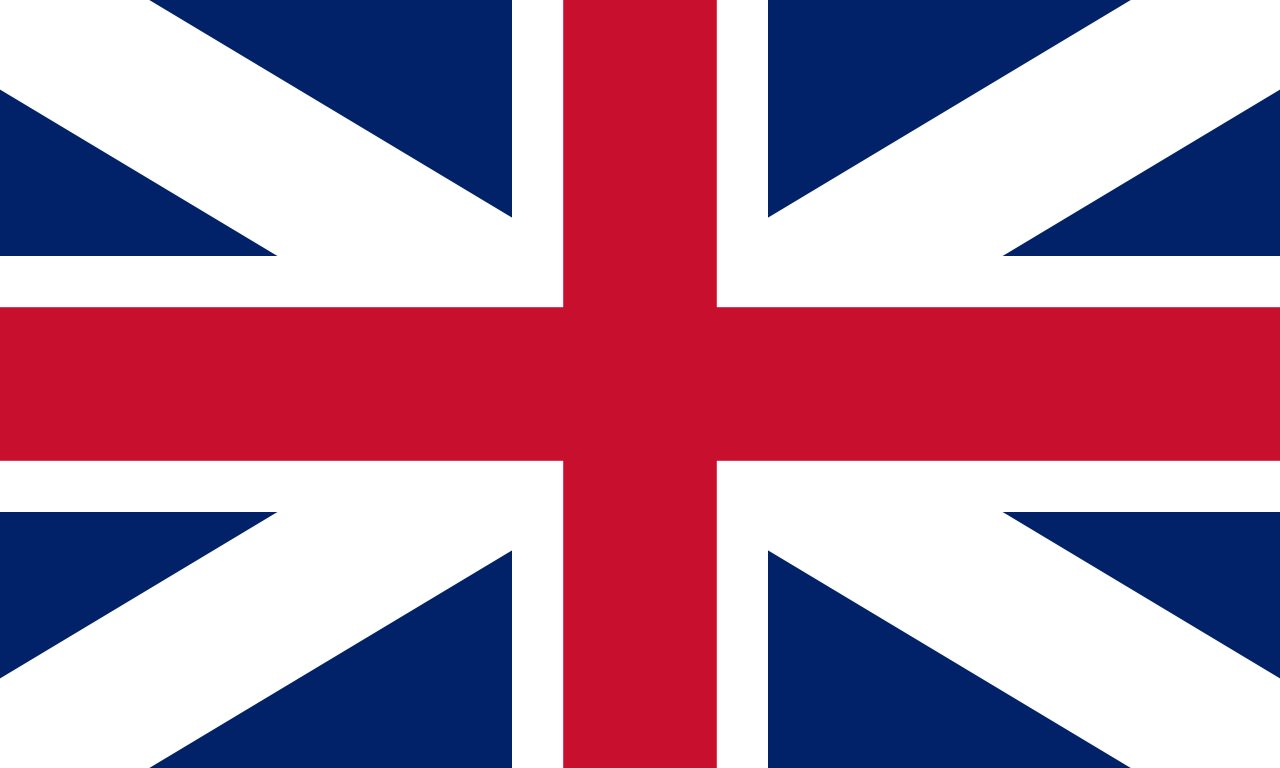
On 1 May 1707 the Acts of Union took effect and two old kingdoms, England and Scotland, became one state: the Kingdom of Great Britain, with a single parliament at Westminster. May 1 is also the day the Great Exhibition opened in 1851, the Empire State Building opened in 1931, an American U-2 spy plane was shot down over the Soviet Union in 1960, and International Workers' Day is marked around the world.
Choose another date: open the On This Day calendar to browse events, births and deaths for any day of the year.
At a Glance
- The treaty
- The Treaty of Union, agreed on 22 July 1706, set the terms that the two parliaments then enacted
- Taking effect
- 1 May 1707 — the English and Scottish parliaments unite into the Parliament of Great Britain
- One kingdom
- Article I united the two kingdoms 'into One Kingdom by the Name of GREAT BRITAIN'
- What Scotland kept
- Its own legal system, its church settlement and its universities were protected by the settlement
- The monarch
- Queen Anne, already queen of both kingdoms, became the first monarch of Great Britain
- The long sequel
- Ireland joined in 1801, creating the United Kingdom of Great Britain and Ireland
Events on this day
- 1707The Acts of Union take effect, uniting England and Scotland into the Kingdom of Great Britain — the featured story above.
- 1840The Penny Black, the world's first adhesive postage stamp, is issued in Britain, designed under Sir Rowland Hill's postal reforms.
- 1851Queen Victoria opens the Great Exhibition at the Crystal Palace in London, the first world's fair, visited by some six million people.
- 1866A white mob in Memphis, Tennessee, begins a three-day attack on Black residents; 46 people are killed, and the violence helps spur the Fourteenth Amendment.
- 1886Rallies across the United States demand the eight-hour working day — the movement from which International Workers' Day on May 1 descends.
- 1898At the Battle of Manila Bay, the U.S. Asiatic Squadron under Commodore George Dewey destroys the Spanish Pacific fleet in the Spanish-American War.
- 1931The Empire State Building, then the tallest building in the world, opens in New York City.
- 1941Orson Welles's film Citizen Kane premieres in New York, later judged by many critics the greatest film ever made.
- 1960An American U-2 spy plane piloted by Francis Gary Powers is shot down over the Soviet Union, wrecking a Paris summit.
- 1971Amtrak begins service in the United States, taking over intercity passenger trains from the private rail companies.
- 1999The body of British mountaineer George Mallory is found on Mount Everest, 75 years after he disappeared near the summit in 1924.
- 2004Ten countries, eight of them former communist states, join the European Union in its largest single enlargement.
Born on this day
- 1769Arthur Wellesley, Duke of Wellington — Irish-born soldier who defeated Napoleon at Waterloo and later served as British prime minister.
- 1830Mary Harris Jones — Irish-born American labour organiser known as Mother Jones, a formidable voice for miners and child workers.
- 1852Calamity Jane — American frontierswoman, born Martha Jane Cannary in Missouri, whose legend outgrew the facts of her life.
- 1916Glenn Ford — Canadian-American film actor, star of Gilda and The Big Heat.
- 1923Joseph Heller — American novelist whose Catch-22 gave the language a word for an absurd no-win dilemma.
- 1969Wes Anderson — American film director of The Royal Tenenbaums and The Grand Budapest Hotel.
Died on this day
- 1873David Livingstone — Scottish missionary and explorer of Africa, found dead at Ilala in present-day Zambia.
- 1904Antonin Dvorak — Czech composer of the New World Symphony, dead in Prague at 62.
- 1945Joseph Goebbels — Nazi propaganda minister, who killed himself and his family in Berlin a day after Hitler's suicide.
- 1994Ayrton Senna — Brazilian racing driver and three-time Formula One world champion, killed in a crash at Imola at 34.
- 1978Aram Khachaturian — Armenian composer of the Sabre Dance and the Gayane ballet, dead in Moscow at 74.
The featured story: the Acts of Union take effect, 1 May 1707
England and Scotland had shared a monarch since 1603, when James VI of Scotland inherited the English throne, but for a century they remained separate kingdoms with separate parliaments, laws and churches. By 1706 both sides had reasons, of very different kinds, to end the arrangement. England, at war with France, wanted its northern border secure and the Protestant succession guaranteed in Scotland. Scotland, whose Darien colony in Panama had collapsed with heavy losses, wanted access to English markets and colonial trade. Commissioners negotiated a Treaty of Union in the summer of 1706, and the two parliaments then passed the Acts that gave it force.
The settlement was detailed and, in places, deliberately protective. There would be one kingdom, one parliament and one flag, and the Hanoverian succession would apply in both countries. Scotland kept its own legal system and courts, its Presbyterian church settlement was secured, and its universities and burgh privileges survived. Scottish peers and commoners took seats at Westminster in numbers far smaller than England's, a grievance that lasted, but Scotland gained free trade with England and its colonies — the economic prize its negotiators had sought. The Scottish parliament's last act was to vote itself out of existence.
On 1 May 1707 the union took effect. Queen Anne, who had pressed for the union in speech after speech, became the first sovereign of Great Britain, and the new Parliament of Great Britain met at Westminster, in the home of the old English parliament. In Scotland the reaction was bitter in the streets even where it was accepted in the counting houses: many Scots saw the treaty as a surrender bought with English gold, and the union remained contested for decades, through two Jacobite risings fought partly in its name.
Judged over three centuries, the union built one of the most durable states in Europe. The combined kingdom became the core of a global trading and industrial power, while Scotland, keeping its law, church and schools, developed a distinct national life inside it. The argument the treaty began has never entirely closed — it runs through the creation of the Scottish Parliament in 1999 and the independence referendum of 2014 — which is why 1 May 1707 is not a footnote but a founding date: the day the state that became the United Kingdom began.
Why this date matters
May 1 carries two identities that have never quite reconciled. For most of the world it is the workers' day, born of the American eight-hour movement of 1886 and the repression that followed it; in Britain its older self survives as May Day, a spring festival. The date's political history is just as double: it founded a kingdom in 1707, opened the temple of industry at the Crystal Palace in 1851, and in the Cold War became the stage for rival parades — and, in 1960, for the U-2 shootdown that poisoned a summit. Few dates hold founding, festival and protest in quite this balance.
Sources
- Encyclopaedia Britannica — On This Day: May 1
- HISTORY — What Happened on May 1
- UK Parliament — The Acts of Union
- National Records of Scotland — Treaty of Union
- Encyclopaedia Britannica — Acts of Union
The facts on this page were checked against these sources on 19 November 2026. The History Trail's permanent pages are researched and written for this site; the live profiles elsewhere on The History Trail are assembled automatically from Wikipedia and Wikidata.
About the Author
Researched and written by the The History Trail Editorial Team — the accountable editorial function behind this site's permanent story pages. The team works from the published sources cited on each page; it does not invent historians, reviewers or credentials, and it corrects errors openly.
Fact Check
Every load-bearing fact on this page traces to one of the sources listed above, and significant claims link to their source in the text. Our checking method is described on the methodology page; errors can be reported via the corrections page.
Sources & Citations
Cite this page as: The History Trail Editorial Team, The History Trail — this article's title, publication and update dates are shown beneath its headline. The full source list appears under Sources above; the site's source standards are on the sources page.