
Years
1912 in History
1912 is the year the unsinkable sank. The White Star liner Titanic, the largest moving object humans had built, struck an iceberg on her maiden voyage and went down in the North Atlantic with the loss of some 1,500 lives. The same year, a six-year-old's abdication ended two thousand years of imperial China, and Captain Scott reached the South Pole to find he had been beaten to it.
At a Glance
- Defining event
- The Titanic sinks in the early hours of 15 April, two hours and forty minutes after striking an iceberg; of about 2,200 aboard, some 1,500 die
- The voyage
- Titanic departs Southampton on 10 April with some 2,200 people aboard, bound for New York
- Imperial ending
- The six-year-old Qing emperor Puyi abdicates on 12 February, ending more than 2,000 years of imperial rule in China
- Polar tragedy
- Scott reaches the South Pole on 17 January, a month after Amundsen; he and his companions die on the return journey
- Born this year
- Alan Turing, born 23 June — the mathematician who would formalise computing and lead the Enigma codebreaking effort
- Election
- Woodrow Wilson is elected U.S. president on 5 November, defeating Taft and Theodore Roosevelt in a three-way race
The defining story: the Titanic and the end of an age of confidence
The year of endings began with the greatest of them. The emperor who ended two thousand years of Chinese imperial history was six years old, and he did not sign anything. On 12 February 1912 the Empress Dowager Longyu, acting for the child emperor Puyi, issued the Imperial Edict of Abdication, surrendering the sovereignty of the Qing dynasty to the new Republic of China. The terms were strikingly gentle: under the Articles of Favourable Treatment, Puyi kept his imperial title, a large allowance, his servants and his home in the Forbidden City, where a miniature court continued for another twelve years. Few fallen dynasties have been pensioned off so politely.
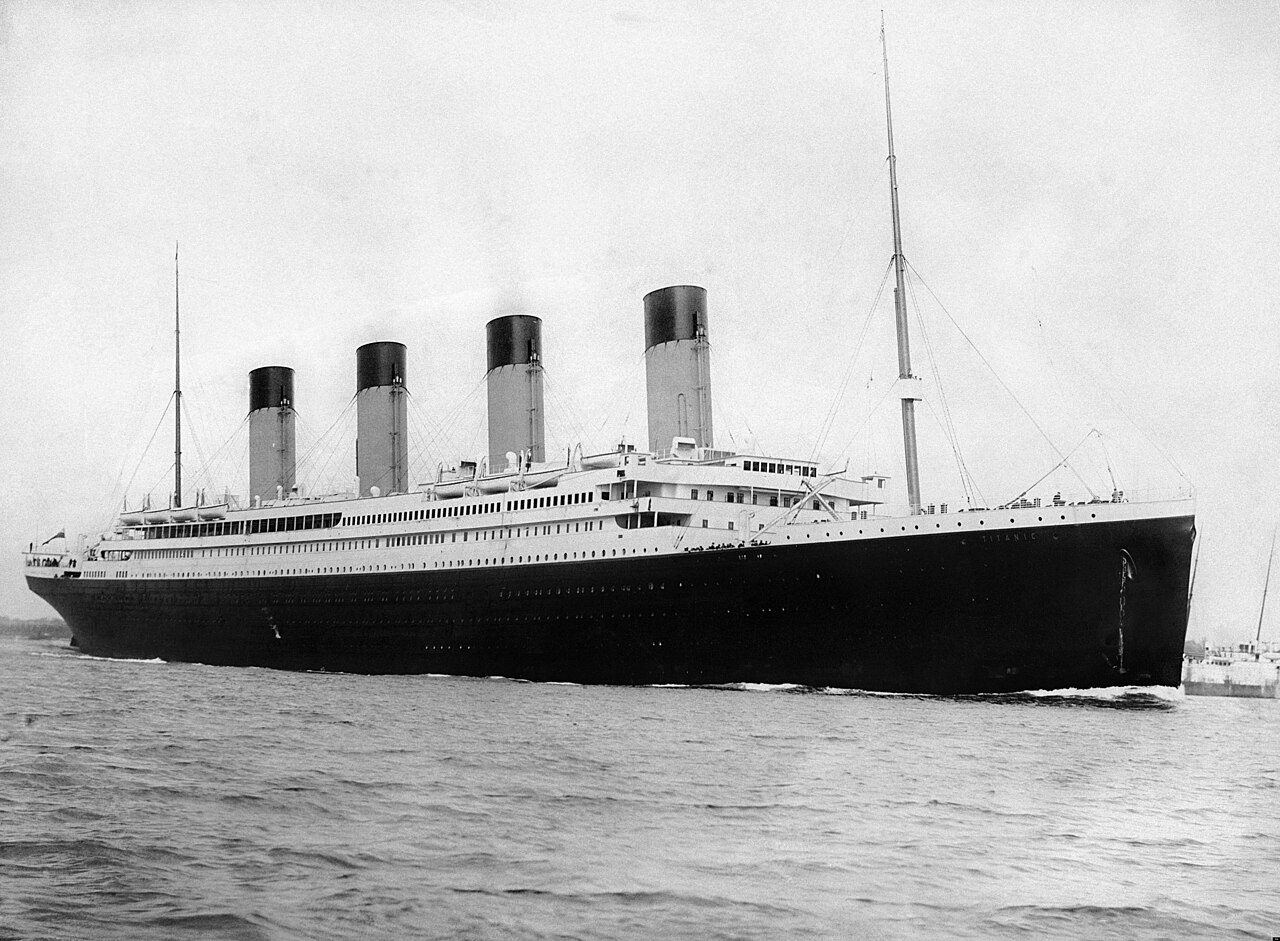
Titanic left Southampton on 10 April 1912 as the largest moving object human beings had built: 883 feet long, with a swimming pool, a gymnasium, and watertight doors that could be closed from the bridge. Her owners called her, in careful language, practically unsinkable; the press dropped the qualifier. Her maiden voyage drew the age in miniature — millionaires in first class, emigrants in third, some 2,200 people in all — and Captain Edward Smith, the White Star Line's most trusted commodore, making what was to have been his final crossing before retirement.
The North Atlantic that April was full of ice, and warnings reached Titanic by wireless all through 14 April; at least one, from the Mesaba, reporting heavy pack ice directly in her path, never reached the bridge. She steamed on at about 22 knots. At 11:40 p.m. the lookout, Frederick Fleet, rang the bell three times — iceberg, right ahead. The ship turned, but her starboard side brushed the ice for some seven seconds, and below, the sea poured in across five compartments. What followed was orderly, slow and fatally short of boats: Titanic carried lifeboats for about half the people aboard, legal under regulations written for smaller ships, and the early boats were lowered partly filled. The Californian, stopped in the ice perhaps twenty miles away, saw her rockets and did not come; the Carpathia, 58 miles off, raced through the icefield at record speed.
At 2:20 a.m. on 15 April, her lights still blazing, the ship sank — two hours and forty minutes after the collision. Of about 2,200 aboard, some 1,500 died. The rest of the year ran on at the old world's pace: Harriet Quimby became the first woman to fly the English Channel the day after the sinking; Washington's famous cherry trees, a gift from Japan, were planted by the Tidal Basin; the African National Congress was founded in Bloemfontein; Alan Turing was born in June; in October former president Theodore Roosevelt was shot in the chest while campaigning — and delivered his scheduled speech before seeking treatment; and in November Woodrow Wilson won a three-way presidential race.
Timeline of 1912
- 6 January
New Mexico is admitted to the Union as the 47th state.
- 8 January
The South African Native National Congress, later the African National Congress, is founded in Bloemfontein.
- 17 January
Captain Robert Falcon Scott reaches the South Pole, a month after Roald Amundsen; Scott and his companions die on the return journey.
- 12 February
The last emperor of China abdicates, ending more than 2,000 years of imperial rule.
- 27 March
The first of Washington's famous cherry trees are planted by the Tidal Basin, a gift of friendship from Japan.
- 29 March
Robert Falcon Scott makes his last diary entry in his tent on the return from the South Pole.
- 10 April
RMS Titanic departs Southampton on her maiden voyage to New York.
- 15 April
The Titanic sinks in the North Atlantic in the early hours, after striking an iceberg late on 14 April.
- 16 April
Harriet Quimby becomes the first woman to fly across the English Channel.
- 23 June
Alan Turing is born — the mathematician who would formalise computing and lead the Enigma codebreaking effort.
- 14 October
Former president Theodore Roosevelt is shot in the chest in Milwaukee while campaigning — and delivers his scheduled speech before seeking treatment.
- 5 November
Woodrow Wilson is elected president of the United States in a three-way race.
- 12 November
The bodies of Captain Scott and his companions are found in their tent on the Ross Ice Shelf, eight months after they died.
Why 1912 still matters
1912 still matters because the Titanic rewired the rules of the sea. The disaster was a failure not of one ship but of a regulatory world built for smaller vessels: lifeboats for only about half the people aboard were legal, ice warnings could die in a wireless room, and a nearby ship could watch rockets and stay put. The inquiries that followed made the liner, in the words of this site's own account, the ship that changed the rules — and her Marconi wireless, whose distress calls brought Carpathia racing to the scene, proved at once the value of the new technology and the cost of leaving it unattended.
The year's other endings marked the old order's retreat. China's negotiated abdication avoided an immediate bloodbath at the revolution's centre — a pointed contrast with the fate of the Romanovs in Russia six years later. Scott's death march became the defining story of heroic failure, retold for a century. And in a Bloemfontein church hall, the founding of what became the African National Congress began a struggle that would run for the rest of the century. In 1912 the nineteenth century's confidence — in progress, in size, in empire — met the ice, and lost.
Other 1912 beginnings ran quietly underneath the disasters. In March, Juliette Gordon Low formed the first American Girl Guides troop in Savannah, Georgia — the beginning of the Girl Scouts of the USA. In April, Fenway Park, home of the Boston Red Sox, hosted its first major league game. Washington's cherry trees, planted in March as a gift of friendship from Japan, still define the capital's spring. And Alan Turing, born in June, would within three decades formalise computing and lead the Enigma codebreaking effort at Bletchley Park — the disaster year's most consequential birth.
1912 on The History Trail
The History Trail tells 1912 through the Titanic's voyage, China's last emperor and the race for the Pole.
- February 12 in History — the last emperor of China abdicates, ending more than 2,000 years of imperial rule.
- April 10 in History — Titanic departs Southampton on her maiden voyage.
- April 15 in History — the Titanic sinks in the North Atlantic.
- RMS Titanic — the ship that changed the rules — the full story of the liner and the disaster.
- Titanic (1997 film) — how the disaster became the defining film of its story.
Sources
- Encyclopaedia Britannica — Titanic
- Encyclopaedia Britannica — On This Day: April 15
- HISTORY — What Happened on April 15
- Encyclopaedia Britannica — On This Day: April 10
- HISTORY — What Happened on February 12
- Encyclopaedia Britannica — On This Day: February 12
The facts on this page were checked against these sources on 19 November 2026. The History Trail's permanent pages are researched and written for this site; the live profiles elsewhere on The History Trail are assembled automatically from Wikipedia and Wikidata.
About the Author
Researched and written by the The History Trail Editorial Team — the accountable editorial function behind this site's permanent story pages. The team works from the published sources cited on each page; it does not invent historians, reviewers or credentials, and it corrects errors openly.
Fact Check
Every load-bearing fact on this page traces to one of the sources listed above, and significant claims link to their source in the text. Our checking method is described on the methodology page; errors can be reported via the corrections page.
Sources & Citations
Cite this page as: The History Trail Editorial Team, The History Trail — this article's title, publication and update dates are shown beneath its headline. The full source list appears under Sources above; the site's source standards are on the sources page.