
Years
1911 in History
1911 is remembered for arrivals at the ends of the earth and revelations at home: on 14 December Roald Amundsen and four companions became the first people to stand at the South Pole, and on 24 July Hiram Bingham was led to the Inca citadel of Machu Picchu. In New York, the Triangle Shirtwaist fire of 25 March killed 146 garment workers behind locked doors and drove a generation of workplace safety law; in Paris, the theft of the Mona Lisa made a painting world-famous.
At a Glance
- Defining event
- Amundsen reaches the South Pole, 14 December — about five weeks ahead of Scott
- Rediscovery
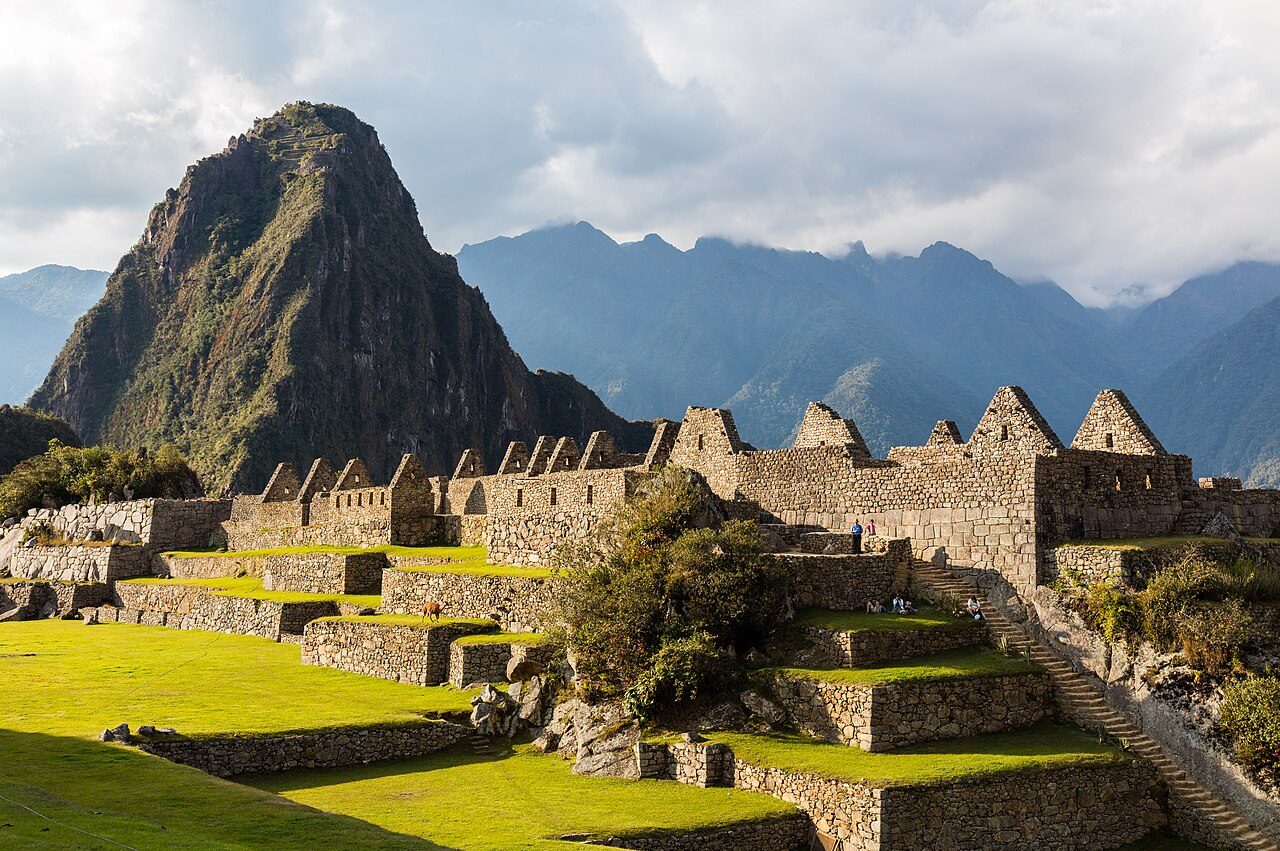
- Hiram Bingham is led to Machu Picchu, 24 July
- Disaster
- Triangle Shirtwaist fire, New York, 25 March — 146 garment workers killed
- Theft
- The Mona Lisa is stolen from the Louvre, 21 August; recovered in Florence in 1913
- Empire ends
- Wuchang Uprising, 10 October, begins the revolution that ends imperial China
- Computing begins
- Computing-Tabulating-Recording Company founded 16 June — renamed IBM in 1924
The defining story: the race to the bottom of the world
The race for the South Pole was not supposed to involve Roald Amundsen at all. The Norwegian had borrowed the ship Fram and raised money for an expedition to the North Pole — then, when rival claims made the northern prize worthless, he changed his mind in secret. He sailed south in 1910 still publicly bound for the Arctic, and revealed the true destination only at Madeira, from where a blunt telegram told his rival, Robert Falcon Scott, that the race was on. Scott was already camped in Antarctica preparing his own attempt.
Amundsen built his base, Framheim, at the Bay of Whales on the Ross Ice Shelf and spent the Antarctic winter preparing with a discipline learned from the Inuit and from his own crossing of the Northwest Passage. Where Scott relied on ponies and motor sledges as well as men and dogs, Amundsen staked everything on skis and Greenland dogs — 52 of them for the polar journey. After one false start in the spring cold, the real attempt began on 19 October: five men, four sledges, and a route up the previously unknown Axel Heiberg Glacier onto the polar plateau.
On 8 December they passed the farthest point south reached by Ernest Shackleton three years earlier. Six days later, in the early afternoon of 14 December 1911, the dog drivers called a halt at the same instant: their sledge-meters showed the full distance. The five men planted the Norwegian flag, named the plateau for King Haakon VII, and spent three days taking observations to fix the Pole's position. They had beaten Scott's British party by about five weeks — a margin built entirely on preparation, dogs and the willingness to keep the plan secret until secrecy no longer mattered.
The same year delivered its wonders in warmer places. On 24 July a Peruvian farmer, Melchor Arteaga, and a young boy from a family farming the terraces led Yale historian Hiram Bingham up a jungle ridge to Machu Picchu, the Inca citadel whose photographs, published worldwide in 1913, made it famous; archaeologists now read it as a royal estate of the emperor Pachacuti. In China, the Wuchang Uprising of 10 October set off the Xinhai Revolution that ended two thousand years of imperial rule, and on 29 December Sun Yat-sen was elected provisional president of the Republic of China.
Timeline of 1911
- 25 March
Fire at the Triangle Shirtwaist factory in New York kills 146 garment workers, trapped by locked doors.
- 21 May
French troops occupy Fez in Morocco, a move that sparks the Second Moroccan Crisis with Germany.
- 23 May
The New York Public Library is dedicated, in a ceremony presided over by President Taft.
- 30 May
The first Indianapolis 500 motor race is run and won by Ray Harroun.
- 16 June
The Computing-Tabulating-Recording Company is founded in New York; renamed in 1924, it becomes IBM.
- 24 July
Hiram Bingham is led to the Inca citadel of Machu Picchu in Peru.
- 21 August
The Mona Lisa is stolen from the Louvre in Paris by Vincenzo Peruggia, an Italian workman.
- 29 September
Italy declares war on the Ottoman Empire, beginning the Italo-Turkish War over Libya.
- 10 October
The Wuchang Uprising begins in China, setting off the revolution that ends imperial rule.
- 1 November
Italian lieutenant Giulio Gavotti drops grenades over Ottoman forces in Libya — the first aerial bombing in warfare.
- 14 December
Roald Amundsen and four companions reach the South Pole, the first people to stand there.
- 27 December
'Jana Gana Mana', the future national anthem of India, is sung publicly for the first time in Calcutta.
- 29 December
Sun Yat-sen is elected provisional president of the Republic of China in Nanjing.
Why 1911 still matters
Amundsen's triumph is still the textbook case of preparation defeating romance: dogs against ponies, skis against motors, a base placed closer to the goal, and a leader who treated the journey as a transport problem to be solved rather than a ordeal to be endured. Scott's party reached the Pole weeks later and died on the return, which fixed the two expeditions in memory as opposites — efficiency and tragedy — and made 14 December 1911 the date exploration's heroic age effectively closed, its last great geographical prize taken.
At home, 1911 taught harder lessons. The Triangle fire — 146 dead in half an hour, the owners acquitted, the families paid $75 for each life — became the disaster that taught America to regulate its workplaces, driving a generation of safety law. The Mona Lisa's theft did the opposite work for fame: a portrait admired within the art world, hidden in the false bottom of a trunk in a Paris boarding house for over two years, became through newspaper coverage the most famous painting on earth — the clearest early case of mass-media celebrity attaching to an object.
And the year's quiet foundings outlasted its spectacles. The company incorporated on 16 June as the Computing-Tabulating-Recording Company became IBM. The first Indianapolis 500 began a century of American motor racing. The first aerial bombing, Gavotti's grenades over Libya on 1 November, opened a form of warfare that has never closed. Even Machu Picchu's fame was a beginning: the site Bingham publicised — never lost to the families farming its terraces — became the emblem of Peru and of the Inca world.
1911 on The History Trail
All three of this year's featured days are here, along with the story of the painting the year's theft made famous.
- March 25 in History — The Triangle Shirtwaist fire kills 146 garment workers in New York.
- July 24 in History — Hiram Bingham is led to Machu Picchu in the Peruvian Andes.
- December 14 in History — Amundsen and four companions reach the South Pole.
- Mona Lisa — The portrait Leonardo never gave away — and the 1911 theft that made it world-famous.
- August 21 in History — The Mona Lisa is stolen from the Louvre by Vincenzo Peruggia.
- October 10 in History — The Wuchang Uprising begins the revolution that ends imperial China.
Sources
- Encyclopaedia Britannica — On This Day: March 25
- HISTORY — What Happened on July 24
- Encyclopaedia Britannica — On This Day: December 14
- Encyclopaedia Britannica — On This Day: August 21
- Encyclopaedia Britannica — On This Day: October 10
- Encyclopaedia Britannica — On This Day: June 16
The facts on this page were checked against these sources on 19 November 2026. The History Trail's permanent pages are researched and written for this site; the live profiles elsewhere on The History Trail are assembled automatically from Wikipedia and Wikidata.
About the Author
Researched and written by the The History Trail Editorial Team — the accountable editorial function behind this site's permanent story pages. The team works from the published sources cited on each page; it does not invent historians, reviewers or credentials, and it corrects errors openly.
Fact Check
Every load-bearing fact on this page traces to one of the sources listed above, and significant claims link to their source in the text. Our checking method is described on the methodology page; errors can be reported via the corrections page.
Sources & Citations
Cite this page as: The History Trail Editorial Team, The History Trail — this article's title, publication and update dates are shown beneath its headline. The full source list appears under Sources above; the site's source standards are on the sources page.