
Years
1979 in History
1979 is remembered as the year the 1970s ended early: revolution in Iran drove out the Shah and brought Ayatollah Khomeini home, Egypt and Israel signed the first peace between Israel and an Arab state, Margaret Thatcher became Britain's first female prime minister, Iranian students seized the American embassy in Tehran — and in December smallpox was certified eradicated, the first disease deliberately wiped out.
At a Glance
- Defining event
- Smallpox certified eradicated, 9 December — the first, and still only, deliberate eradication of a human disease
- Revolution
- The Shah flees Iran, 16 January; Khomeini returns, 1 February
- Peace
- Egypt–Israel peace treaty signed in Washington, 26 March
- Accident
- Partial meltdown at Three Mile Island, 28 March — the worst U.S. commercial nuclear accident
- Britain
- Margaret Thatcher wins the general election, 3 May, and takes office the next day
- Crisis begins
- U.S. embassy seized in Tehran, 4 November — the 444-day hostage crisis
- Culture
- Sony puts the Walkman on sale in Japan, 1 July
The defining story: the year smallpox died
The year began with an empire of a different kind collapsing. Vietnamese forces captured Phnom Penh on 7 January and overthrew Pol Pot's Khmer Rouge regime in Cambodia. Nine days later the Shah of Iran fled his country as revolution gathered force, and on 1 February Ayatollah Ruhollah Khomeini returned to Iran in triumph after fifteen years of exile. In March the old order produced one achievement and one warning within two days: on 26 March, on the White House North Lawn, Anwar Sadat and Menachem Begin signed a peace treaty between Egypt and Israel — the first between Israel and an Arab state, exchanging Israeli withdrawal from Sinai for full Egyptian recognition, and still in force. On 28 March a stuck-open relief valve and misread instruments caused a partial meltdown at the Three Mile Island reactor in Pennsylvania, the worst accident in American commercial nuclear history, which halted the industry's growth for a generation.
In Britain the postwar settlement ended at the ballot box. The election itself had been forced by arithmetic: on 28 March James Callaghan's Labour government lost a confidence vote in the Commons by a single vote, 311 to 310, after a winter of strikes. On 3 May the Conservatives under Margaret Thatcher won the general election, and the next day she took office as Britain's first female prime minister, beginning an eleven-year premiership. In November the Iranian revolution turned into a superpower crisis: on 4 November Iranian students stormed the United States embassy in Tehran and seized its staff, beginning the 444-day hostage crisis. On 24 December Soviet forces began their intervention in Afghanistan, airlifting troops into Kabul at the start of a nine-year war.
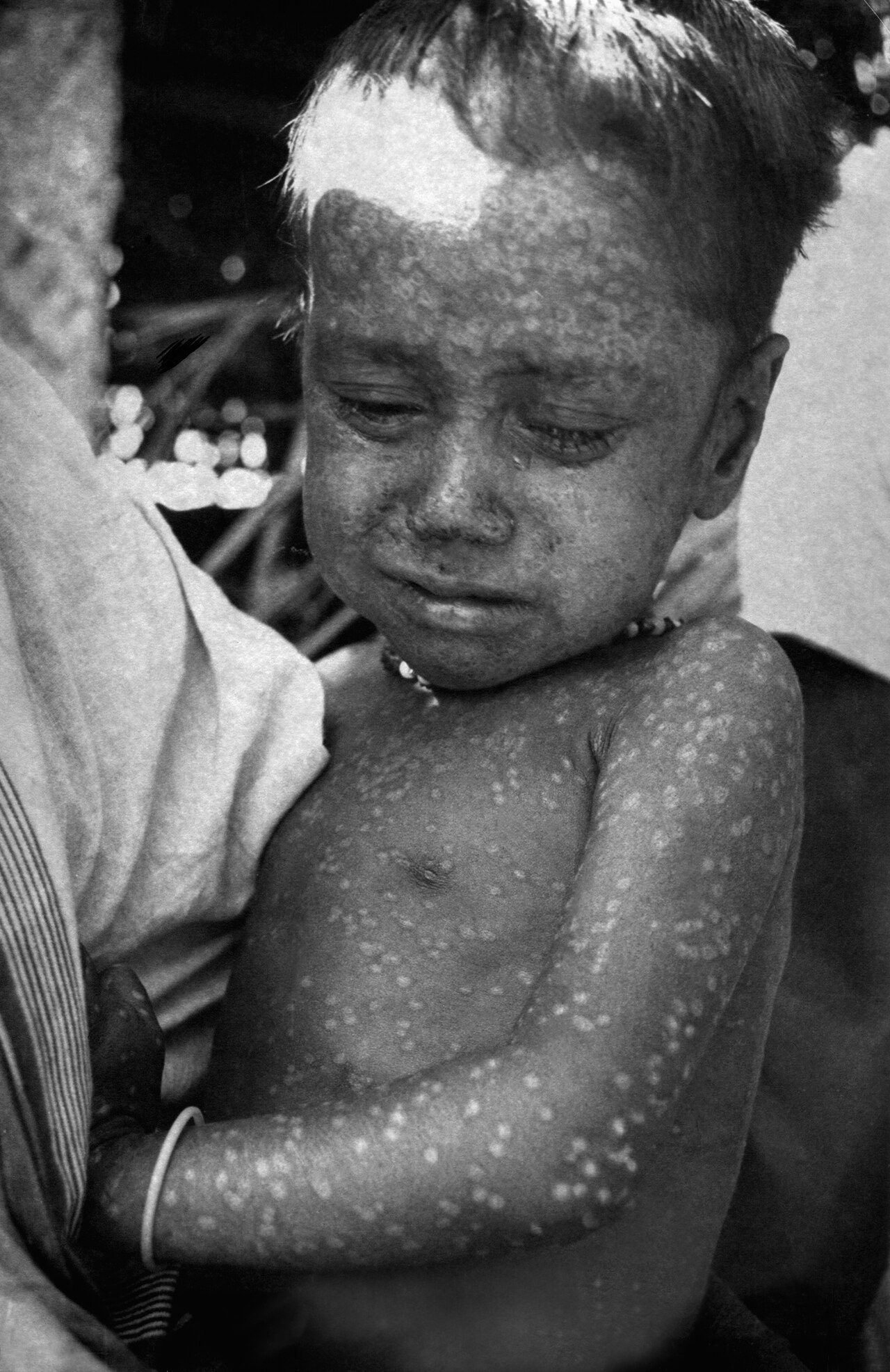
Against those upheavals, the year's greatest event made almost no noise. Smallpox is older than civilisation's records of it: its marks have been found on the mummy of Pharaoh Ramses V, and in the twentieth century alone it is estimated to have killed 300 million people, more than both world wars combined. The last person known to contract naturally occurring variola major, the deadlier form, was Rahima Banu, a two-year-old girl on Bhola Island, Bangladesh, photographed in 1975; her case was reported by an eight-year-old girl, Bilkisunnessa, who received the 250-taka reward offered for finding a case.
On 9 December 1979, in Geneva, the Global Commission for the Certification of Smallpox Eradication signed its final report, certifying the first — and still only — deliberate eradication of a human disease. The World Health Assembly formally accepted the finding in May 1980, which is why both dates appear in official histories, but the deed itself, the scientists' signatures, belongs to 9 December 1979. A scourge of millennia had been ended not by a single discovery but by surveillance, vaccination and paperwork — the commission's parchment was the full stop.
Timeline of 1979
- 7 January
Vietnamese forces capture Phnom Penh and overthrow Pol Pot's Khmer Rouge regime in Cambodia.
- 16 January
The Shah of Iran flees his country as revolution gathers force.
- 1 February
Ayatollah Khomeini returns to Iran in triumph after fifteen years of exile.
- 26 March
Egypt and Israel sign their peace treaty in Washington, the first between Israel and an Arab state.
- 28 March
A partial meltdown begins at Three Mile Island in Pennsylvania, the worst U.S. commercial nuclear accident.
- 11 April
Ugandan dictator Idi Amin flees Kampala as Tanzanian-led forces close in, ending eight years of brutal rule.
- 3 May
Margaret Thatcher's Conservatives win the general election; she takes office as prime minister the next day.
- 1 July
Sony puts the Walkman on sale in Japan, putting personal stereo music in a coat pocket for the first time.
- 27 August
An IRA bomb kills Lord Mountbatten aboard his boat in Ireland; 18 British soldiers die at Warrenpoint the same day.
- 17 October
Mother Teresa is named the winner of the Nobel Peace Prize for her work among the poorest of Calcutta.
- 4 November
Iranian students storm the U.S. embassy in Tehran and seize its staff, beginning the 444-day hostage crisis.
- 9 December
The Global Commission certifies the eradication of smallpox in Geneva.
- 21 December
The Lancaster House Agreement sets the terms for elections and independence in Rhodesia, which becomes Zimbabwe.
- 24 December
Soviet forces begin their intervention in Afghanistan, at the start of a nine-year war.
Why 1979 still matters
Almost every line of the next decade starts in 1979. The Iranian revolution created the Islamic Republic, the hostage crisis poisoned American-Iranian relations for generations, and the Soviet intervention in Afghanistan began a nine-year war whose consequences ran far beyond its ending in 1989. Thatcher's victory began the remaking of Britain's economy and politics, and the Egypt–Israel treaty — assembled in days after Carter flew to Cairo and Jerusalem when talks stalled — proved an Arab-Israeli peace could hold, even as it isolated Egypt among its neighbours.
Three Mile Island froze nuclear power's expansion in the United States for a generation, a caution compounded twelve days earlier by fiction: the thriller The China Syndrome, about a utility covering up a near-meltdown, had opened in cinemas just before the real accident assembled itself from small failures. The Walkman, by contrast, expanded quietly: a cassette player that could not record and had no speaker detached music from the living room and attached it to the listener, a pattern every portable player since has copied.
Smallpox stands apart as the year's — and the century's — clearest victory. Eradication was certified by a commission's signatures in Geneva, not announced by a conqueror, and it remains unique: no other human disease has been deliberately wiped out. That a year remembered for revolutions, accidents and invasions also contains humanity's most complete medical triumph is the best reason to remember 1979 whole. The treaty itself had almost died in its final fortnight: with talks stalled in March, Carter flew to Cairo and then Jerusalem and negotiated in person, and the last compromises — including American commitments on oil supply and a Sinai airbase replacement — were assembled in days. Sony's first Walkman, meanwhile, sold 30,000 units in its first two months, its sceptics notwithstanding.
1979 on The History Trail
Four featured stories belong to 1979 on The History Trail, plus the Walkman, the year's quiet revolution.
- March 26 in History — Egypt and Israel sign their peace treaty on the White House North Lawn.
- March 28 in History — The partial meltdown at Three Mile Island begins in Pennsylvania.
- May 3 in History — Margaret Thatcher wins the general election and becomes prime minister.
- December 9 in History — Smallpox is certified eradicated by the Global Commission in Geneva.
- November 4 in History — Iranian students seize the U.S. embassy in Tehran, beginning the hostage crisis.
- July 1 in History — Sony puts the first Walkman on sale in Japan.
- The Walkman: Sony's Little Box That Privatised Music — How a pocket cassette player of 1979 privatised listening.
Sources
- Encyclopaedia Britannica — On This Day: January 7
- Encyclopaedia Britannica — On This Day: February 1
- US Department of State, Office of the Historian — Camp David Accords and the Arab-Israeli Peace Process
- Smithsonian National Museum of American History — Three Mile Island: The Inside Story
- UK Parliament — Margaret Thatcher
- Encyclopaedia Britannica — On This Day: May 3
The facts on this page were checked against these sources on 19 November 2026. The History Trail's permanent pages are researched and written for this site; the live profiles elsewhere on The History Trail are assembled automatically from Wikipedia and Wikidata.
About the Author
Researched and written by the The History Trail Editorial Team — the accountable editorial function behind this site's permanent story pages. The team works from the published sources cited on each page; it does not invent historians, reviewers or credentials, and it corrects errors openly.
Fact Check
Every load-bearing fact on this page traces to one of the sources listed above, and significant claims link to their source in the text. Our checking method is described on the methodology page; errors can be reported via the corrections page.
Sources & Citations
Cite this page as: The History Trail Editorial Team, The History Trail — this article's title, publication and update dates are shown beneath its headline. The full source list appears under Sources above; the site's source standards are on the sources page.