
On This Day
May 3 in History
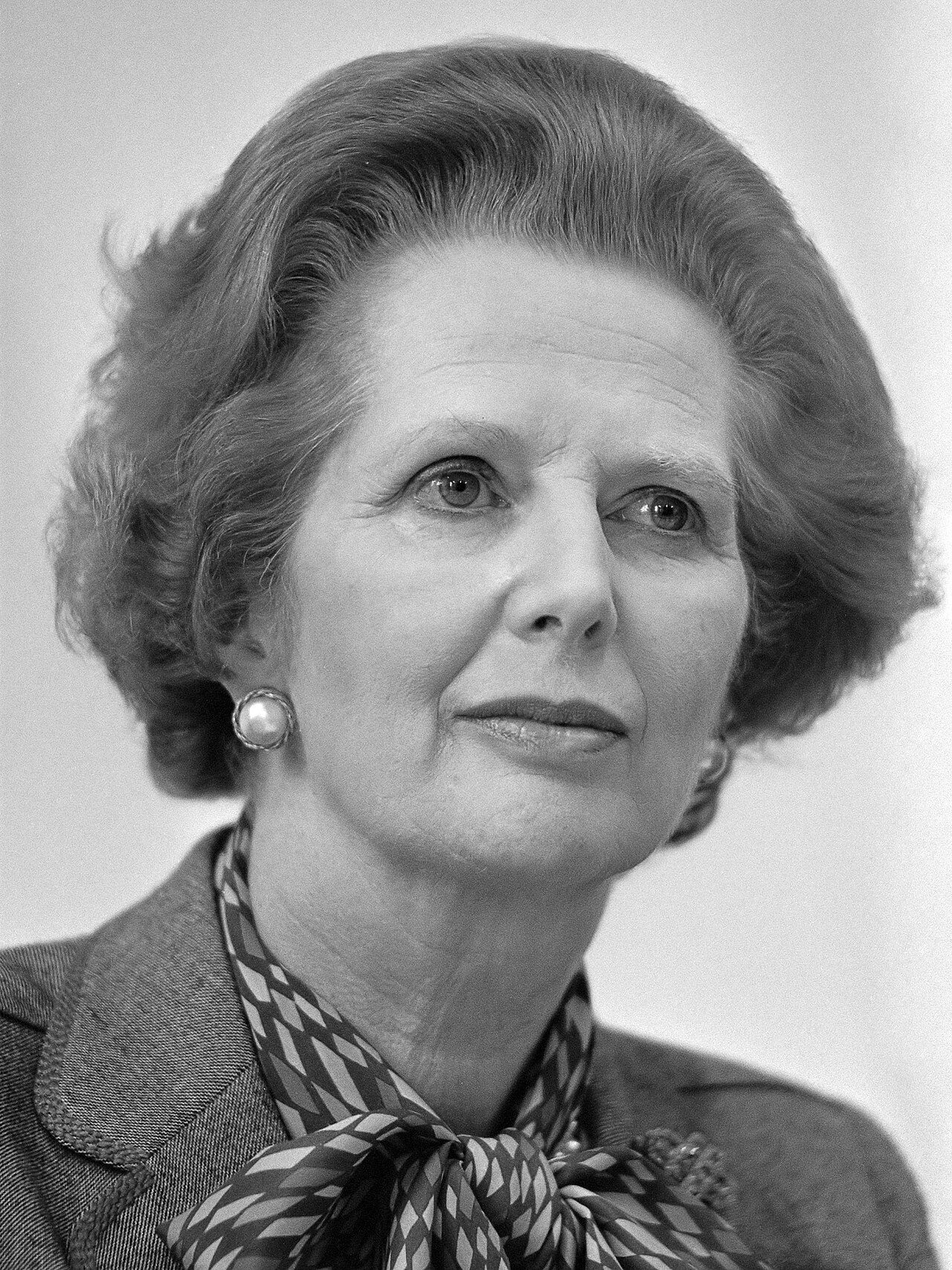
On 3 May 1979 British voters elected the Conservative Party under Margaret Thatcher, who the next day became the first woman to serve as prime minister of the United Kingdom — an office she would hold for eleven and a half years, longer than anyone in the twentieth century. May 3 is also the day the first spam email was sent in 1978, Golda Meir was born in 1898, and Bing Crosby was born in 1903.
Choose another date: open the On This Day calendar to browse events, births and deaths for any day of the year.
At a Glance
- The election
- General election of 3 May 1979, called after James Callaghan's Labour government lost a confidence vote by one vote
- The result
- The Conservatives won 339 seats and a majority of 43 in the House of Commons
- The new prime minister
- Margaret Thatcher, Conservative leader since 1975, took office on 4 May 1979
- The tenure
- Three election victories — 1979, 1983 and 1987 — and resignation in November 1990
- The predecessor
- Labour under James Callaghan, weakened by the strikes of the 1978–79 Winter of Discontent
- The legacy
- Privatisation, trade-union reform and a smaller state reshaped Britain; her supporters and critics still argue over the balance sheet
Events on this day
- 1494Christopher Columbus sights Jamaica, the first European landing on the island, during his second voyage to the Americas.
- 1815The Congress Kingdom of Poland is proclaimed under the Russian crown as the Vienna settlement redraws Europe after Napoleon.
- 1916Padraig Pearse, Thomas MacDonagh and Thomas Clarke are executed in Dublin, the first of the Easter Rising's leaders to be shot.
- 1937Margaret Mitchell's Gone with the Wind wins the Pulitzer Prize for fiction.
- 1947Japan's post-war constitution, drafted under the Allied occupation, comes into force, renouncing war and making the emperor a symbol.
- 1951The Festival of Britain opens in London, a national exhibition meant to lift a rationed, bomb-scarred country.
- 1978Gary Thuerk sends an advertisement to some 400 ARPANET users — the message now remembered as the first spam email.
- 1979Margaret Thatcher's Conservatives win the general election — the featured story above.
- 1999A tornado outbreak strikes Oklahoma, including an F5 tornado that devastates Moore and the Oklahoma City suburbs, killing 36 people.
- 2007Three-year-old Madeleine McCann disappears from a holiday apartment in Praia da Luz, Portugal; the case is never solved.
- 2016Wildfire forces the evacuation of Fort McMurray, Alberta — some 88,000 people flee Canada's costliest natural disaster to that date.
Born on this day
- 1469Niccolo Machiavelli — Florentine diplomat and political writer, author of The Prince.
- 1898Golda Meir — Ukrainian-born leader who became prime minister of Israel during the Yom Kippur War.
- 1903Bing Crosby — American singer and actor whose voice defined popular song for a generation.
- 1919Pete Seeger — American folk singer and activist who carried the folk tradition into the revival of the 1960s.
- 1933James Brown — American singer, the Godfather of Soul.
- 1951Christopher Cross — American singer-songwriter of Sailing and Arthur's Theme.
Died on this day
- 1897Jacob Burckhardt — Swiss historian whose Civilization of the Renaissance in Italy shaped how the period is understood.
- 1990Pimen — Patriarch of Moscow and head of the Russian Orthodox Church through its millennium year, dead at 79.
- 2008Leopoldo Calvo-Sotelo — former prime minister of Spain, dead in Madrid at 82.
- 2011Jackie Cooper — American actor, a child star of the 1930s who became a television director, dead at 88.
- 2016Jadranka Stojakovic — Bosnian singer-songwriter known across Yugoslavia, dead in Banja Luka at 65.
The featured story: Margaret Thatcher wins the general election, 3 May 1979
The election of May 1979 was born in a corridor vote. On 28 March, James Callaghan's Labour government lost a motion of confidence in the House of Commons by a single vote — 311 to 310 — the first government since 1924 to be forced into an election that way. Behind the vote lay a miserable winter: the Winter of Discontent, months of strikes by lorry drivers, refuse collectors and gravediggers that had broken Labour's pay policy and its reputation for competence. The Conservatives campaigned on a short, pointed manifesto — lower taxes, trade-union reform, council-house sales — and a poster that became famous: a dole queue under the line 'Labour Isn't Working'.
Margaret Thatcher had led her party for four years, having beaten Edward Heath for the leadership in 1975 — a grocer's daughter from Grantham running a party of grandees. She was, in 1979, still an untested quantity: the first woman to lead a major British party, proposing the most radical break with the post-war settlement any post-war leader had offered. On polling day, 3 May, the Conservatives won 339 seats to Labour's 269, a majority of 43, on a swing that was solid rather than landslide. The next afternoon Thatcher stood outside 10 Downing Street and quoted, as she put it, words attributed to St Francis of Assisi: where there is discord, may we bring harmony.
What followed was the longest prime-ministerial tenure of the twentieth century. Her governments cut income tax, sold council houses to their tenants, privatised the great state industries from telecommunications to gas, curbed the legal immunities of trade unions after defeating the miners' strike of 1984–85, and fought and won the Falklands War of 1982. Unemployment rose above three million in the early 1980s as old industries contracted, and her governments never lacked for determined enemies — in the Labour Party, in her own cabinet, and in the streets during the poll tax crisis that finally brought her down.
She resigned in November 1990, after eleven and a half years, having won three general elections and never lost one. Historians still divide over the record: admirers credit her with reversing national decline and restoring enterprise; critics charge her with deindustrialisation and a coarser public life. What is not disputed is the scale of the change that began with the vote of 3 May 1979 — or that British politics, in both parties, has been conducted in its shadow ever since. The one-vote margin that forced the election is a reminder of how narrow the door was through which so large an era walked.
Why this date matters
May 3 has a habit of pairing the very new with the very old. A constitution renouncing war took effect in Japan in 1947 on the same date that Poland's old kingdom was re-proclaimed under a tsar in 1815; the first spam arrived in 1978, a year before British voters chose the most consequential peacetime government of their century. Even its births run the same span, from Machiavelli, who taught princes how power works, to Pete Seeger, who sang against it. The date rewards anyone who thinks history moves in only one direction at a time.
Sources
- Encyclopaedia Britannica — On This Day: May 3
- HISTORY — What Happened on May 3
- UK Parliament — Margaret Thatcher
- Encyclopaedia Britannica — Margaret Thatcher
The facts on this page were checked against these sources on 19 November 2026. The History Trail's permanent pages are researched and written for this site; the live profiles elsewhere on The History Trail are assembled automatically from Wikipedia and Wikidata.
About the Author
Researched and written by the The History Trail Editorial Team — the accountable editorial function behind this site's permanent story pages. The team works from the published sources cited on each page; it does not invent historians, reviewers or credentials, and it corrects errors openly.
Fact Check
Every load-bearing fact on this page traces to one of the sources listed above, and significant claims link to their source in the text. Our checking method is described on the methodology page; errors can be reported via the corrections page.
Sources & Citations
Cite this page as: The History Trail Editorial Team, The History Trail — this article's title, publication and update dates are shown beneath its headline. The full source list appears under Sources above; the site's source standards are on the sources page.