
Years
1946 in History
1946 is remembered as the first full year of the postwar order: the United Nations General Assembly opened in London on 10 January, Winston Churchill declared in March that an iron curtain had descended across Europe, and in October the Nuremberg trials ended with twelve death sentences. The same year founded UNICEF and UNESCO's constitution, made Italy a republic and the Philippines independent — and, in Alba, saw Pietro Ferrero create the hazelnut paste that became Nutella.
At a Glance
- Defining event
- First UN General Assembly session opens in London, 10 January 1946
- Cold War named
- Churchill declares an iron curtain has descended across Europe, 5 March
- Judgment
- Nuremberg trials end 1 October with twelve death sentences; ten leaders hanged 16 October
- New states
- Italy votes to become a republic on 2 June; the Philippines becomes independent on 4 July
- For children
- UNICEF is founded on 11 December to aid children in war-devastated countries
- In Alba
- Ferrero is founded in 1946; Pietro Ferrero creates his hazelnut paste loaf
The defining story: building the postwar order
The postwar world began work in London in January. On 10 January the first session of the United Nations General Assembly opened, with 51 nations represented, and on 17 January the UN Security Council held its first meeting in the same city. On 1 February Trygve Lie of Norway became the organisation's first Secretary-General. These were deliberately hopeful acts: an attempt to settle disputes by votes rather than by armies, built while the ruins of the war that made it necessary were still being cleared.
The hope was qualified almost at once. On 22 February George F. Kennan sent his Long Telegram from Moscow, the analysis of Soviet intentions that shaped the American policy of containment. On 5 March Winston Churchill, speaking at Fulton, Missouri with President Truman beside him, declared that an iron curtain had descended across Europe. In July the Irgun bombed the King David Hotel in Jerusalem, headquarters of the British administration in Palestine, killing 91 people, and in December French bombardment of Haiphong and the Viet Minh attack in Hanoi began the First Indochina War. The peace, it was already clear, would be an armed and divided one.
Justice, at least, was given its year. The Tokyo war crimes tribunal opened in the spring, putting 28 former Japanese leaders on trial. At Nuremberg the trials of the leading Nazi defendants ended on 1 October with sentences including twelve death sentences. Hermann Göring cheated the gallows by suicide hours before his execution on 15 October; on 16 October ten Nazi leaders, among them Joachim von Ribbentrop and Wilhelm Keitel, were hanged in the prison gymnasium. The principle established — that leaders answer personally for aggressive war and crimes against humanity — outlived the courtroom.
Reconstruction took everyday forms too. Italians voted on 2 June to abolish the monarchy and make Italy a republic; the Philippines became fully independent of the United States on 4 July; the first Cannes Film Festival opened on 20 September, seven years after its planned 1939 debut was cancelled by war. UNESCO's constitution came into force on 4 November, and UNICEF was founded on 11 December to aid children in devastated countries. In Alba, Piedmont, pastry maker Pietro Ferrero founded his company and answered scarce, expensive cocoa with a sweet paste built around local hazelnuts — a sliced loaf his family later turned into a spread. President Truman formally proclaimed the end of the hostilities of the Second World War on 31 December.
Timeline of 1946
- 10 January
The first session of the UN General Assembly opens in London, with 51 nations represented.
- 1 February
Trygve Lie of Norway becomes the first Secretary-General of the United Nations.
- 22 February
George F. Kennan sends his Long Telegram from Moscow, shaping the policy of containment.
- 5 March
Churchill declares at Fulton, Missouri, that an iron curtain has descended across Europe.
- 7 May
Sony is founded in Tokyo as Tokyo Tsushin Kogyo by Masaru Ibuka and Akio Morita.
- 2 June
Italians vote in a referendum to abolish the monarchy and make Italy a republic.
- 4 July
The Philippines becomes fully independent of the United States.
- 22 July
The Irgun bombs the King David Hotel in Jerusalem, killing 91 people.
- 20 September
The first Cannes Film Festival opens in France.
- 1 October
The Nuremberg trials end, with twelve death sentences on the leading Nazi defendants.
- 16 October
Ten Nazi leaders convicted at Nuremberg are hanged in the prison gymnasium.
- 1 November
The New York Knickerbockers beat the Toronto Huskies in the first game in NBA history.
- 11 December
UNICEF is founded to aid children in countries devastated by the Second World War.
- 19 December
The Viet Minh attack French forces in Hanoi, beginning the First Indochina War.
Why 1946 still matters
Nuremberg's legacy is the idea that how a war is made and waged can be judged in a court, by law, with defendants represented — an imperfect precedent that every later war-crimes tribunal has inherited. The United Nations, meeting first in the same year, carried the companion idea that states could be bound into a single talking institution; its Security Council met within a week of the General Assembly, and UNICEF and UNESCO followed within the year. That the Cold War was named in the same twelve months, in Churchill's Fulton speech and Kennan's Long Telegram, does not cancel the building; it explains the armed terms on which the new order had to operate.
Decolonisation and independence ran alongside the institution-building: Jordan's Abdullah I was proclaimed king on 25 May, Italy chose a republic, the Philippines left American rule, and Vietnam's war against France began — the first of the long postwar wars of independence. Culture restarted too: Cannes opened, It's a Wonderful Life premiered in New York on 20 December before becoming the definitive American Christmas film, and Bugsy Siegel opened the Flamingo Hotel in Las Vegas on 26 December, pointing toward the modern Strip.
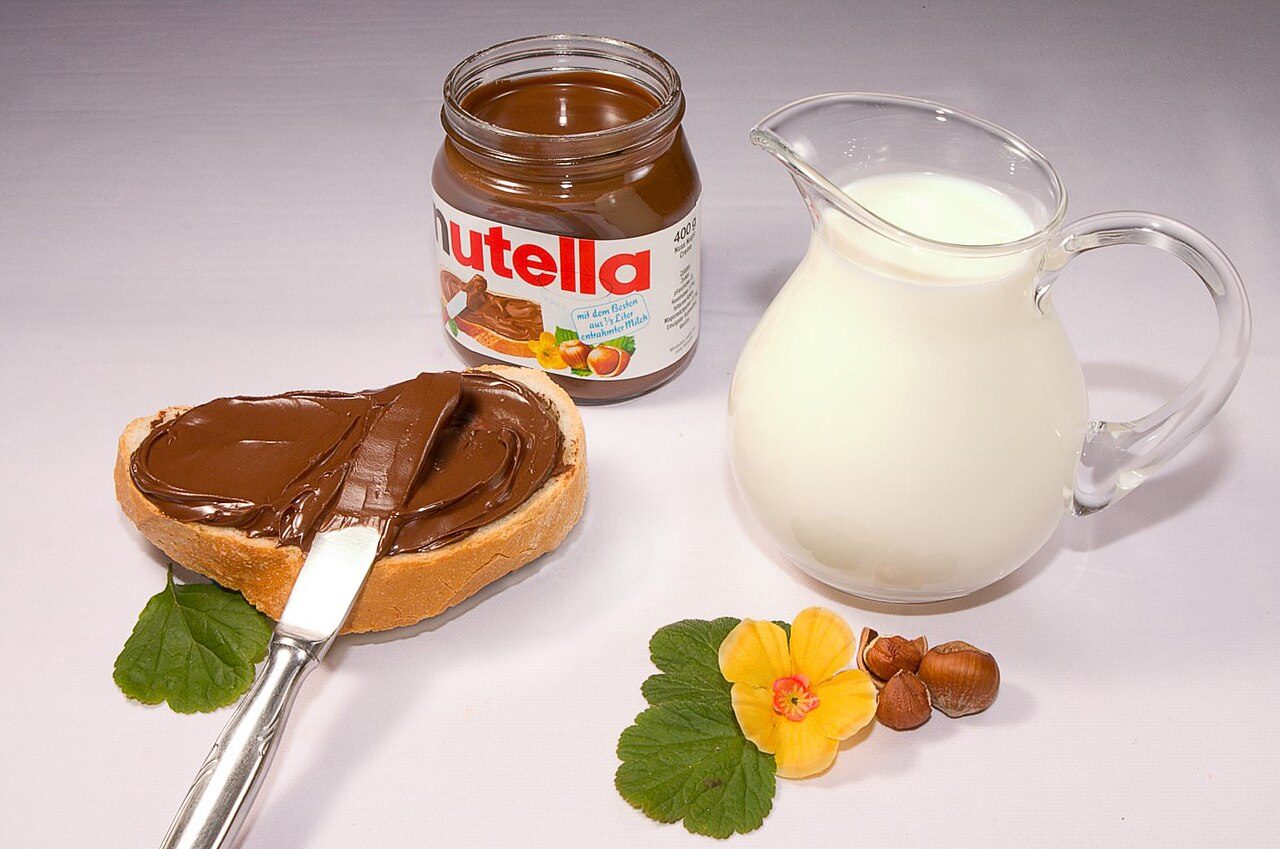
The year's births were unusually presidential and creative at once: Donald Trump, George W. Bush and Bill Clinton were all born in 1946, as were Freddie Mercury, Dolly Parton, Steven Spielberg, Sylvester Stallone and Gianni Versace. And in Alba, Ferrero's hazelnut loaf showed reconstruction at kitchen scale — stretching scarce cocoa with a local crop, cheap enough for working families. The modern jar in this page's photograph is a present-day product, not a 1946 image: what dates to 1946 is the company and the sliced paste it was built from.
1946 on The History Trail
The postwar order takes shape across 1946 on The History Trail.
- January 10 in History — The first UN General Assembly opens in London.
- March 5 in History — Churchill names the Iron Curtain at Fulton.
- October 1 in History — The Nuremberg trials end with sentences.
- October 16 in History — Ten Nuremberg defendants are hanged.
- December 11 in History — UNICEF is founded.
- July 4 in History — The Philippines becomes independent.
- Nutella — How Pietro Ferrero's 1946 hazelnut loaf became a global spread.
Sources
- Encyclopaedia Britannica — On This Day: January 10
- HISTORY — This Day in History: February 22
- Encyclopaedia Britannica — On This Day: October 1
- Encyclopaedia Britannica — On This Day: October 16
- Encyclopaedia Britannica — On This Day: December 11
- Encyclopaedia Britannica — On This Day: June 2
- Encyclopaedia Britannica — On This Day: July 4
The facts on this page were checked against these sources on 19 November 2026. The History Trail's permanent pages are researched and written for this site; the live profiles elsewhere on The History Trail are assembled automatically from Wikipedia and Wikidata.
About the Author
Researched and written by the The History Trail Editorial Team — the accountable editorial function behind this site's permanent story pages. The team works from the published sources cited on each page; it does not invent historians, reviewers or credentials, and it corrects errors openly.
Fact Check
Every load-bearing fact on this page traces to one of the sources listed above, and significant claims link to their source in the text. Our checking method is described on the methodology page; errors can be reported via the corrections page.
Sources & Citations
Cite this page as: The History Trail Editorial Team, The History Trail — this article's title, publication and update dates are shown beneath its headline. The full source list appears under Sources above; the site's source standards are on the sources page.