
Years
1925 in History
1925 is remembered for a small-town courtroom in Dayton, Tennessee, where the teacher John T. Scopes was convicted on 21 July of teaching human evolution — the 'Monkey Trial' that turned a Tennessee statute into a national argument about science and faith. The same year brought America's deadliest tornado, the Tri-State storm of 18 March, which crossed three states and killed nearly 700 people in an era with no warnings, and saw The Great Gatsby published in New York and the Locarno Treaties signed in London.
At a Glance
- Defining event
- The Scopes Trial: John T. Scopes convicted at Dayton, Tennessee, on 21 July of teaching evolution; his $100 fine is later overturned on a technicality
- Deadliest storm
- The Tri-State Tornado, 18 March: 219 miles across three states, nearly 700 lives, in an era with no warning system
- In print
- F. Scott Fitzgerald's The Great Gatsby is published in New York, 10 April; the first volume of Mein Kampf appears in Germany, 18 July
- Diplomacy
- The Locarno Treaties, settling Germany's western borders, are formally signed in London, 1 December
- First broadcast
- The Grand Ole Opry is broadcast for the first time from WSM in Nashville, 28 November
- Born this year
- Malcolm X and Pol Pot, both on 19 May; Margaret Thatcher on 13 October
The defining story: a teacher on trial in Tennessee
The trial was manufactured by a statute. In March 1925 Tennessee moved against the teaching of evolution in its public schools: the legislature passed the ban on 13 March, and on 21 March the Butler Act — prohibiting the teaching of human evolution in Tennessee's public schools — was signed into law. The law set up the confrontation its opponents and supporters both wanted to test: four months later, in the small town of Dayton, a young teacher named John T. Scopes stood trial for teaching evolution, and the proceedings became the 'Monkey Trial', covered by the nation's press as a duel between modern science and biblical literalism.
On 21 July Scopes was convicted and fined $100 — a fine later overturned on a technicality, leaving the statute itself standing and the argument unresolved. The verdict was almost beside the point. The trial's real product was the spectacle: a courtroom asked to settle what a classroom might teach, and a country discovering, through the new mass media, that it disagreed with itself about the origins of humankind. The date record for 21 July calls Dayton the place where the illusion died that a courtroom could settle science — the same illusion that had died on the same date in 1861, when the first great battle of the Civil War dissolved the North's confidence in a short, gallant war.
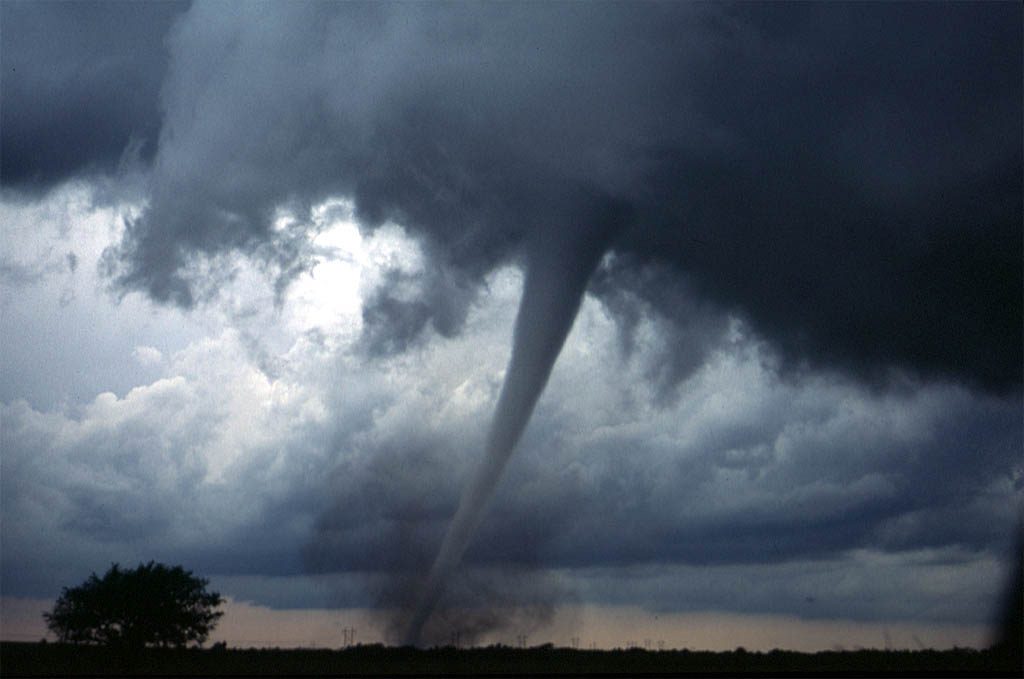
Nature supplied the year's other defining event, and it needed no statute. On 18 March 1925 the Tri-State Tornado tracked across Missouri, southern Illinois and Indiana. NOAA's records describe a storm that lasted over three hours, travelled 219 miles, was reported a mile wide — a record width at the time — and took nearly 700 lives. There was no rating system, no radar and no warning service: meteorologists afterwards assessed the storm by surveying its damage in person. NOAA adds that the modern Enhanced Fujita scale would rate it EF5, the highest category — a judgement applied backwards, since the tornado predates the scale by nearly half a century and no instrument recorded its winds.
Around those two dramas, 1925 quietly stocked the century's shelves. The New Yorker published its first issue on 21 February; F. Scott Fitzgerald's The Great Gatsby appeared on 10 April; the first volume of Adolf Hitler's Mein Kampf was published in Germany on 18 July. On 28 November the Grand Ole Opry was broadcast for the first time from radio station WSM in Nashville, beginning the longest-running radio show in American history, and on 1 December the Locarno Treaties — negotiated in October to settle Germany's western borders and ease post-war tensions — were formally signed in London. On 12 December the world's first motel, the Milestone Mo-Tel, opened in San Luis Obispo, California, midway between Los Angeles and San Francisco.
Timeline of 1925
- 21 February
The first issue of The New Yorker magazine is published in New York City.
- 28 February
Friedrich Ebert, first president of Germany's Weimar Republic, dies in office in Berlin at 54.
- 18 March
The Tri-State Tornado crosses Missouri, Illinois and Indiana: 219 miles in over three hours, nearly 700 lives taken, with no warning system in existence.
- 21 March
Tennessee's Butler Act, banning the teaching of human evolution in public schools, is signed into law — setting up the Scopes trial four months later.
- 10 April
F. Scott Fitzgerald's novel The Great Gatsby is published in New York.
- 19 May
Malcolm X is born — the American minister and human-rights activist; Pol Pot, the future leader of Cambodia's Khmer Rouge, is born the same day.
- 18 July
The first volume of Adolf Hitler's Mein Kampf is published in Germany.
- 21 July
John T. Scopes is convicted in Dayton, Tennessee, of teaching evolution, in the 'Monkey Trial'; his $100 fine is later overturned on a technicality.
- 13 October
Margaret Thatcher is born — the British politician who became Europe's first woman prime minister and led Britain from 1979 to 1990.
- 20 November
Robert F. Kennedy is born — U.S. attorney general and senator, assassinated in 1968.
- 28 November
The Grand Ole Opry is broadcast for the first time from radio station WSM in Nashville, Tennessee, beginning the longest-running radio show in American history.
- 1 December
The Locarno Treaties, negotiated in October to settle Germany's western borders and ease post-war tensions, are formally signed in London.
- 12 December
The world's first motel, the Milestone Mo-Tel, opens in San Luis Obispo, California, midway between Los Angeles and San Francisco.
Why 1925 still matters
The Scopes Trial matters because it never really ended. The Butler Act's conviction was overturned on a technicality rather than on principle, and the underlying argument — who decides what science a school may teach — has returned to American courtrooms and legislatures ever since. Dayton 1925 was its first fully modern performance: a test case, arranged to be fought, in which the trial itself became a national broadcast argument about the authority of science and scripture. The $100 fine is forgotten; the template is not.
The Tri-State Tornado reshaped a science. It remains the deadliest single tornado in United States history, and the benchmark of the pre-warning era: its 219-mile track is still the standard against which long-track tornadoes are compared. The effort to ensure such a toll could not recur drove the development of Doppler radar networks, storm-scale computer models and the watch-and-warning system — and a growing population in tornado country has not produced a return to 1925-scale death tolls from single storms, a change attributed to warnings, radar, shelters and public awareness rather than to any change in the storms themselves.
The rest of the year's legacy is cultural ballast: Gatsby became the defining American novel of its decade's glitter and hollowness, The New Yorker set a standard for magazine writing, the Grand Ole Opry carried country music out of Nashville for a century, and the motel remade road travel. Locarno's signatures, by contrast, bought Europe only a few years of eased tension — and the other book published in 1925, Mein Kampf, announced what would end them.
1925 on The History Trail
A courtroom in Tennessee and a storm across three states frame this year on The History Trail.
- July 21 in History — Scopes is convicted at Dayton in 1925, on the date of the First Battle of Bull Run in 1861.
- March 21 in History — Tennessee's Butler Act is signed into law in 1925, setting up the Scopes trial.
- April 10 in History — The Great Gatsby is published in New York in 1925.
- December 1 in History — The Locarno Treaties are formally signed in London in 1925.
- November 28 in History — The Grand Ole Opry is broadcast for the first time in 1925.
- Tornado — Twisters, the Fujita scale and the 1925 Tri-State disaster — the deadliest single tornado in American history.
Sources
- Encyclopaedia Britannica — On This Day: March 21
- HISTORY — What Happened on July 21
- Encyclopaedia Britannica — On This Day: April 10
- Encyclopaedia Britannica — On This Day: February 21
- Encyclopaedia Britannica — On This Day: November 28
- Encyclopaedia Britannica — On This Day: December 1
- Encyclopaedia Britannica — On This Day: July 18
The facts on this page were checked against these sources on 19 November 2026. The History Trail's permanent pages are researched and written for this site; the live profiles elsewhere on The History Trail are assembled automatically from Wikipedia and Wikidata.
About the Author
Researched and written by the The History Trail Editorial Team — the accountable editorial function behind this site's permanent story pages. The team works from the published sources cited on each page; it does not invent historians, reviewers or credentials, and it corrects errors openly.
Fact Check
Every load-bearing fact on this page traces to one of the sources listed above, and significant claims link to their source in the text. Our checking method is described on the methodology page; errors can be reported via the corrections page.
Sources & Citations
Cite this page as: The History Trail Editorial Team, The History Trail — this article's title, publication and update dates are shown beneath its headline. The full source list appears under Sources above; the site's source standards are on the sources page.