
On This Day
October 10 in History
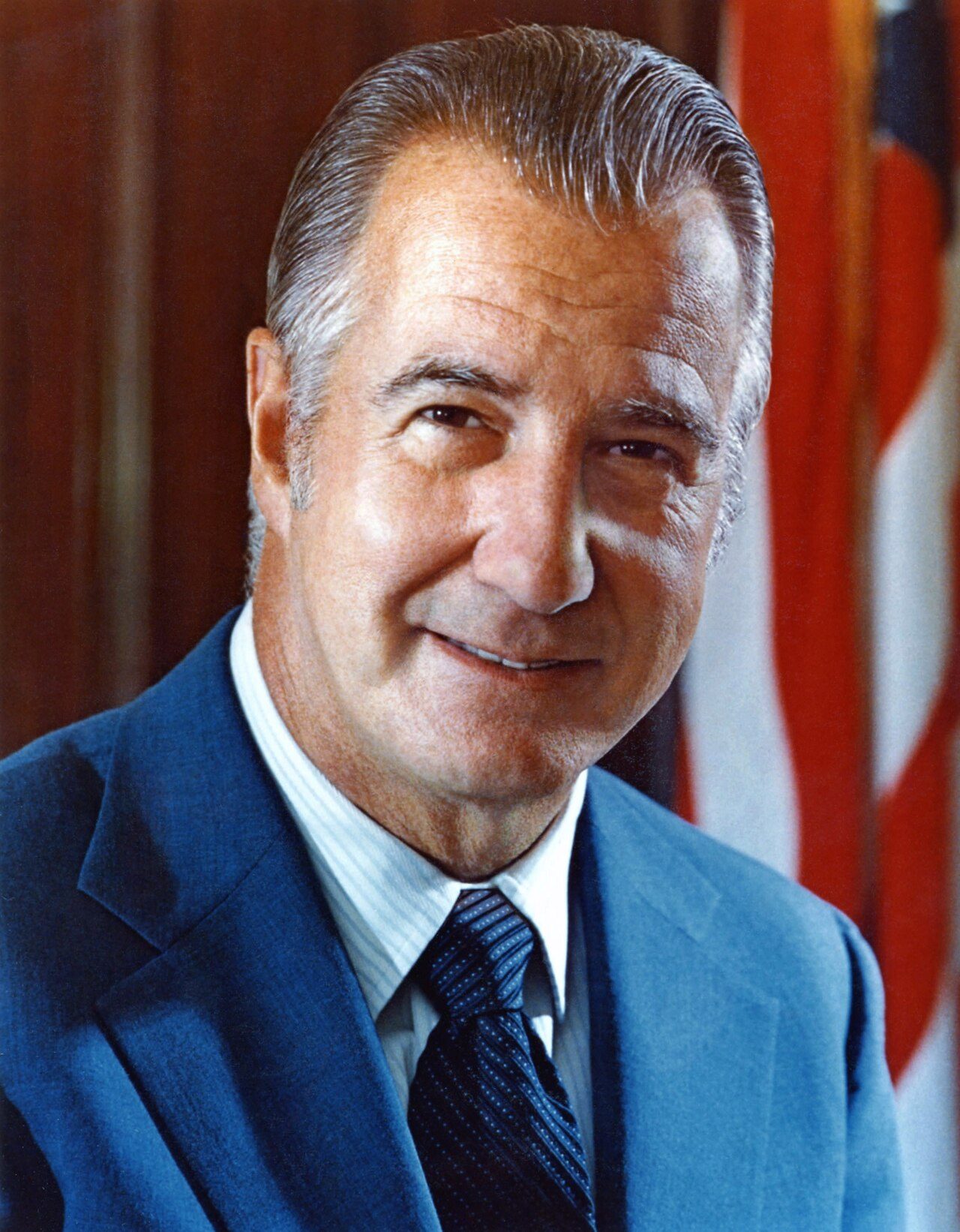
On 10 October 1973 Spiro Agnew resigned as vice president of the United States and pleaded no contest to a charge of federal income tax evasion, becoming the first vice president to fall to criminal charges — and setting in motion the succession that made Gerald Ford president. October 10 is also the day of the Wuchang Uprising in 1911 and the founding of the U.S. Naval Academy in 1845.
Choose another date: open the On This Day calendar to browse events, births and deaths for any day of the year.
At a Glance
- The date
- 10 October 1973, in a federal courtroom in Baltimore
- The plea
- No contest to one count of tax evasion — failing to report $29,500 of income in 1967
- The sentence
- A $10,000 fine and three years' probation; no prison
- What was dropped
- Charges of bribery and kickbacks reaching back to his Maryland career
- The distinction
- Only the second vice president ever to resign, and the first under criminal charges
- The successor
- Gerald Ford, nominated under the Twenty-fifth Amendment — who became president ten months later
Events on this day
- 1845The United States Naval Academy is founded at Annapolis, Maryland, opening with fifty midshipmen and seven professors.
- 1868Cuba's Ten Years' War begins with the Grito de Yara, the first great rising against Spanish rule.
- 1871Rain helps extinguish the Great Chicago Fire, which has burned for two days and destroyed the heart of the city.
- 1903Emmeline Pankhurst founds the Women's Social and Political Union in Manchester, the militant suffragettes.
- 1911The Wuchang Uprising begins in China, setting off the Xinhai Revolution that ends two thousand years of imperial rule.
- 1913President Woodrow Wilson presses a telegraph key to detonate the Gamboa Dike, flooding the Panama Canal's Culebra Cut and joining the oceans.
- 1933A United Airlines Boeing 247 is destroyed by an explosion over Indiana — the first proven case of sabotage of a commercial airliner.
- 1935George Gershwin's opera Porgy and Bess opens on Broadway in New York.
- 1945Communists and Nationalists sign the Double Tenth Agreement in China, a peace that fails within the year.
- 1970Fiji becomes independent of Britain after ninety-six years of colonial rule.
- 1973Vice President Spiro Agnew resigns and pleads no contest to tax evasion — the featured story above.
- 1985U.S. Navy jets intercept an Egyptian airliner carrying the Achille Lauro hijackers and force it to land in Sicily.
- 2010The Netherlands Antilles is dissolved, with Curaçao and Sint Maarten becoming countries within the Kingdom of the Netherlands.
Born on this day
- 1731Henry Cavendish — English scientist who weighed the Earth and discovered hydrogen.
- 1813Giuseppe Verdi — Italian composer of Rigoletto, Aida and La Traviata, born, by his own account, on 9 or 10 October.
- 1861Fridtjof Nansen — Norwegian polar explorer and humanitarian, Nobel Peace Prize laureate.
- 1900Helen Hayes — American actress, the 'First Lady of the American Theatre'.
- 1917Thelonious Monk — American jazz pianist and composer, a founder of bebop.
- 1969Brett Favre — American football quarterback, three-time NFL most valuable player.
Died on this day
- 1985Orson Welles — American director of Citizen Kane, dead in Los Angeles at 70.
- 1985Yul Brynner — Russian-born actor of The King and I, dead in New York the same day as Welles, at 65.
- 2010Solomon Burke — American soul singer, the 'King of Rock and Soul', dead at Amsterdam airport at 74.
The featured story: Vice President Spiro Agnew resigns, 10 October 1973
On 10 October 1973, Spiro T. Agnew became the first vice president of the United States to resign under the cloud of criminal charges. In a Baltimore courtroom that day, Richard Nixon's vice president pleaded no contest to a single charge of federal income tax evasion — failing to report $29,500 of income in 1967 — and was fined $10,000 and placed on three years' probation. In exchange, prosecutors dropped the far more serious charges they had been preparing: that Agnew had taken bribes and kickbacks across his career as Baltimore County executive, governor of Maryland and even as vice president, payments said to have been delivered in cash, sometimes in the White House itself. The same day, his resignation took effect, in a one-sentence letter to the Secretary of State.
Agnew had been Nixon's attack dog, the scourge of the press, of anti-war protesters and of the 'effete corps of impudent snobs' he loved to denounce, and for months he had proclaimed his innocence in the most combative terms, insisting he would not resign even if indicted. Behind the scenes, though, the evidence assembled by the U.S. Attorney in Maryland, George Beall, was formidable, built on the testimony of the men who had paid him. The plea bargain was shaped by politics on both sides: Agnew's lawyers wanted to keep him out of prison, and the Nixon administration — itself drowning in Watergate — wanted the succession settled before the vice presidency and the presidency could fall vacant at once. Attorney General Elliot Richardson approved a deal that traded resignation for freedom.
The constitutional machinery then turned for almost the first time. Under the Twenty-fifth Amendment, ratified only in 1967, Nixon nominated the House minority leader, Gerald Ford, to fill the vacancy, and Congress confirmed him — the first unelected vice president in American history. The choice proved to be the hinge of the decade: ten months later, in August 1974, Nixon himself resigned over Watergate, and Ford became president without a single vote ever having been cast for him for either office. The manoeuvre that removed Agnew, designed to stabilise the administration, had in fact decided who would lead the country out of its crisis.
Agnew's afterlife was quiet and bitter. He was disbarred in Maryland, repaid some of the money in a civil suit years later, wrote a novel and a memoir maintaining that he had been forced out, and largely vanished from public life, dying in 1996. His place in history is fixed by two distinctions: he is one of only two vice presidents ever to resign — John C. Calhoun, in 1832, left over a policy quarrel — and the only one to fall to criminal charges. The plea he entered, no contest, allowed him to say forever that he had never admitted guilt. The resignation letter said everything else.
Why this date matters
October 10 is a date of doors opening and closing. It opened the U.S. Naval Academy and Porgy and Bess, set off the revolution that ended imperial China, joined the Atlantic and Pacific at Panama, and gave Fiji its independence. But its sharpest moment is a door closing in 1973: a vice president walking out of office and into a courtroom in the same afternoon. The Agnew resignation is the date's enduring contribution to the constitutional order — the first real test of the Twenty-fifth Amendment, and the quiet decision that made Gerald Ford president. History's largest consequences sometimes arrive disguised as a personnel change.
Sources
- Encyclopaedia Britannica — On This Day: October 10
- HISTORY — Vice President Agnew Resigns
- HISTORY — This Day in History: October 10
- Smithsonian Magazine — What the Nation's Founders Said About the Indictment of a Former President
The facts on this page were checked against these sources on 19 November 2026. The History Trail's permanent pages are researched and written for this site; the live profiles elsewhere on The History Trail are assembled automatically from Wikipedia and Wikidata.
About the Author
Researched and written by the The History Trail Editorial Team — the accountable editorial function behind this site's permanent story pages. The team works from the published sources cited on each page; it does not invent historians, reviewers or credentials, and it corrects errors openly.
Fact Check
Every load-bearing fact on this page traces to one of the sources listed above, and significant claims link to their source in the text. Our checking method is described on the methodology page; errors can be reported via the corrections page.
Sources & Citations
Cite this page as: The History Trail Editorial Team, The History Trail — this article's title, publication and update dates are shown beneath its headline. The full source list appears under Sources above; the site's source standards are on the sources page.