
Years
1898 in History
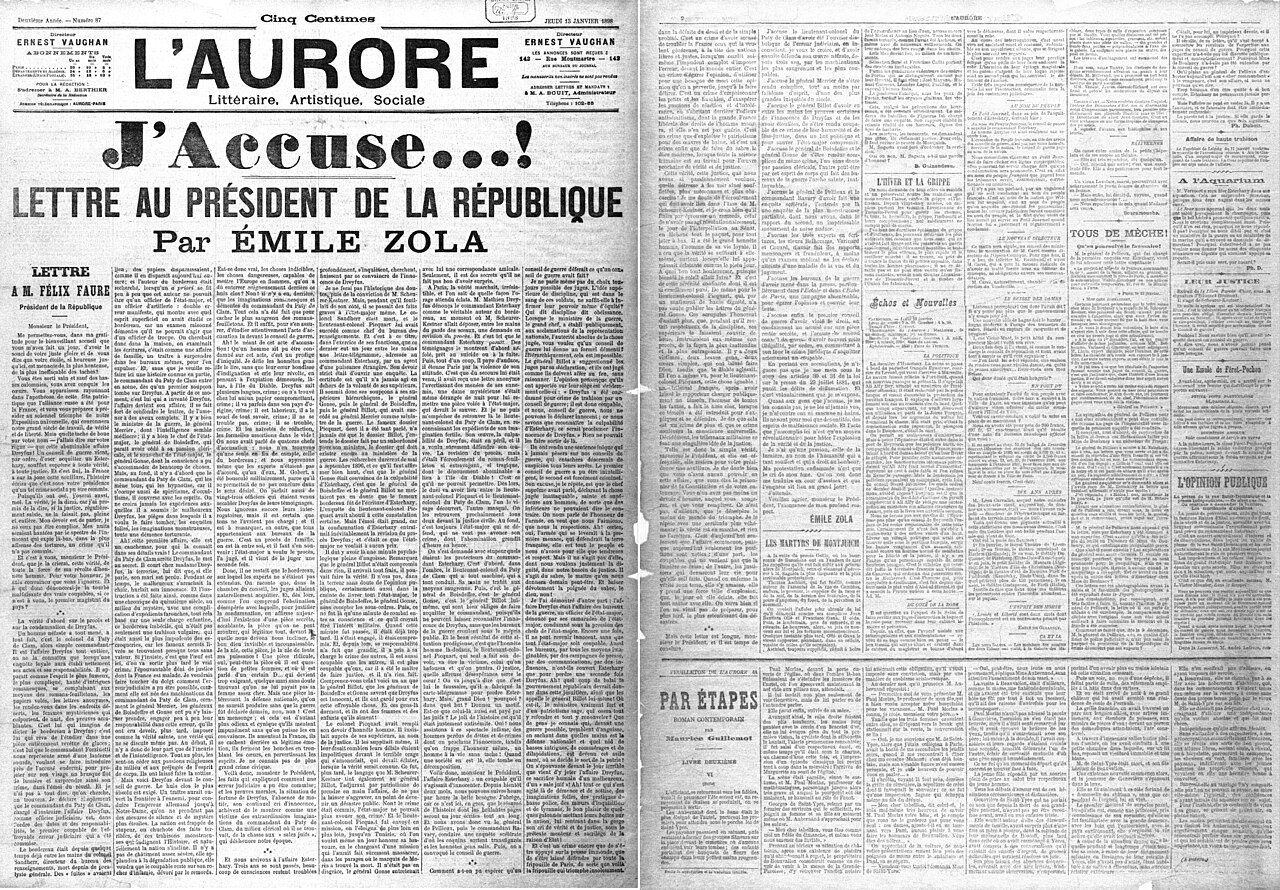
1898 is remembered for two explosions of print and powder. In January Émile Zola published 'J'Accuse…!', accusing France's army of framing Alfred Dreyfus; in February the battleship USS Maine blew up in Havana Harbor, officially killing two officers and 264 men, and within months the Spanish-American War had stripped Spain of Cuba, Puerto Rico, Guam and the Philippines and made the United States an overseas power.
At a Glance
- Defining event
- The Spanish-American War: Spain cedes the Philippines, Puerto Rico and Guam to the United States by the Treaty of Paris, 10 December 1898
- The trigger
- USS Maine explodes in Havana Harbor, 15 February — officially two officers and 264 men killed; Spanish and American inquiries blame different causes
- The accusation
- Zola's 'J'Accuse…!' in L'Aurore, 13 January, charges the French army with framing Dreyfus; Zola is convicted of libel and flees to England
- The war
- Spain declares war 24 April; Dewey destroys the Spanish Pacific fleet at Manila Bay on 1 May; an armistice follows on 12 August
- Science of the year
- Pierre and Marie Curie announce the discovery of radium, 26 December
- Died this year
- Otto von Bismarck (30 July) and William Ewart Gladstone (19 May)
The defining story: remember the Maine
The Maine had come to Havana on a mission described as friendly. Cuba was in revolt against Spanish rule, riots had broken out in the capital, and Washington sent the battleship in January 1898 to protect American lives and property. She lay at a buoy in the harbour for three weeks. At about twenty minutes to ten on the night of 15 February, an explosion tore through her forward magazines; the front third of the ship was destroyed and the rest sank into the harbour mud. The official American count put the dead at two officers and 264 men.
What caused the explosion was disputed then and is not settled now. The Spanish inquiry concluded that the blast was internal — a fire or accident in the ship's own magazines. The American naval court of inquiry concluded that a mine had detonated beneath the ship and set off her forward magazines, though it fixed no blame on Spain itself. None of that uncertainty survived contact with the American press: 'Remember the Maine, to hell with Spain' became a national slogan, Congress recognised Cuban independence, Spain declared war on 24 April, and Washington's own declaration followed a day later, opening the Spanish-American War.
The fighting was swift. On 1 May Commodore George Dewey's Asiatic Squadron destroyed the Spanish Pacific fleet at Manila Bay. On 1 July American forces stormed San Juan Hill outside Santiago de Cuba, a victory that made Theodore Roosevelt famous. On 12 June Emilio Aguinaldo had already proclaimed the independence of the Philippines from Spain; on 13 August American forces captured Manila — a day after an armistice had in fact ended the fighting. By the Treaty of Paris on 10 December, Spain ceded the Philippines, Puerto Rico and Guam to the United States and recognised Cuban independence. The United States, which had gone to war over a harbour explosion, had emerged as a Pacific power.
The year's other detonation was printed, not fired. On 13 January, two days after a military court acquitted Ferdinand Walsin Esterhazy — the officer the evidence actually pointed to — Émile Zola published 'J'Accuse…!' across the front page of L'Aurore, accusing the French army, officer by officer, of framing the innocent Alfred Dreyfus and covering it up. Zola was tried in February, convicted of libel, sentenced to a year in prison and a fine of 3,000 francs, and fled to England. France split down the middle, Dreyfusards against anti-Dreyfusards, in the defining culture war of the Third Republic — and the phrase 'J'accuse' entered every language as the writer's indictment of a state.
Timeline of 1898
- 13 January
Émile Zola publishes 'J'Accuse…!' in L'Aurore, accusing France's army of framing Alfred Dreyfus.
- 15 February
An explosion sinks the USS Maine in Havana Harbor, killing two officers and 264 men by the official count.
- 24 April
Spain declares war on the United States over Cuba; Washington's declaration follows a day later.
- 1 May
At the Battle of Manila Bay, Dewey's U.S. Asiatic Squadron destroys the Spanish Pacific fleet.
- 19 May
William Ewart Gladstone, four times British prime minister, dies.
- 12 June
Emilio Aguinaldo proclaims the independence of the Philippines from Spain.
- 27 June
Joshua Slocum completes the first solo circumnavigation of the globe, sailing into Newport, Rhode Island, after three years at sea.
- 1 July
American forces storm San Juan Hill outside Santiago de Cuba, a victory that makes Theodore Roosevelt famous.
- 30 July
Otto von Bismarck, the 'Iron Chancellor' who unified Germany, dies aged 83.
- 12 August
An armistice ends the fighting in the Spanish-American War, four months after it began.
- 10 September
Empress Elisabeth of Austria is assassinated in Geneva by the anarchist Luigi Lucheni.
- 10 December
The Treaty of Paris ends the Spanish-American War: Spain cedes the Philippines, Puerto Rico and Guam to the United States.
- 26 December
Pierre and Marie Curie announce their discovery of a new element, radium, to the French Academy of Sciences.
Why 1898 still matters
The Treaty of Paris redrew the map of American power. In a single settlement the United States acquired territory across two oceans and became, whether it wished the word or not, an empire — with all the arguments about empire that have followed ever since. The war's stated cause, meanwhile, remains unproven: the two official inquiries into the Maine reached opposite conclusions from the same wreck, and later studies have argued both ways. The disaster's most quoted number also conceals a quiet fact the February 15 record notes: the officers' quarters were aft and the crew's forward, near the explosion — two officers died; 264 enlisted men did. A casus belli built on uncertain evidence, paid for overwhelmingly by the men who slept closest to the magazines, is the year's standing warning.
J'Accuse did the opposite work: it forced uncertain evidence into the open. Zola's letter created the modern figure of the intellectual as public conscience, and the affair it ignited ran on until Dreyfus was fully exonerated in 1906 — eight years after Zola himself had been convicted for telling the truth as he saw it. The separation of church and state in France and the very phrase 'J'accuse' both run back to that front page.
And in a Paris laboratory on 26 December, Pierre and Marie Curie announced radium — a discovery that, with the X-rays of 1895, opened the atomic age's long account of benefit and harm. The century was assembling its tools.
1898 on The History Trail
Two featured stories lead this year on The History Trail: Zola's accusation in Paris and the Maine's explosion in Havana.
- January 13 in History — Zola publishes 'J'Accuse…!', the most famous newspaper article ever printed.
- February 15 in History — USS Maine explodes in Havana Harbor, the road to the Spanish-American War.
- May 1 in History — Dewey destroys the Spanish Pacific fleet at Manila Bay.
- July 1 in History — American forces storm San Juan Hill outside Santiago de Cuba.
- December 10 in History — The Treaty of Paris ends the Spanish-American War.
- December 26 in History — Pierre and Marie Curie announce the discovery of radium.
Sources
- Encyclopaedia Britannica — J'Accuse
- Encyclopaedia Britannica — On This Day: January 13
- Encyclopaedia Britannica — On This Day: February 15
- HISTORY — What Happened on February 15
- Encyclopaedia Britannica — On This Day: May 1
- Encyclopaedia Britannica — On This Day: July 1
- Encyclopaedia Britannica — On This Day: December 10
- Encyclopaedia Britannica — On This Day: December 26
The facts on this page were checked against these sources on 19 November 2026. The History Trail's permanent pages are researched and written for this site; the live profiles elsewhere on The History Trail are assembled automatically from Wikipedia and Wikidata.
About the Author
Researched and written by the The History Trail Editorial Team — the accountable editorial function behind this site's permanent story pages. The team works from the published sources cited on each page; it does not invent historians, reviewers or credentials, and it corrects errors openly.
Fact Check
Every load-bearing fact on this page traces to one of the sources listed above, and significant claims link to their source in the text. Our checking method is described on the methodology page; errors can be reported via the corrections page.
Sources & Citations
Cite this page as: The History Trail Editorial Team, The History Trail — this article's title, publication and update dates are shown beneath its headline. The full source list appears under Sources above; the site's source standards are on the sources page.