
Years
2021 in History
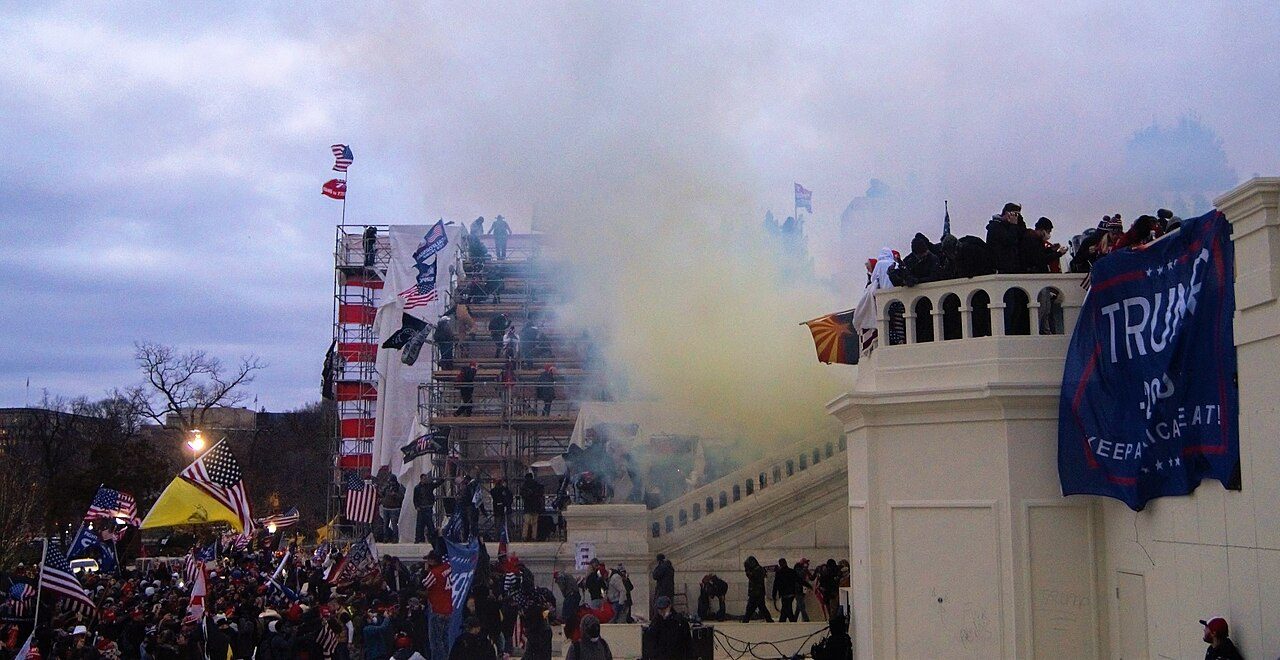
2021 began with an attack on the ritual at the heart of American democracy: on 6 January a mob stormed the United States Capitol as Congress met to certify the 2020 presidential election, forcing the joint session to flee. The year also saw Kamala Harris sworn in as the first woman — and first Black and Asian American — vice president, the container ship Ever Given block the Suez Canal for six days, Kabul fall to the Taliban in August, and NASA's James Webb Space Telescope launched on Christmas Day.
At a Glance
- Defining event
- A mob storms the United States Capitol on 6 January as Congress certifies the 2020 election
- The outcome
- Congress returns the same night and completes the certification of Joe Biden's victory
- The first
- Kamala Harris is sworn in on 20 January as the first woman, and first Black and Asian American, vice president
- The blockage
- The container ship Ever Given runs aground across the Suez Canal on 23 March, blocking the trade route for six days
- The fall
- Kabul falls to the Taliban on 15 August; the last American military aircraft leaves on 30 August, ending a twenty-year war
- Closed the year
- NASA's James Webb Space Telescope is launched from French Guiana on 25 December
The defining story: the day the count was attacked
The counting of electoral votes is normally the most ceremonial afternoon in American politics: a joint session of Congress, a mahogany box of certificates, a foregone conclusion. The session of 6 January 2021 was different because the losing president, Donald Trump, had spent two months refusing to accept the result of the 2020 election, which Joe Biden had won, and had summoned his supporters to Washington for the day of the count. That morning, at a rally near the White House, Trump urged the crowd to march on the Capitol and fight to overturn the result. What followed was the first violent seizure of the Capitol in its history. Thousands marched on the building; hundreds forced their way inside, smashing windows, ransacking offices and driving the joint session into flight — senators and representatives evacuated or sheltering as rioters reached the Senate chamber minutes behind them.
The Justice Department later reported that about 140 Capitol and Metropolitan police officers were criminally assaulted in the fighting, and damage to the building was put at about $1.5 million. The building was not secured until about 6 p.m., roughly four hours after the first breach. Congress returned the same night and finished the count, certifying Biden's victory. The political consequences were immediate and lasting: the House of Representatives impeached Trump for 'incitement of insurrection', making him the first American president to be impeached twice; the Senate acquitted him after he had left office. The FBI treated the attack as an act of domestic terrorism, and hundreds of participants were prosecuted. For the first time in the republic's history, the transfer of power — the ritual the day was built around — had been interrupted by force.
The transfer, delayed by hours, happened: on 20 January Kamala Harris was sworn in as the first woman — and first Black and Asian American — vice president of the United States, and Biden took the presidency the mob had tried to deny him. The year's other crises were slower. On 1 February Myanmar's military seized power in a coup, detaining Aung San Suu Kyi and ending a decade of partial civilian rule. On 23 March the container ship Ever Given ran aground across the Suez Canal, blocking one of the world's busiest trade routes for six days — a single hull demonstrating the fragility of the world's supply chains. On 20 April former police officer Derek Chauvin was convicted of the murder of George Floyd in Minneapolis, closing the legal chapter that 2020's protests had opened. On 24 June a condominium tower collapsed at Surfside, Florida, killing 98 people, and on 7 July Haiti's president, Jovenel Moïse, was assassinated by gunmen at his home in Port-au-Prince.
August supplied the year's second collapse. On 15 August Kabul fell to the Taliban as Afghanistan's government collapsed, almost twenty years after the US-led invasion began; on 30 August the last American military aircraft left Kabul, ending the United States' twenty-year war in Afghanistan. The year of the interrupted transfer thus also contained a transfer imposed by force abroad — and ended, on 25 December, with an instrument of pure curiosity: NASA's James Webb Space Telescope launched from French Guiana, beginning its journey to observe the earliest galaxies. In October William Shatner, television's Captain Kirk, had flown to space aboard Blue Origin's New Shepard at the age of 90, the oldest person yet to leave Earth — the year's two space stories, one looking outward to the first galaxies, one carrying fiction's most famous captain briefly into the real thing.
Timeline of 2021
- 6 January
A mob storms the United States Capitol as Congress certifies the 2020 election.
- 20 January
Kamala Harris is sworn in as the first woman — and first Black and Asian American — vice president of the United States.
- 22 January
Hank Aaron, American baseball great who held the home-run record for 33 years, dies at 86.
- 1 February
Myanmar's military seizes power in a coup, detaining Aung San Suu Kyi and ending a decade of partial civilian rule.
- 23 March
The container ship Ever Given runs aground across the Suez Canal, blocking one of the world's busiest trade routes for six days.
- 20 April
Former police officer Derek Chauvin is convicted of the murder of George Floyd in Minneapolis.
- 24 June
A condominium tower collapses at Surfside, Florida, killing 98 people.
- 7 July
Haiti's president, Jovenel Moïse, is assassinated by gunmen at his home in Port-au-Prince.
- 20 July
Jeff Bezos flies to the edge of space aboard Blue Origin's New Shepard on its first crewed flight.
- 15 August
Kabul falls to the Taliban as Afghanistan's government collapses, almost twenty years after the US-led invasion began.
- 30 August
The last American military aircraft leaves Kabul, ending the United States' twenty-year war in Afghanistan.
- 25 December
NASA's James Webb Space Telescope is launched from French Guiana, beginning its journey to observe the earliest galaxies.
Why 2021 still matters
January 6 fixed a new meaning to a date that already carried democratic firsts, and its central fact is double: the attack happened, and the procedure it attacked was completed by the same Congress, in the same building, before the night was out. The transfer of power was interrupted by force for the first time in the republic's history — and it held, delayed by hours rather than stopped. The prosecutions that followed, and the second impeachment, made the day a continuing legal and political event long after the building was repaired; few single days in the century have generated so much subsequent history.
Kabul's fall closed the era that had begun in 2001: the twenty-year war in Afghanistan ended with the Taliban restored to the capital they had been expelled from, and the last American aircraft leaving on 30 August under the shadow of the collapse. Between the Capitol in January and Kabul in August, 2021 was a year about the fragility of orders that had seemed permanent — a theme the Ever Given underlined in miniature in March, when one stuck ship held up a measurable share of world trade for six days and made 'supply chain' a household phrase.
The year's counterweights were real: a barrier broken at the vice presidency, a murder conviction that answered the previous summer's protests, and a telescope launched on Christmas Day to look at the first light in the universe. 2021 is remembered first for its sieges; its December launch is the entry that will still be producing news a decade from now.
2021 on The History Trail
A siege, a fall, a stuck ship and a telescope: 2021 on The History Trail.
- January 6 in History — The attack on the United States Capitol — the year's featured story, told in full.
- August 15 in History — Kabul falls to the Taliban.
- March 23 in History — The Ever Given blocks the Suez Canal.
- April 20 in History — Derek Chauvin is convicted of the murder of George Floyd.
- December 25 in History — The James Webb Space Telescope is launched.
- January 20 in History — Kamala Harris is sworn in as vice president.
Sources
- Encyclopaedia Britannica — On This Day: January 6
- Encyclopaedia Britannica — On This Day: August 15
- Encyclopaedia Britannica — On This Day: March 23
- Encyclopaedia Britannica — On This Day: April 20
- Encyclopaedia Britannica — On This Day: February 1
The facts on this page were checked against these sources on 19 November 2026. The History Trail's permanent pages are researched and written for this site; the live profiles elsewhere on The History Trail are assembled automatically from Wikipedia and Wikidata.
About the Author
Researched and written by the The History Trail Editorial Team — the accountable editorial function behind this site's permanent story pages. The team works from the published sources cited on each page; it does not invent historians, reviewers or credentials, and it corrects errors openly.
Fact Check
Every load-bearing fact on this page traces to one of the sources listed above, and significant claims link to their source in the text. Our checking method is described on the methodology page; errors can be reported via the corrections page.
Sources & Citations
Cite this page as: The History Trail Editorial Team, The History Trail — this article's title, publication and update dates are shown beneath its headline. The full source list appears under Sources above; the site's source standards are on the sources page.