
Years
1964 in History
1964 is the year civil rights became law in America: on 2 July President Johnson signed the Civil Rights Act, outlawing segregation and employment discrimination after the longest filibuster in Senate history. It was also the year the Beatles conquered America before 73 million television viewers, Cassius Clay beat Sonny Liston, and Nelson Mandela was sentenced to life in prison.
At a Glance
- Defining event
- The Civil Rights Act is signed on 2 July, outlawing segregation and employment discrimination
- Culture's earthquake
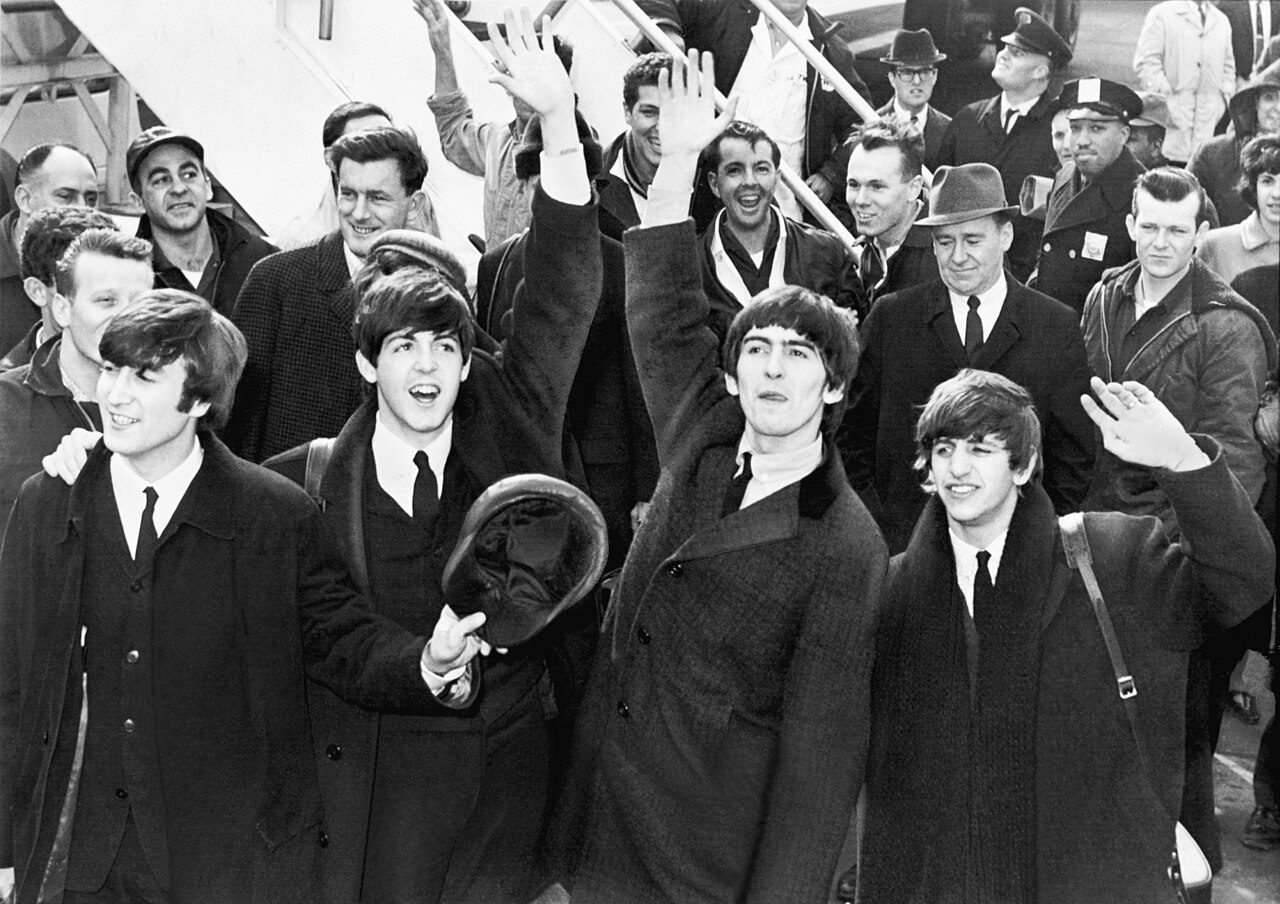
- The Beatles land in New York on 7 February; 73 million watch them on The Ed Sullivan Show two days later
- The upset
- Cassius Clay, 22, stops the 8-to-1 favourite Sonny Liston on 25 February to win the heavyweight title
- A life sentence
- Mandela and seven others are sentenced to life imprisonment on 12 June — the death penalty had been widely expected
- Escalation
- The Gulf of Tonkin Resolution of 7 August grants Johnson sweeping authority to conduct the Vietnam War
- The club grows
- China detonates its first atomic bomb on 16 October, becoming the world's fifth nuclear power
The defining story: civil rights becomes law
The year belonged to Lyndon Johnson's domestic revolution and to four young men from Liverpool. On 8 January Johnson declared an 'unconditional war on poverty' in his State of the Union address; on 11 January the Surgeon General, Luther Terry, published Smoking and Health, the landmark report concluding that smoking causes cancer; and on 23 January the Twenty-fourth Amendment was ratified, banning the poll tax in federal elections, a device long used to keep poor and Black Americans from voting. Then, on 7 February, the Beatles landed at the recently renamed John F. Kennedy International Airport to an estimated 4,000 fans and some 200 reporters. Two days later they appeared on The Ed Sullivan Show before an estimated 73 million viewers — more than a third of the United States population. Beatlemania had arrived in America.
February also produced the decade's great sporting upset. On 25 February, at Miami Beach, Cassius Clay, aged 22 and dismissed by many writers as a loudmouth, stopped Sonny Liston — an 8-to-1 favourite who had twice destroyed Floyd Patterson in one round. Liston, cut and battered in the sixth, failed to answer the bell for the seventh and conceded the title sitting down. Clay confirmed his conversion to Islam after the fight and soon took the name Muhammad Ali. In April, Sidney Poitier won the Academy Award for Best Actor for Lilies of the Field, the first Black actor to win the award.
The year's moral centre was the struggle the Civil Rights Act answered. On 12 June Nelson Mandela and seven others were sentenced to life imprisonment at the end of the Rivonia Trial in South Africa — the death penalty had been widely expected — and Mandela began the Robben Island years that would make up 18 of his 27 years behind bars. On 21 June, civil rights workers James Chaney, Andrew Goodman and Michael Schwerner were murdered by the Ku Klux Klan in Mississippi; their bodies were found buried in an earthen dam on 4 August. On 2 July, hours after Congress passed the bill, Johnson signed the Civil Rights Act in the East Room, outlawing segregation in public places and banning discrimination based on race, colour, religion, sex or national origin. Supporters had broken the longest filibuster in Senate history to get it there. The bill had been proposed by President Kennedy in June 1963; Johnson drove it through after the assassination.
The autumn redrew the world's balances. On 7 August Congress had passed the Gulf of Tonkin Resolution, granting Johnson sweeping authority to conduct the war in Vietnam. On 14 October Martin Luther King Jr. was awarded the Nobel Peace Prize, and Nikita Khrushchev was removed as leader of the Soviet Union by his own Presidium, ending his turbulent decade in power. On 16 October China detonated its first atomic bomb at Lop Nur, becoming the world's fifth nuclear power. On 10 December King, at 35 the youngest recipient to that date, received his Nobel Peace Prize in Oslo for his nonviolent campaign for civil rights.
Timeline of 1964
- 8 January
President Johnson declares an 'unconditional war on poverty' in his State of the Union address.
- 11 January
The Surgeon General publishes Smoking and Health, concluding that smoking causes cancer.
- 23 January
The Twenty-fourth Amendment is ratified, banning the poll tax in federal elections.
- 7 February
The Beatles land at Kennedy Airport in New York to begin their first American visit.
- 9 February
The Beatles make their live American television debut on The Ed Sullivan Show before 73 million viewers.
- 25 February
Cassius Clay, the future Muhammad Ali, stops Sonny Liston to win the world heavyweight title.
- 13 April
Sidney Poitier wins the Academy Award for Best Actor, the first Black actor to win the award.
- 12 June
Nelson Mandela and seven others are sentenced to life imprisonment at the end of the Rivonia Trial.
- 21 June
Civil rights workers Chaney, Goodman and Schwerner are murdered by the Ku Klux Klan in Mississippi.
- 2 July
President Johnson signs the Civil Rights Act, outlawing segregation and employment discrimination.
- 7 August
Congress passes the Gulf of Tonkin Resolution, granting Johnson sweeping authority in Vietnam.
- 14 October
Martin Luther King Jr. is awarded the Nobel Peace Prize for his nonviolent campaign.
- 16 October
China detonates its first atomic bomb at Lop Nur, becoming the world's fifth nuclear power.
- 10 December
King, at 35 the youngest recipient to that date, receives the Nobel Peace Prize in Oslo.
Why 1964 still matters
The Civil Rights Act is the legislative landmark of the American century: it outlawed segregation in theatres, restaurants and hotels, and its Title VII banned employment discrimination and created the Equal Employment Opportunity Commission. Proposed by Kennedy in June 1963 and driven through by Johnson after the assassination, over the longest filibuster in Senate history, it remains the template against which American equality law is measured — and King's Nobel Prize, awarded that October, recognised the nonviolent campaign that forced it onto the statute book.
The year's other sentences ran just as long. Mandela's life term, handed down when execution was expected, kept him alive for the reversal the record traces: released on 11 February 1990 and elected president of South Africa in April 1994. The Gulf of Tonkin Resolution, by contrast, opened the road to America's deepening war in Vietnam, on authority granted in a single August week. China's first atomic bomb made the nuclear club five-strong and permanently changed Asia's balance.
And the Beatles' February landing — 73 million watching a Sunday-night variety show — began the British Invasion and the modern age of youth culture as a global industry. The Sullivan fee tells the story of a world not yet wise to it: the band was paid just $10,000 in total for the three appearances that changed music.
1964 on The History Trail
The year's biggest stories have full pages of their own on The History Trail.
- February 7 in History — the Beatles arrive in the United States and Beatlemania lands with them.
- February 9 in History — the Beatles on The Ed Sullivan Show, watched by 73 million.
- February 25 in History — Cassius Clay stops Sonny Liston to win the heavyweight title.
- June 12 in History — Mandela is sentenced to life imprisonment at the Rivonia Trial.
- July 2 in History — the Civil Rights Act is signed into law.
- Ford Mustang — the car unveiled at the New York World's Fair on 17 April 1964, taking some 22,000 orders on its first day.
Sources
- Encyclopaedia Britannica — On This Day: January 8
- https://www.cdc.gov/tobacco-surgeon-general-reports/about/history.html
- Smithsonian Magazine — Beatlemania Took the United States by Storm
- Smithsonian Magazine — On This Day in 1964, 73 Million Americans Tuned in to Watch the Biggest Act in Music
- Encyclopaedia Britannica — On This Day: February 25
- Encyclopaedia Britannica — On This Day: June 12
The facts on this page were checked against these sources on 19 November 2026. The History Trail's permanent pages are researched and written for this site; the live profiles elsewhere on The History Trail are assembled automatically from Wikipedia and Wikidata.
About the Author
Researched and written by the The History Trail Editorial Team — the accountable editorial function behind this site's permanent story pages. The team works from the published sources cited on each page; it does not invent historians, reviewers or credentials, and it corrects errors openly.
Fact Check
Every load-bearing fact on this page traces to one of the sources listed above, and significant claims link to their source in the text. Our checking method is described on the methodology page; errors can be reported via the corrections page.
Sources & Citations
Cite this page as: The History Trail Editorial Team, The History Trail — this article's title, publication and update dates are shown beneath its headline. The full source list appears under Sources above; the site's source standards are on the sources page.