
Years
1792 in History
1792 is the year France abolished a thousand years of monarchy. A Paris crowd stormed the Tuileries on 10 August and Louis XVI was suspended and imprisoned; on 20 September revolutionary soldiers held off the Prussian advance at Valmy; and on 21 September the National Convention abolished the monarchy, proclaiming the First Republic the next day. In the same year the United States founded its Mint, laid the White House cornerstone and saw its first presidential veto.
At a Glance
- Defining event
- France abolishes the monarchy, 21 September 1792; the First Republic is proclaimed on 22 September
- The fall
- A crowd storms the Tuileries on 10 August; Louis XVI is suspended and imprisoned
- The salvation
- Battle of Valmy, 20 September — the revolutionary army halts the Prussian advance on Paris
- An anthem born
- Rouget de Lisle composes 'La Marseillaise' overnight in Strasbourg, 24 April
- American foundations
- The U.S. Mint is founded (2 April) and the White House cornerstone laid (13 October)
- A first veto
- George Washington casts the first presidential veto in U.S. history, 5 April
The defining story: the end of the French monarchy
France entered 1792 as a constitutional monarchy in collapse. Its revolution had a soundtrack before it had a republic: on 24 April, in Strasbourg, army officer Claude-Joseph Rouget de Lisle composed 'La Marseillaise' overnight, the marching song that became France's national anthem. Through the summer the war against Austria and Prussia went badly, Paris radicalised, and the court's suspected dealings with the enemy destroyed what trust remained in Louis XVI.
On 10 August a revolutionary crowd stormed the Tuileries Palace in Paris. The king's Swiss Guards were overwhelmed, Louis XVI was suspended from power and imprisoned with his family in the Temple, and the French monarchy effectively fell. Elections followed for a National Convention, and the invading Prussian army advanced on Paris to restore the king by force.
The invasion broke at Valmy. On 20 September the French revolutionary army halted the Prussian advance; Goethe, present with the Prussian army, sensed a new era beginning. The next day, 21 September, the National Convention met for the first time and voted to abolish the French monarchy, ending over a thousand years of kingship. There was no long debate: monarchy was ended by decree in an afternoon, and Louis XVI became, in the Republic's language, Citizen Louis Capet. On 22 September the French First Republic was proclaimed — the date from which the revolutionaries later counted their new calendar's Year I.
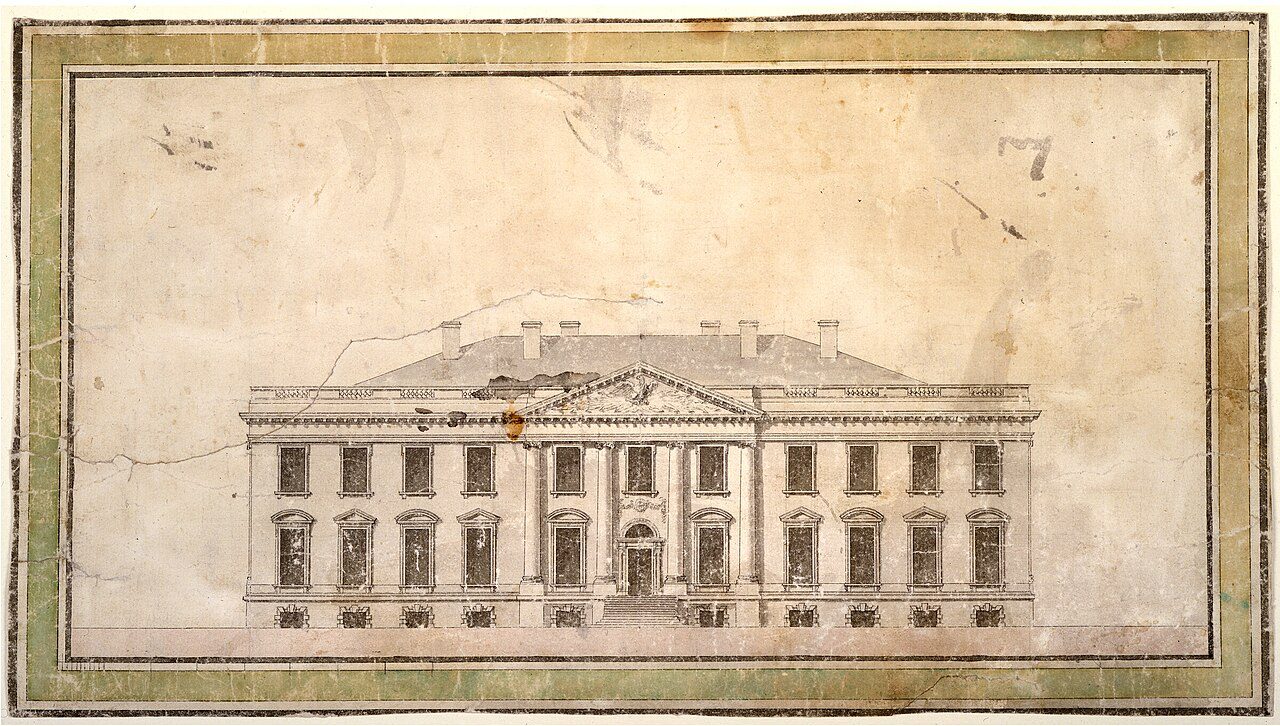
The other republic spent 1792 building quieter foundations. Washington signed the Postal Service Act on 20 February, putting the Post Office on a permanent footing; Congress founded the United States Mint on 2 April; and on 5 April Washington cast the first presidential veto in U.S. history, rejecting a bill on congressional apportionment. On 17 May twenty-four brokers signed the Buttonwood Agreement under a tree on Wall Street, founding what became the New York Stock Exchange, and on 1 June Kentucky entered the Union as the 15th state, the first west of the Appalachians. On 13 October the cornerstone of the president's house — James Hoban's future White House — was laid in the new federal capital, while in Paris the deposed king awaited the trial that would send him to the guillotine the following January.
Timeline of 1792
- 20 February
President George Washington signs the Postal Service Act, putting the U.S. Post Office on a permanent footing.
- 29 February
Gioachino Rossini, composer of The Barber of Seville and William Tell, is born in Pesaro on leap day.
- 2 April
The United States Mint is founded, giving the young republic its own official source of coinage.
- 5 April
George Washington casts the first presidential veto in U.S. history.
- 24 April
Claude-Joseph Rouget de Lisle composes 'La Marseillaise' overnight in Strasbourg.
- 17 May
Twenty-four brokers sign the Buttonwood Agreement on Wall Street, founding what becomes the New York Stock Exchange.
- 1 June
Kentucky is admitted to the Union as the 15th state, the first west of the Appalachian Mountains.
- 18 July
John Paul Jones, naval hero of the American Revolution, dies in Paris at 45.
- 10 August
A Paris crowd storms the Tuileries; Louis XVI is suspended and imprisoned, and the monarchy effectively falls.
- 20 September
At the Battle of Valmy, the French revolutionary army halts the Prussian advance on Paris.
- 21 September
France's National Convention abolishes the monarchy, ending over a thousand years of kingship.
- 22 September
The French First Republic is proclaimed in Paris.
- 13 October
The cornerstone of the president's house — the White House — is laid in Washington, D.C.
Why 1792 still matters
1792 matters because it turned a revolution against a king's policies into a revolution against kingship itself. Abolition by decree, a republic proclaimed the next morning, and a revolutionary calendar that renumbered time from that day: France announced that legitimacy now flowed from the nation, not the crown. Every monarchy in Europe understood the threat, and the wars that followed — already begun at Valmy — would last, in one form or another, for a generation.
Valmy is the year's hinge in arms: a citizen army standing its ground against Europe's most professional soldiers persuaded sceptics that the revolution could defend itself, and gave the Convention the security to abolish the monarchy the very next day. Sequence mattered: victory on 20 September, abolition on the 21st, republic on the 22nd.
The American entries show the alternative tempo of republic-building: a mint, a post office act, a stock exchange founded under a tree, a new state, a first veto testing the constitution's machinery, and a president's house begun on a swampy capital site. Where France remade its state in an afternoon's decree, the United States accumulated one — and the White House cornerstone, laid that October, outlasted every French regime of the era.
1792 on The History Trail
The fall of a monarchy and the founding of a republic — 1792 day by day.
- September 21 in History — France abolishes the monarchy — the featured story of the republic's birth.
- October 13 in History — The cornerstone of the White House is laid.
- August 10 in History — A crowd storms the Tuileries and the monarchy effectively falls.
- September 20 in History — The Battle of Valmy saves revolutionary Paris.
- April 24 in History — 'La Marseillaise' is composed overnight in Strasbourg.
- United States dollar — The currency of the republic that founded its Mint in 1792.
Sources
- Encyclopaedia Britannica — On This Day: September 21
- HISTORY — This Day in History: September 21
- Encyclopaedia Britannica — On This Day: September 20
- HISTORY — What Happened on August 10
- Encyclopaedia Britannica — On This Day: October 13
- Encyclopaedia Britannica — On This Day: April 2
The facts on this page were checked against these sources on 19 November 2026. The History Trail's permanent pages are researched and written for this site; the live profiles elsewhere on The History Trail are assembled automatically from Wikipedia and Wikidata.
About the Author
Researched and written by the The History Trail Editorial Team — the accountable editorial function behind this site's permanent story pages. The team works from the published sources cited on each page; it does not invent historians, reviewers or credentials, and it corrects errors openly.
Fact Check
Every load-bearing fact on this page traces to one of the sources listed above, and significant claims link to their source in the text. Our checking method is described on the methodology page; errors can be reported via the corrections page.
Sources & Citations
Cite this page as: The History Trail Editorial Team, The History Trail — this article's title, publication and update dates are shown beneath its headline. The full source list appears under Sources above; the site's source standards are on the sources page.