
On This Day
September 20 in History
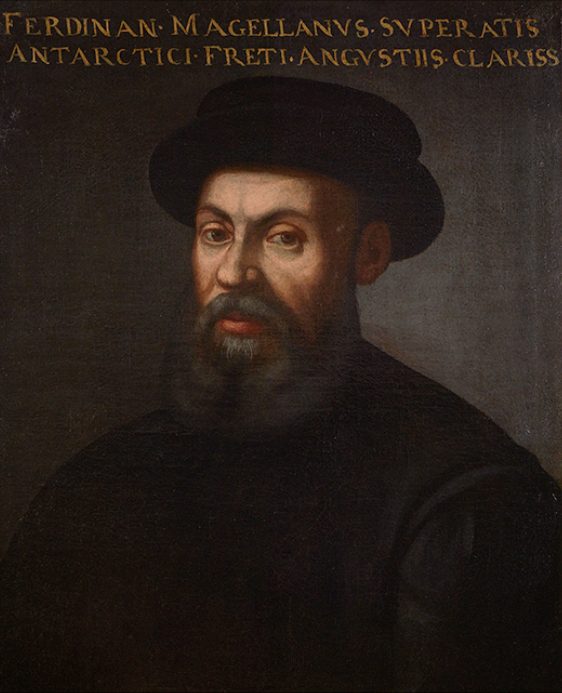
On 20 September 1519 five ships under the Portuguese navigator Ferdinand Magellan sailed from Sanlúcar de Barrameda in Spain, beginning the expedition that would complete the first circumnavigation of the Earth. September 20 is also the day Italian troops entered Rome in 1870, the first Cannes Film Festival opened, and Billie Jean King won the 'Battle of the Sexes'.
Choose another date: open the On This Day calendar to browse events, births and deaths for any day of the year.
At a Glance
- The departure
- Sanlúcar de Barrameda, Spain, 20 September 1519, after weeks of final preparation downriver from Seville
- The fleet
- Five ships — Trinidad, San Antonio, Concepción, Santiago and Victoria — with about 270 men
- The commander
- Ferdinand Magellan, a Portuguese navigator sailing for Charles I of Spain
- The mission
- To find a western sea route to the Spice Islands (the Moluccas) by sailing around South America
- The cost
- Magellan was killed in the Philippines in April 1521; most of the fleet and crew never returned
- The completion
- The Victoria, under Juan Sebastián Elcano, reached Spain on 6 September 1522 with 18 survivors — the first ship to circle the globe
Events on this day
- 1519Ferdinand Magellan's fleet of five ships sails from Sanlúcar de Barrameda to seek a western route to the Spice Islands — the featured story above.
- 1792At the Battle of Valmy, the French revolutionary army halts the Prussian advance on Paris; Goethe, present with the Prussian army, senses a new era beginning.
- 1854At the Battle of the Alma, British, French and Ottoman forces defeat the Russians in the first major battle of the Crimean War.
- 1870Italian troops breach Rome's walls at the Porta Pia and take the city, completing the unification of Italy; the Pope withdraws into the Vatican.
- 1946The first Cannes Film Festival opens in France, seven years after its planned 1939 debut was cancelled by the outbreak of war.
- 1973Billie Jean King defeats Bobby Riggs in straight sets in the 'Battle of the Sexes' tennis match at the Houston Astrodome.
- 1988Margaret Thatcher delivers her Bruges speech, setting out British resistance to a centralised European super-state and reshaping the Europe debate.
- 2011'Don't Ask, Don't Tell', the policy barring openly gay Americans from military service, is formally repealed in the United States.
Born on this day
- 1878Upton Sinclair — American novelist and muckraker whose novel The Jungle exposed the meatpacking industry and changed food law.
- 1899Leo Strauss — German-American political philosopher whose readings of classical texts shaped modern conservatism.
- 1934Sophia Loren — Italian actress, an Academy Award winner for Two Women and an enduring emblem of Italian cinema.
- 1948George R. R. Martin — American novelist of A Song of Ice and Fire, the books behind Game of Thrones.
Died on this day
- 1863Jacob Grimm — German philologist and folklorist, elder of the Brothers Grimm, whose fairy tales and dictionary shaped German letters.
- 1957Jean Sibelius — Finland's national composer, of Finlandia and seven symphonies, dead at his home Ainola at 91.
- 1973Jim Croce — American singer-songwriter of 'Time in a Bottle', killed in a plane crash in Louisiana at 30, on the day his greatest fame was arriving.
- 1999Raisa Gorbacheva — wife and close partner of Soviet leader Mikhail Gorbachev, whose public role redefined the Soviet first lady.
The featured story: Magellan's fleet sails, 20 September 1519
On 20 September 1519 a fleet of five ships dropped down from Sanlúcar de Barrameda, at the mouth of the Guadalquivir, and turned into the Atlantic. Its commander was a Portuguese veteran of the Indian Ocean wars, Ferdinand Magellan, sailing now for Spain's young king Charles I with a commission to do what Columbus had failed to do: reach the Spice Islands — the Moluccas, source of cloves and nutmeg worth more than gold — by sailing west. About 270 men were aboard the Trinidad, San Antonio, Concepción, Santiago and Victoria. None of them, Magellan included, was proposing to sail around the world; the circumnavigation happened to the expedition, not by its design.
The fleet crossed the Atlantic, wintered in Patagonia — where Magellan crushed a mutiny with executions — and in October 1520 threaded the stormy strait at South America's tip that still bears his name, though one ship, the San Antonio, deserted and sailed home. Beyond the strait lay an ocean so calm that Magellan named it Pacific. The crossing took nearly four months, far longer than any estimate: the crews ate rats, sawdust and leather, and scurvy killed freely, before the survivors reached Guam and then the Philippines in March 1521.
There, on 27 April 1521, Magellan was killed at Mactan, intervening in a local dispute with a force of some sixty men against the warriors of the chieftain Lapulapu. Command passed from hand to hand as the expedition shrank: the Concepción was burned for want of crews, the Trinidad was left behind and captured, and at last the Victoria alone, loaded with cloves and commanded by the Basque navigator Juan Sebastián Elcano, set out across the Indian Ocean and around Africa. She reached Sanlúcar on 6 September 1522 — just under three years after the departure — with 18 starved survivors of the original company.
The voyage proved, in the most literal way, the size and sphericity of the Earth: the Victoria's crew, keeping a meticulous log, found on reaching the Cape Verde Islands that their calendar was a day behind the world's — the first human experience of the date line. It opened the Pacific to European charts and gave Spain a route to Asia, at a price in lives that the age barely counted. Elcano received a coat of arms bearing a globe and the motto 'You first circled me.' The fleet that sailed on 20 September 1519 had set out for spices; it came back, one ship of five, having measured the planet.
Why this date matters
September 20 is a day of departures that outgrew their purposes. Magellan sailed for spices and produced a measurement of the Earth; Italian troops entered Rome in 1870 to finish a nation and began a 59-year quarrel with the papacy instead; a film festival postponed by war opened in 1946 and became cinema's parliament; and a tennis exhibition in 1973 became a referendum on women's equality watched around the world. The date rewards those who set out — and keeps the receipts, in sunken ships and lost stars, for what the setting-out cost.
Sources
- Encyclopaedia Britannica — On This Day: September 20
- HISTORY — This Day in History: September 20
- Encyclopaedia Britannica — Ferdinand Magellan
- Wikimedia — On This Day feed: September 20
The facts on this page were checked against these sources on 19 November 2026. The History Trail's permanent pages are researched and written for this site; the live profiles elsewhere on The History Trail are assembled automatically from Wikipedia and Wikidata.
About the Author
Researched and written by the The History Trail Editorial Team — the accountable editorial function behind this site's permanent story pages. The team works from the published sources cited on each page; it does not invent historians, reviewers or credentials, and it corrects errors openly.
Fact Check
Every load-bearing fact on this page traces to one of the sources listed above, and significant claims link to their source in the text. Our checking method is described on the methodology page; errors can be reported via the corrections page.
Sources & Citations
Cite this page as: The History Trail Editorial Team, The History Trail — this article's title, publication and update dates are shown beneath its headline. The full source list appears under Sources above; the site's source standards are on the sources page.