
Things
Day of the Dead
The Day of the Dead — Día de los Muertos — is Mexico's festival of remembrance, observed on 1 and 2 November, when families build altars, visit graves and welcome the spirits of their dead back for a joyful reunion. It treats death familiarly, without fear, as a continuation of life.
At a Glance
- Spanish name
- Día de los Muertos (Día de Muertos)
- Dates
- 1–2 November
- Catholic frame
- All Saints' Day (1 November) and All Souls' Day (2 November)
- Altar
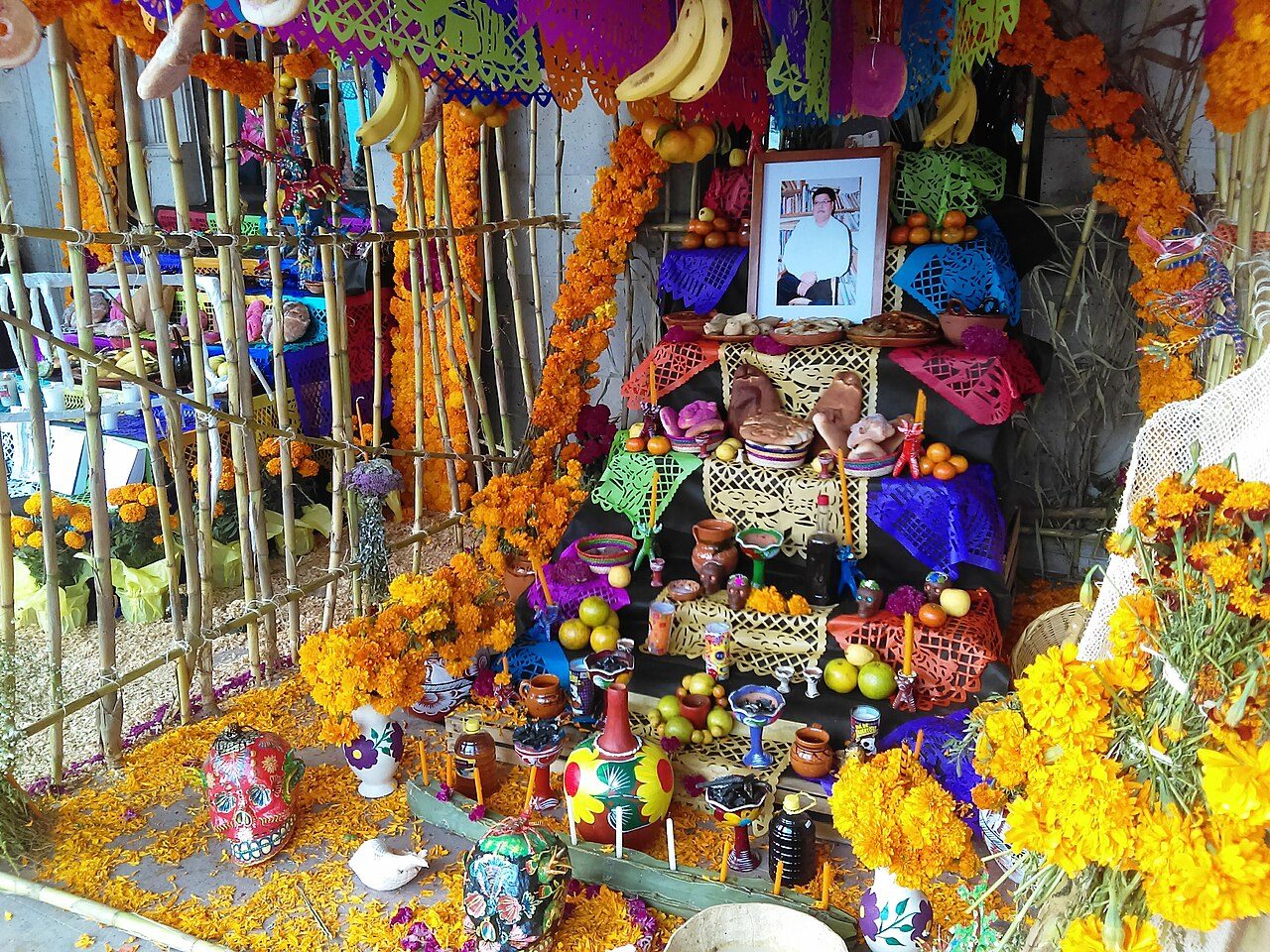
- The ofrenda, with photographs, candles, marigolds and the dead person's favourite foods
- Flower
- Cempasúchil, the Mexican marigold
- Icon
- La Calavera Catrina, created by printmaker José Guadalupe Posada
- UNESCO
- Inscribed in 2008 on the Representative List of the Intangible Cultural Heritage of Humanity
Introduction
The Day of the Dead is a holiday in Mexico, also observed to a lesser extent in other parts of Latin America and in the United States, that honours deceased loved ones on 1 and 2 November. Families visit cemeteries to clean and decorate graves with candles, marigolds and the favourite foods of the dead, and build altars at home — all in the hope of encouraging the spirits to return for a joyful reunion with the living.
Though it sits beside Halloween on the calendar, the Day of the Dead is distinct in both origin and meaning. Where Halloween plays with fear of death, Día de Muertos meets death without dread: the dead are guests, fed, toasted, teased in comic verse and remembered with stories, in a festival rooted in Indigenous cultures that understood death as a continuation of life rather than its opposite.
Origins
The observance traces its origins back thousands of years to the Indigenous peoples of Mesoamerica — Aztecs, Toltecs, Maya and others — who held a cyclical understanding of life and death. Among the Aztecs there was a common belief that after death a person's soul embarked on a long journey through the Land of the Dead before reaching Mictlan, the underworld governed by the lord and lady of the dead. Families played an active role in helping their loved ones complete it, leaving offerings of food, water, tools and personal objects to nourish and guide the spirits along the way.
When Spanish colonisers arrived in the sixteenth century, they brought the Roman Catholic observances of All Saints' Day and All Souls' Day, on 1 and 2 November, and a new calendar. Indigenous communities adapted these frameworks to their existing beliefs and rituals of remembrance, and the resulting tradition is a fusion: Catholic prayers and masses alongside the pre-Hispanic conviction that death is a continuation of life and that the dead remain connected to the living. UNESCO describes the festival as the fusion of pre-Hispanic religious rites and Catholic feasts, bringing together two universes.
Timeline
- Pre-Hispanic era
Indigenous peoples of Mesoamerica, among them the Aztecs, honour the dead with offerings of food, water and tools to aid the soul's journey toward Mictlan.
- 16th century
Spanish colonisation brings All Saints' Day and All Souls' Day, on 1 and 2 November; Indigenous remembrance rites settle onto the Catholic dates.
- By 31 October
Families set up ofrendas — home altars with photographs, candles, marigolds, incense, salt and the dead person's favourite foods and drinks.
- 1 November
All Saints' Day. Families visit cemeteries, clean and repaint graves, and lay flower petals and candles along the paths leading home, to guide the souls to the ofrenda.
- 2 November
All Souls' Day. The reunion peaks in cemeteries and at altars, with food, drink, prayer and storytelling; after the holiday, the ofrendas are taken down.
- c. 1910–1913
The printmaker José Guadalupe Posada creates his zinc etching of an elegant female skull — the image that becomes La Calavera Catrina.
- 1913
Posada's Catrina receives its first certain publication, in a satirical broadside issued for the Day of the Dead.
- 1947
Diego Rivera paints Catrina as a full, dressed figure in his mural of a Sunday afternoon in the Alameda Park, helping to turn her into a national symbol of Mexico.
- 2008
UNESCO inscribes the Indigenous festivity dedicated to the dead on its Representative List of the Intangible Cultural Heritage of Humanity; it had originally been proclaimed in 2003.
- 2016
Mexico City stages its first great Day of the Dead parade, inspired by the opening sequence of the James Bond film Spectre the year before.
Significance
The ofrenda is the festival's grammar. Its offerings traditionally represent the four elements of nature: fire, in the candles that light the spirits' path; water, for purification; earth, symbolised by the food prepared to nourish them; and wind, in the delicate cut-paper banners called papel picado, whose patterns are believed to let the souls pass through. The bright orange and yellow cempasúchiles, marigolds, are laid in trails because their colour and scent are believed to guide spirits back to the world of the living.
The festival does social work as well as spiritual work. UNESCO notes that this encounter between the living and the dead affirms the role of the individual within society and reinforces the standing of Mexico's Indigenous communities. Sugar skulls inscribed with the names of the dead, the sweet bread pan de muerto, and humorous verses about living friends keep the tone affectionate: in many places the festivities are characterised by black humour, and grief is answered with hospitality.
Myths and disputes
Is the Day of the Dead a 'Mexican Halloween'? No — the comparison rests on the calendar alone. Día de Muertos is distinct from Halloween in both origin and meaning: it treats death familiarly, without fear and dread, and its core acts — the altar, the grave visit, the offered meal — are hospitality to the dead, not horror. Skull face paint and street parties borrow some of Halloween's energy, but they decorate a much older act of remembrance.
Even the festival's antiquity is debated. Mexican academics are divided on whether the observance has genuine Indigenous pre-Hispanic roots, or is largely a Spanish Allhallowtide tradition reshaped in the twentieth century, when the presidency of Lázaro Cárdenas encouraged Mexican nationalism through an 'Aztec' identity. The Mexico City parade shows the layering continuing in the open: invented in 2016 after a film imagined one, it now draws more than a million spectators a year — a new tradition wrapped around an old core.
Legacy
The Day of the Dead has become a national symbol of Mexico and a worldwide emblem of its culture. It is celebrated by Mexican communities across the United States — Oakland's Fruitvale neighbourhood, among others, holds a large annual festival with public ofrendas — and Catrina, created as satire of powdered, wealthy women who would all end as skulls, now stands on altars as a beloved figure of the day.
UNESCO's inscription recognised what celebrants already practised: a festival in which the dead are not gone, only away, and expected home each November — and in which preparing their favourite dishes, laying their flower paths and telling their stories is itself an act of love that keeps a family's memory, and a community's identity, alive.
Sources
- UNESCO — Indigenous festivity dedicated to the dead
- Encyclopaedia Britannica — Day of the Dead
- Wikipedia — Day of the Dead
- Wikipedia — La Calavera Catrina
The facts on this page were checked against these sources on 19 November 2026. The History Trail's permanent pages are researched and written for this site; the live profiles elsewhere on The History Trail are assembled automatically from Wikipedia and Wikidata.
About the Author
Researched and written by the The History Trail Editorial Team — the accountable editorial function behind this site's permanent story pages. The team works from the published sources cited on each page; it does not invent historians, reviewers or credentials, and it corrects errors openly.
Fact Check
Every load-bearing fact on this page traces to one of the sources listed above, and significant claims link to their source in the text. Our checking method is described on the methodology page; errors can be reported via the corrections page.
Sources & Citations
Cite this page as: The History Trail Editorial Team, The History Trail — this article's title, publication and update dates are shown beneath its headline. The full source list appears under Sources above; the site's source standards are on the sources page.