
Things
Halloween
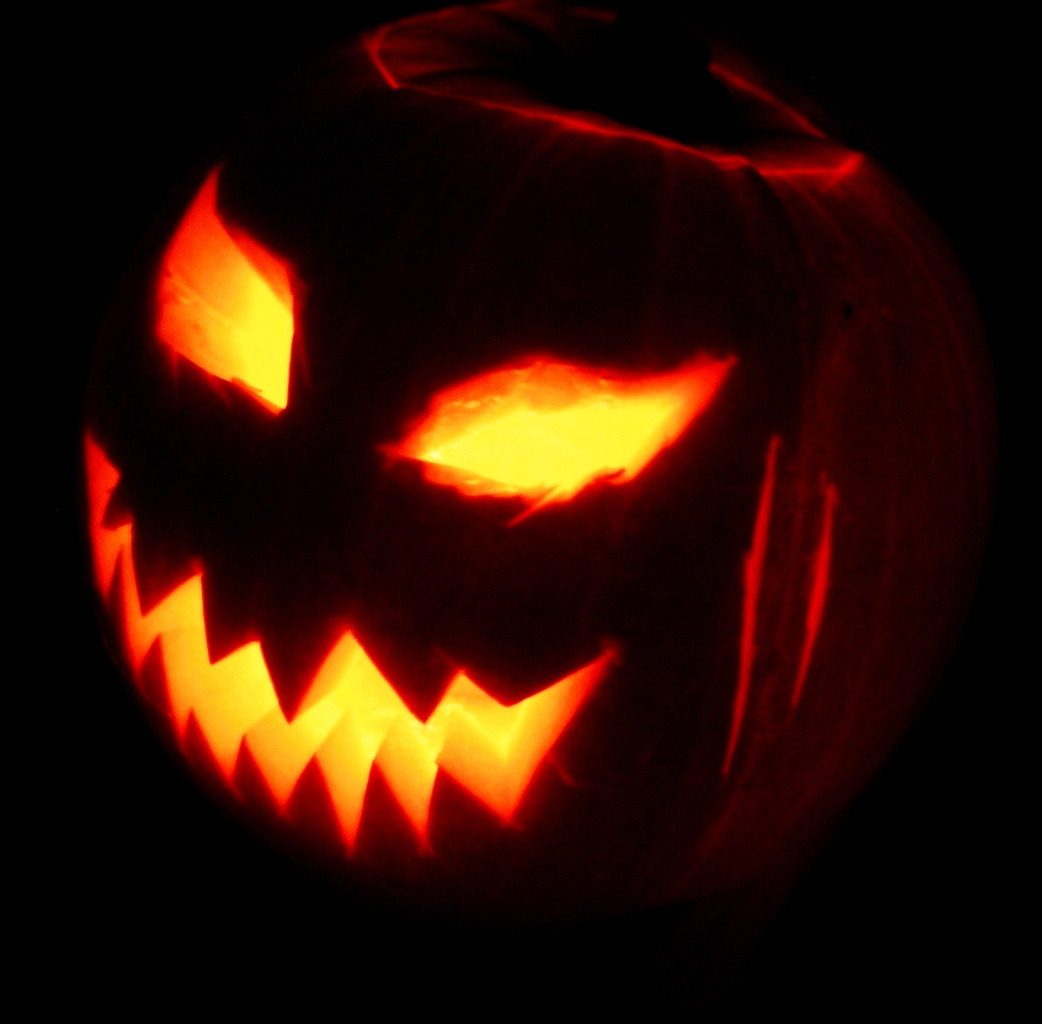
Halloween, on 31 October, is the year's festival of ghosts, costumes and carved lanterns — but it began as two older observances fused together: the Celtic festival of Samhain, when the dead were believed to walk, and the Christian eve of All Saints' Day, from which it takes its name.
At a Glance
- Date
- 31 October, the eve of All Saints' Day
- Name from
- All Hallows' Eve — the evening before All Hallows' (All Saints') Day
- Opens
- Allhallowtide: All Hallows' Eve (31 October), All Saints' Day (1 November), All Souls' Day (2 November)
- Roots
- The Celtic festival of Samhain and the medieval Christian feasts of the dead
- Original lantern
- A hollowed turnip in the British Isles; the pumpkin took over in North America
- 'Trick or treat'
- The phrase is first recorded in 1927; the custom caught on in the United States in that decade
- Carried to America by
- Irish and other European immigrants, in large numbers from the mid-19th century
Introduction
Halloween is a holiday observed every year on 31 October, the evening before the Christian feast of All Saints' Day — and that one sentence already answers most questions about it. In much of Europe and most of North America it is now celebrated largely without religion, with costume parties, carved pumpkins called jack-o'-lanterns, and children going door to door calling 'trick or treat' in exchange for sweets. Yet it also opens Allhallowtide, a three-day season of remembrance for the dead that runs from All Hallows' Eve through All Saints' Day on 1 November to All Souls' Day on 2 November.
That mixture — pagan, Christian and purely playful — is Halloween's whole story in miniature. Almost every familiar custom has a double ancestry. Disguises may descend both from Samhain's wandering spirits and from medieval guising. Door-to-door begging began as prayers offered for the dead. Lanterns were first carved from turnips in the British Isles and only later from American pumpkins. Halloween is not one festival wearing a costume; it is several festivals that learned, over centuries, to share a single night.
Origins
Halloween is believed to have connections to Samhain, the festival of the Celts of ancient Ireland. Around the date that corresponds to 1 November on modern calendars, the Celtic new year was thought to begin and the winter period to start: livestock were brought in from pasture and land tenures were renewed. On the eve of Samhain, people believed, the boundary between the worlds of the living and the dead blurred. The souls of those who had died were said to return to visit their homes, while those who had died during the year journeyed to the otherworld.
People set bonfires on hilltops, to relight their hearth fires for the winter and possibly to frighten away evil spirits, and they sometimes wore masks and other disguises to avoid being recognised by the ghosts believed to be present — one plausible root of the Halloween costume. Rome, conquering Celtic Britain in the 1st century CE, added its own commemorations of the dead. The Church then layered its feasts onto the same dates: All Saints' Day, established by Pope Boniface IV in the 7th century and first kept on 13 May, was moved to 1 November in the 8th century by Pope Gregory III, perhaps in part to supplant the pagan holiday, and 2 November was later designated All Souls' Day, devoted to praying for all the faithful departed. The evening before All Saints' — All Hallows' Eve — gave Halloween its name.
Timeline
- Ancient Ireland
Samhain marks the Celtic new year and the beginning of winter around 1 November; on its eve the dead are believed to visit their homes and bonfires are lit on hilltops.
- 1st century CE
Rome conquers Celtic Britain, bringing Feralia, its commemoration of the passing of the dead, and traditions of Pomona, goddess of fruit trees and orchards.
- 7th century
Pope Boniface IV establishes All Saints' Day, originally kept on 13 May.
- 8th century
Pope Gregory III moves All Saints' Day to 1 November; the evening before it, All Hallows' Eve, will in time contract into the word 'Halloween'.
- Middle Ages
By the end of the Middle Ages the sacred and secular days have merged. In 'souling', poor people — especially children — go door to door offering prayers for a household's dead in exchange for food or money, while guisers earn their reward with a song, a joke or a small trick.
- 1800s
The early American colonists had largely forbidden Halloween, but during the 1800s harvest festivals in America develop that incorporate elements of it.
- Mid-19th century
Large numbers of immigrants, including many from Ireland, bring their Halloween customs to the United States.
- 1927
The phrase 'trick or treat' is first recorded; during that decade the pastime catches on in the United States, though early celebrations lean heavily toward tricks and sometimes dangerous pranks.
- After World War II
The end of sugar rationing cements trick-or-treating's sweet side. A Peanuts strip uses 'tricks or treats' in 1951, Disney's Donald Duck short Trick or Treat follows in 1952, and shop-bought candy replaces home-made offerings.
- 20th century
Halloween becomes one of the principal American holidays, particularly among children, and one of the biggest holidays of the year for candy sales in the United States.
Significance
Halloween's significance is that it holds two opposite things in one night without resolving them. As All Hallows' Eve it begins a solemn Christian season for remembering the dead: in Catholic-majority countries All Saints' and All Souls' remain important religious holidays, when families visit cemeteries and light candles for their relatives. As a secular festival it licenses the opposite mood — disguise, mischief, horror enjoyed as entertainment. The candles lit on graves and in windows to guide souls and the candles grinning inside pumpkins are, historically, the same gesture at different temperatures.
The holiday also records a social bargain. Door-to-door visiting began as an exchange across the line between rich and poor, and between the living and the dead: food or money given, prayers returned. When the festival became secular, the prayers dropped away and the exchange shrank to sweets for a performed 'trick' — but the structure survived intact. Community groups in the 20th century actively promoted trick-or-treating as the safe, supervised version of a night that had tipped into vandalism, and since the mid-20th century UNICEF has invited children to collect for other children as they go, turning the old alms-round to a new purpose.
Legacy
Halloween's legacy is a case study in how festivals travel. Carried across the Atlantic by emigrants, rebuilt in America around children, candy and the pumpkin, and then exported again in that American form, it is now kept across Europe and North America and far beyond, while its older layers remain alive beside the new one: All Saints' and All Souls' are still kept as days of prayer and cemetery visits in much of the world, and Samhain itself is celebrated as a major festival in modern Paganism.
Few holidays carry so much of their own history visibly on the surface. The name is a medieval church feast worn smooth by use; the costumes remember spirits that were once genuinely feared; the sweets stand where soul cakes and alms once stood; and the lantern on the doorstep began as a turnip meant to guide or ward off the wandering dead. Halloween endures because every generation finds one of its layers — reverent, communal or gleefully spooky — worth keeping.
Sources
- Encyclopaedia Britannica — Halloween
- Encyclopaedia Britannica — History of Trick-or-Treating
- Encyclopaedia Britannica — Samhain
- Encyclopaedia Britannica — Jack-o'-lantern
- Merriam-Webster — The History of 'Trick or Treat'
The facts on this page were checked against these sources on 19 November 2026. The History Trail's permanent pages are researched and written for this site; the live profiles elsewhere on The History Trail are assembled automatically from Wikipedia and Wikidata.
About the Author
Researched and written by the The History Trail Editorial Team — the accountable editorial function behind this site's permanent story pages. The team works from the published sources cited on each page; it does not invent historians, reviewers or credentials, and it corrects errors openly.
Fact Check
Every load-bearing fact on this page traces to one of the sources listed above, and significant claims link to their source in the text. Our checking method is described on the methodology page; errors can be reported via the corrections page.
Sources & Citations
Cite this page as: The History Trail Editorial Team, The History Trail — this article's title, publication and update dates are shown beneath its headline. The full source list appears under Sources above; the site's source standards are on the sources page.