
On This Day
June 13 in History
On 13 June 1971 The New York Times began publishing the Pentagon Papers, the government's own secret history of the Vietnam War, leaked by analyst Daniel Ellsberg — and triggered the greatest press-freedom fight in American history. June 13 is also the day of the Miranda ruling, Lafayette's landing in America, and Pioneer 10's exit from the planetary system.
Choose another date: open the On This Day calendar to browse events, births and deaths for any day of the year.
At a Glance
- The documents
- A 47-volume, 7,000-page secret Pentagon history of US decision-making on Vietnam, 1945–1967
- The leaker
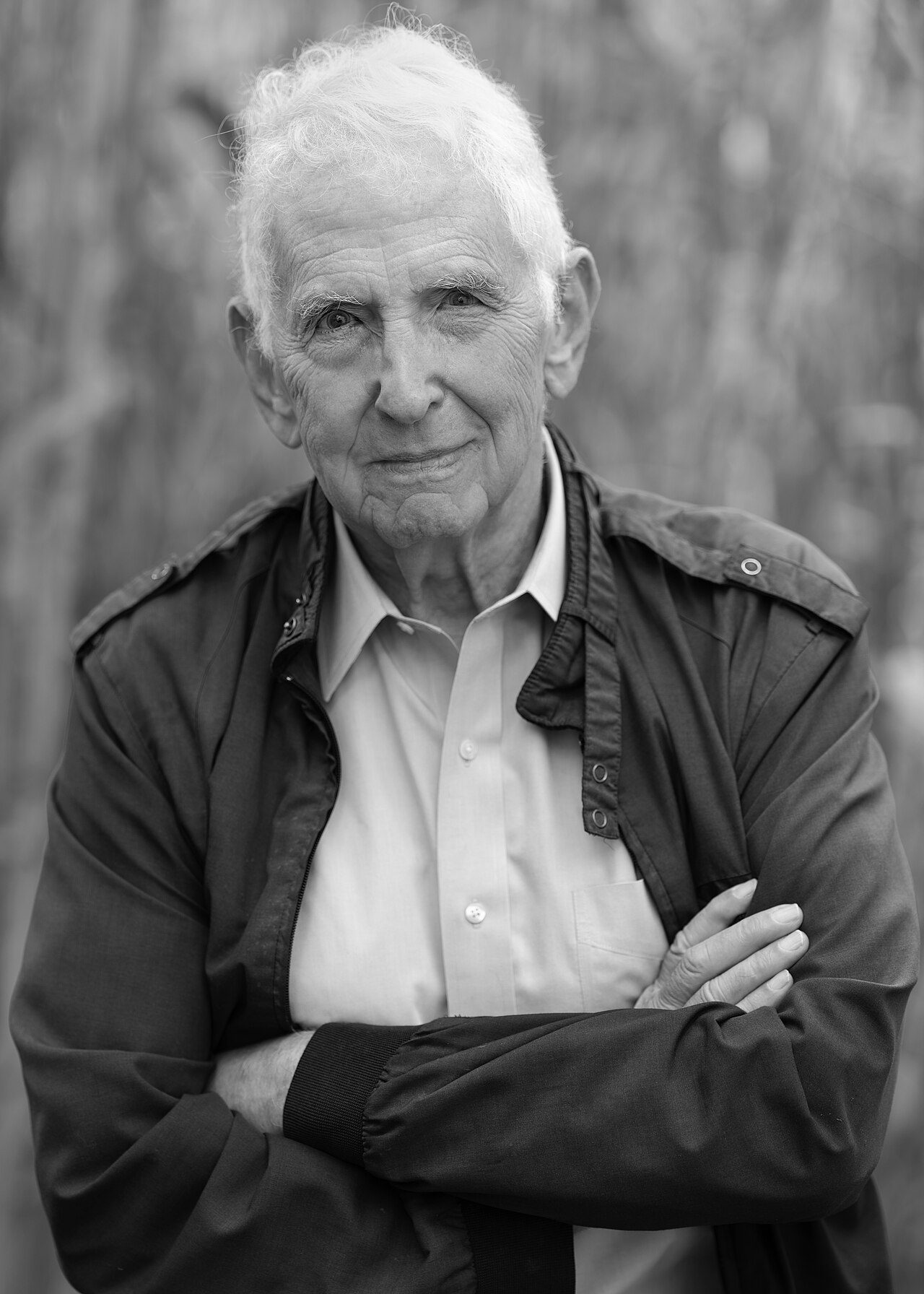
- Daniel Ellsberg, a former Marine and RAND analyst who had worked on the study
- First publication
- The New York Times, Sunday 13 June 1971, reported by Neil Sheehan
- The legal first
- The Nixon administration won the first prior-restraint orders against newspapers in US history
- The ruling
- On 30 June 1971 the Supreme Court held 6–3 that the government could not stop publication
- The aftershock
- The White House 'Plumbers' unit created to fight leaks went on to burgle Watergate
Events on this day
- 1525Martin Luther marries Katharina von Bora, a former nun — a match that shocks Catholic Europe and models the Protestant parsonage.
- 1777The 19-year-old Marquis de Lafayette lands in South Carolina, offering his sword and his fortune to the American Revolution.
- 1807President Thomas Jefferson is subpoenaed to testify in the treason trial of his former vice-president, Aaron Burr.
- 1842Queen Victoria rides from Slough to Paddington, the first British monarch to travel by train.
- 1927Charles Lindbergh, fresh from Paris, is honoured with a ticker-tape parade up Broadway in New York.
- 1966In Miranda v. Arizona, the US Supreme Court rules that suspects must be told their rights before interrogation — the origin of the Miranda warning.
- 1967President Lyndon Johnson nominates Thurgood Marshall to the Supreme Court, its first Black justice.
- 1971The New York Times begins publishing the Pentagon Papers — the featured story above.
- 1983Pioneer 10 crosses the orbit of Neptune and leaves the planetary system, the first craft to do so.
- 1997Timothy McVeigh is sentenced to death for the Oklahoma City bombing.
- 2000North and South Korea open their first-ever summit, between Kim Dae-jung and Kim Jong Il in Pyongyang.
- 2005Michael Jackson is acquitted on all counts at the end of his 14-week trial in California.
Born on this day
- 1865William Butler Yeats — Irish poet and playwright, Nobel laureate and a founder of the Abbey Theatre.
- 1888Fernando Pessoa — Portuguese poet who wrote under dozens of invented selves, or heteronyms.
- 1935Christo — Bulgarian-born artist who, with Jeanne-Claude, wrapped the Reichstag and the Pont-Neuf in fabric.
- 1943Malcolm McDowell — English actor, the menacing Alex of A Clockwork Orange.
- 1944Ban Ki-moon — South Korean diplomat who served two terms as secretary-general of the United Nations.
- 1981Chris Evans — American actor who played Captain America across the Marvel films.
Died on this day
- 1886Louis II — king of Bavaria, builder of Neuschwanstein, found drowned in Lake Starnberg days after being deposed as mad.
- 1986Benny Goodman — American clarinettist, the 'King of Swing', dead at 77.
- 1987Geraldine Page — American actress, Oscar winner for The Trip to Bountiful, dead at 62.
- 2006Charles Haughey — three-time taoiseach of Ireland, the most controversial Irish politician of his era.
The featured story: the Pentagon Papers are published, 13 June 1971
On Sunday 13 June 1971, readers of The New York Times opened their paper to a story unlike any before it: the first instalment of a 7,000-page secret history of the Vietnam War, commissioned by the Pentagon itself, which showed that successive American governments had systematically misled the public about the war's aims, its expansion and its prospects. The documents — the 'Pentagon Papers' — had been leaked by Daniel Ellsberg, a former Marine and defence analyst who had helped compile the study and had come to believe the war was a crime sustained by lies.
The study, officially the History of the U.S. Decision-Making Process on Vietnam Policy, had been ordered by Defense Secretary Robert McNamara in 1967 and completed in 1969. Its 47 volumes documented, among much else, how the United States had helped engineer the cancellation of Vietnam's reunification elections, secretly bombed and raided beyond Vietnam's borders, and planned escalation while publicly promising restraint. Ellsberg, having failed to interest senators in releasing it, photocopied the volumes with his friend Anthony Russo and gave them to Times reporter Neil Sheehan.
The Nixon administration reacted within days. Arguing that publication would damage national security, the Justice Department obtained a restraining order against the Times — the first time in American history that the federal government had imposed prior restraint on a newspaper. The Washington Post then began publishing its own copies, and was restrained in turn. While the lawyers argued, Ellsberg went underground, surrendering to federal authorities in Boston on 28 June as an FBI manhunt ran on national television.
On 30 June the Supreme Court ruled 6–3 that the government had not met the heavy burden required to stop the presses. The case, New York Times Co. v. United States, became the landmark defence of press freedom against prior restraint. Its aftershocks were larger still: enraged by the leak, the White House created the 'Plumbers' unit to discredit Ellsberg — and the same men, a year later almost to the day, were caught inside the Watergate building, setting off the scandal that destroyed Nixon's presidency.
Why this date matters
June 13 is a day about secrets and the people who break them open. The Pentagon Papers reached print on it; the Miranda warning — the right to stay silent, spoken aloud — was created on it; a president was subpoenaed on it, and a future Supreme Court justice was nominated on it in the same decade. Even its quieter entries turn on revelation: a monk defying celibacy in public, a queen trying the frightening new railway, a space probe slipping silently out of the known system. Again and again, the date belongs to the moment something hidden becomes impossible to hide again — and the republic is usually better for the exposure, however uncomfortable the morning after feels.
Sources
- Encyclopaedia Britannica — On This Day: June 13
- HISTORY — What Happened on June 13
- HISTORY — The New York Times publishes the 'Pentagon Papers'
- Encyclopaedia Britannica — Daniel Ellsberg
- Wikimedia Commons — Daniel Ellsberg 2020 CM

The facts on this page were checked against these sources on 19 November 2026. The History Trail's permanent pages are researched and written for this site; the live profiles elsewhere on The History Trail are assembled automatically from Wikipedia and Wikidata.
About the Author
Researched and written by the The History Trail Editorial Team — the accountable editorial function behind this site's permanent story pages. The team works from the published sources cited on each page; it does not invent historians, reviewers or credentials, and it corrects errors openly.
Fact Check
Every load-bearing fact on this page traces to one of the sources listed above, and significant claims link to their source in the text. Our checking method is described on the methodology page; errors can be reported via the corrections page.
Sources & Citations
Cite this page as: The History Trail Editorial Team, The History Trail — this article's title, publication and update dates are shown beneath its headline. The full source list appears under Sources above; the site's source standards are on the sources page.