
On This Day
January 7 in History
On 7 January 1610 Galileo Galilei, observing through a homemade telescope at Padua, noticed three small points of light beside Jupiter that he first took for stars; within days he understood they were moons circling the planet — the first proof that not everything in the heavens revolves around the Earth. January 7 is also the day France retook Calais and the first transatlantic telephone service opened.
Choose another date: open the On This Day calendar to browse events, births and deaths for any day of the year.
At a Glance
- The observation
- On 7 January 1610 Galileo saw three points of light near Jupiter through a telescope of about twenty-power magnification that he had built himself
- The conclusion
- By 15 January, watching the points change position night by night, he concluded they were moons orbiting Jupiter; a fourth appeared in the following nights
- The publication
- Galileo announced the discovery in March 1610 in Sidereus Nuncius, 'The Starry Messenger'
- The names
- Galileo proposed calling them the Medicean Stars, after his patrons; they are now Io, Europa, Ganymede and Callisto, names suggested in the following years
- Why it mattered
- Moons plainly circling Jupiter contradicted the doctrine that every heavenly body must orbit the Earth, and armed the Copernican case for a moving Earth
Events on this day
- 1558French forces retake Calais, the last possession of the English crown on the European mainland, held for more than two centuries.
- 1610Galileo Galilei first observes the moons of Jupiter — the featured story above.
- 1785Jean-Pierre Blanchard and John Jeffries make the first crossing of the English Channel by air, in a balloon from Dover to France.
- 1789American voters choose presidential electors in the first United States presidential election; they unanimously select George Washington.
- 1927Commercial transatlantic telephone service opens between New York and London; the first call links the heads of AT&T and the British Post Office.
- 1953President Harry S. Truman announces that the United States has developed a hydrogen bomb.
- 1955Marian Anderson becomes the first African American singer to perform at the Metropolitan Opera in New York, as Ulrica in Un ballo in maschera.
- 1979Vietnamese forces capture Phnom Penh and overthrow Pol Pot's Khmer Rouge regime in Cambodia.
- 1989Emperor Hirohito of Japan dies after a 62-year reign; his son Akihito succeeds him, beginning the Heisei era.
- 1999The impeachment trial of President Bill Clinton opens in the United States Senate; he is acquitted the following month.
- 2015Two gunmen attack the Paris offices of the satirical magazine Charlie Hebdo, killing twelve people.
Born on this day
- 1800Millard Fillmore — thirteenth president of the United States, who succeeded on Zachary Taylor's death.
- 1891Zora Neale Hurston — American novelist and anthropologist of the Harlem Renaissance, author of Their Eyes Were Watching God.
- 1912Charles Addams — American cartoonist whose macabre New Yorker family became The Addams Family.
- 1925Gerald Durrell — British naturalist and author who founded the Jersey Zoo and wrote My Family and Other Animals.
- 1964Nicolas Cage — American actor of Leaving Las Vegas and National Treasure.
Died on this day
- 1536Catherine of Aragon — Henry VIII's first queen, dead at Kimbolton Castle still insisting she was his lawful wife.
- 1943Nikola Tesla — Serbian-American inventor of the alternating-current electrical system, dead alone in a New York hotel.
- 1989Hirohito — emperor of Japan through the Second World War, whose reign of 62 years was the longest in Japanese history.
- 2024Franz Beckenbauer — German footballer who won the World Cup as both captain and coach.
The featured story: Galileo discovers the moons of Jupiter, 7 January 1610
The telescope was barely a year old as an idea when Galileo Galilei turned his own improved version on the winter sky from Padua. His instrument magnified about twenty times — feeble by later standards, revolutionary in 1610 — and through the autumn of 1609 it had already shown him mountains on the Moon. On the night of 7 January 1610 he pointed it at Jupiter, then bright in the evening sky, and noted three small star-like points arranged in a line beside the planet, two to one side and one to the other. He assumed they were fixed stars and thought little more of it.
What made the discovery was that he looked again. On the following nights the three points had shifted relative to Jupiter and to each other in ways no fixed stars could manage, and a fourth point appeared among them. By 15 January Galileo had drawn the conclusion that inverted the sky: the points were bodies circling Jupiter, carried around with it — moons of another world. He published within weeks. Sidereus Nuncius, 'The Starry Messenger', appeared in March 1610 and made him famous across Europe; he cannily proposed naming the moons the Medicean Stars, after the Medici grand dukes whose patronage he sought, and got his post in Florence.
The four moons — now known by the names Io, Europa, Ganymede and Callisto, suggested a few years later — were far more than a curiosity. The reigning cosmology, inherited from Aristotle and Ptolemy, held that every heavenly body circled the Earth. Here were four bodies demonstrably circling Jupiter instead, moving with it across the sky. The observation did not by itself prove that the Earth moves, but it demolished the claim that it could not: if Jupiter could travel with moons in tow, the Earth could carry its Moon. Galileo's later defences of Copernicus, and his trial by the Inquisition in 1633, grew from the seed planted on this night.
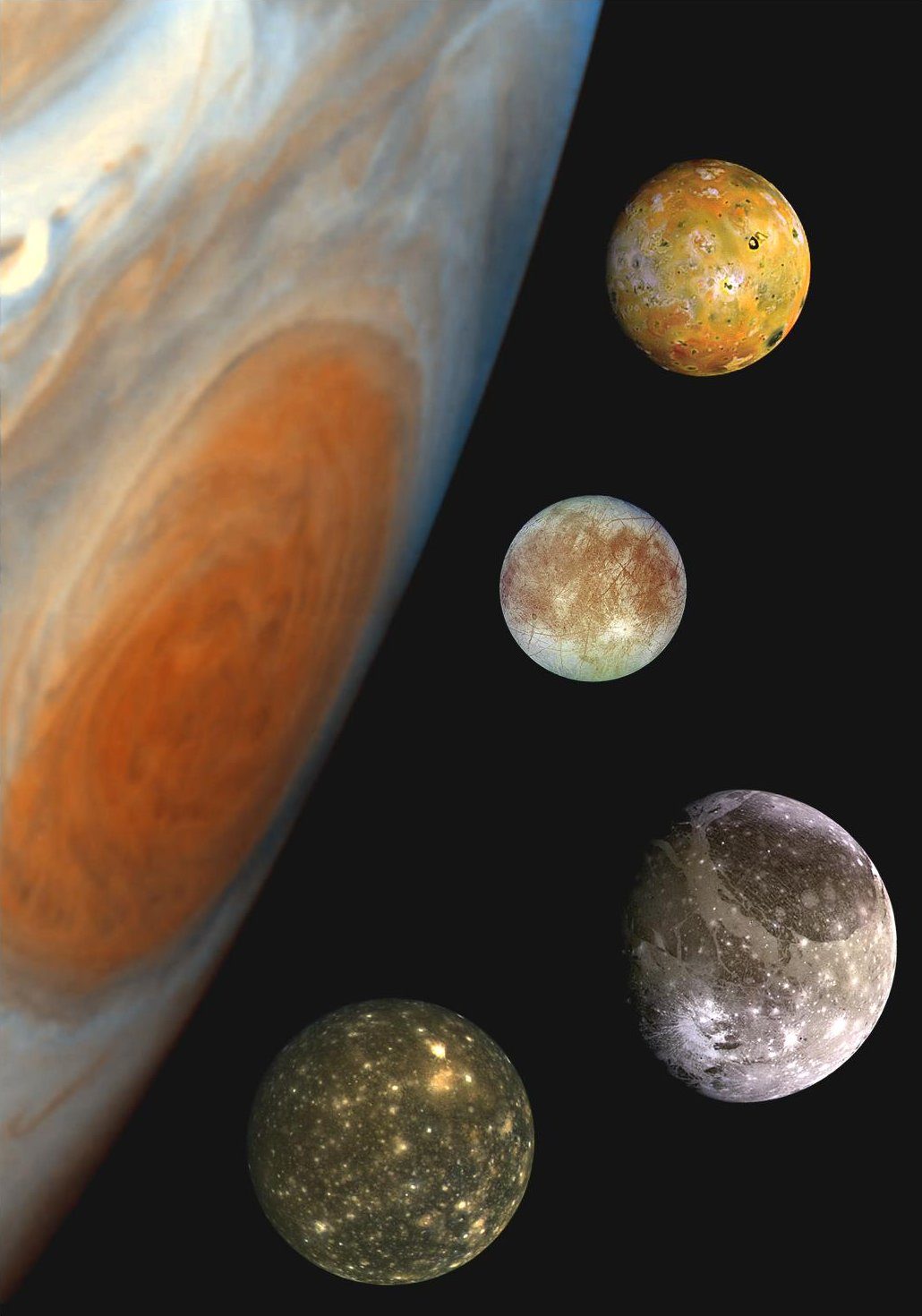
The moons have kept their importance. Ganymede is the largest moon in the solar system, bigger than the planet Mercury; Europa hides an ocean beneath its ice that makes it one of the most promising places to search for life; Io is the most volcanically active body known. Spacecraft — including NASA's Galileo orbiter, named for their discoverer — have photographed all four in detail. They remain what they were in January 1610: the first worlds ever found orbiting another planet, noticed as three pinpricks of light beside Jupiter on the seventh night of the year.
Why this date matters
January 7 is a day for first looks. Galileo looked at Jupiter and saw the universe rearranged; Marian Anderson stepped onto the Met's stage and an American institution saw itself changed; engineers in New York and London heard each other's voices across an ocean and the Atlantic shrank. Even the day's endings are beginnings in disguise — Calais lost closed England's medieval adventure in France, and Phnom Penh's fall ended one of the century's worst regimes. It is a date of thresholds crossed by looking, listening and arriving: people seeing further than anyone had seen before, and finding the world larger than the doctrine they were taught.
Sources
- Encyclopaedia Britannica — On This Day: January 7
- HISTORY — What Happened on January 7
- NASA — 410 Years Ago: Galileo Discovers Jupiter's Moons
- NASA Jet Propulsion Laboratory — PIA00600: Family Portrait of Jupiter's Great Red Spot and the Galilean Satellites
The facts on this page were checked against these sources on 19 November 2026. The History Trail's permanent pages are researched and written for this site; the live profiles elsewhere on The History Trail are assembled automatically from Wikipedia and Wikidata.
About the Author
Researched and written by the The History Trail Editorial Team — the accountable editorial function behind this site's permanent story pages. The team works from the published sources cited on each page; it does not invent historians, reviewers or credentials, and it corrects errors openly.
Fact Check
Every load-bearing fact on this page traces to one of the sources listed above, and significant claims link to their source in the text. Our checking method is described on the methodology page; errors can be reported via the corrections page.
Sources & Citations
Cite this page as: The History Trail Editorial Team, The History Trail — this article's title, publication and update dates are shown beneath its headline. The full source list appears under Sources above; the site's source standards are on the sources page.