
On This Day
August 30 in History
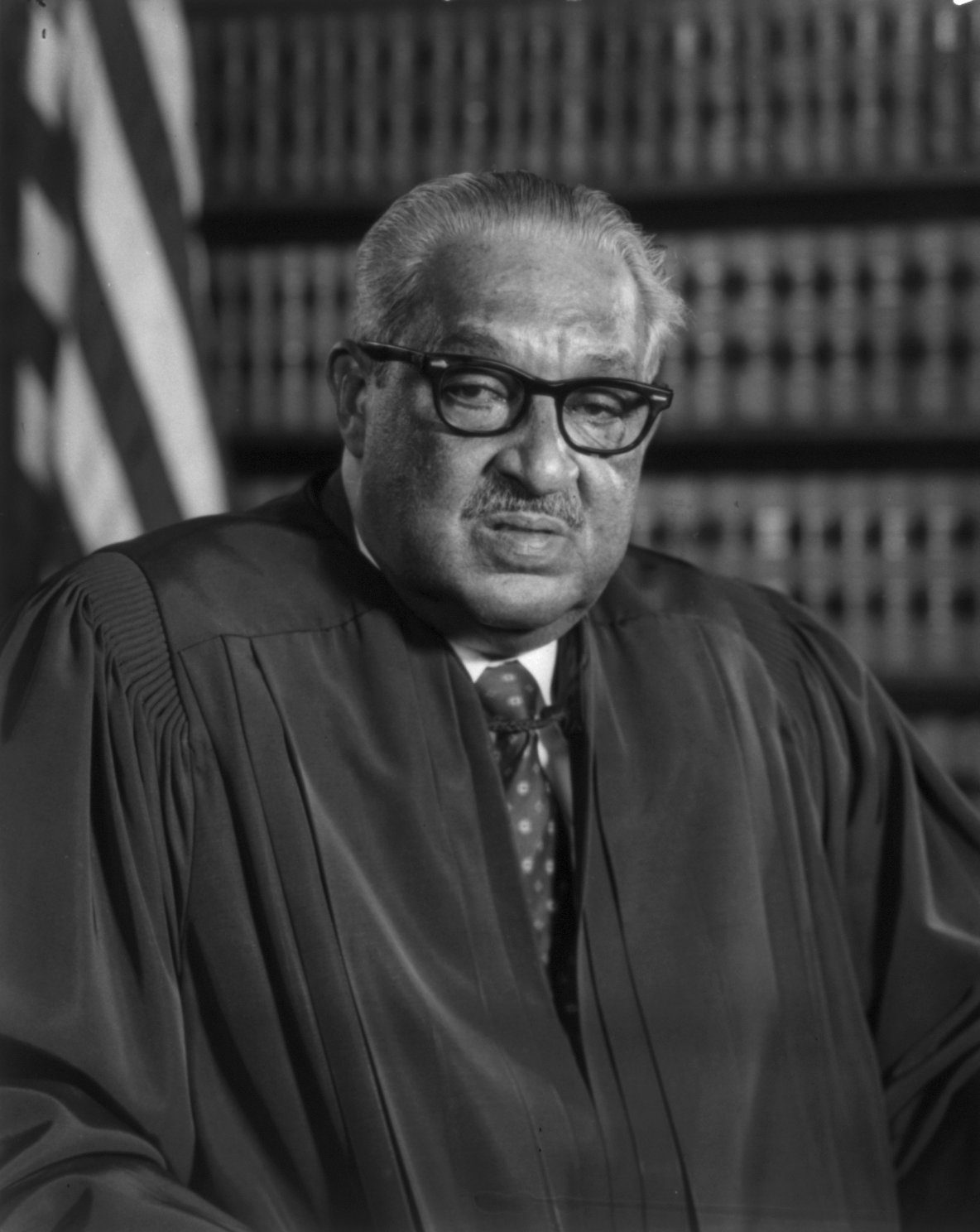
On 30 August 1967 the United States Senate confirmed Thurgood Marshall as the first Black justice of the Supreme Court, thirteen years after he had argued Brown v. Board of Education before that same court. August 30 is also the day the Moscow-Washington hotline opened, the first Black American flew in space, and the last American troops left Afghanistan.
Choose another date: open the On This Day calendar to browse events, births and deaths for any day of the year.
At a Glance
- The confirmation
- Confirmed by the Senate 69-11 on 30 August 1967, and sworn in on 2 September
- The first
- The first African American to sit on the United States Supreme Court
- The road there
- NAACP chief counsel who travelled the South defending Black defendants, at real personal risk
- The landmark
- Lead counsel in Brown v. Board of Education (1954), which declared school segregation unconstitutional
- The record
- Won 29 of the 32 cases he argued before the Supreme Court
- The tenure
- Served 24 years as the Court's liberal anchor, retiring in 1991; he died in 1993
Events on this day
- 1776George Washington explains the American retreat from Long Island and rejects a second British letter of reconciliation.
- 1800Gabriel Prosser's planned slave revolt in Richmond, Virginia, is postponed by storms and then betrayed; he and dozens of followers are later executed.
- 1836Brothers Augustus and John Allen found Houston, Texas, naming it for Sam Houston.
- 1862Confederate forces rout a Union army at the Battle of Richmond, Kentucky.
- 1914The Battle of Tannenberg ends with the destruction of the Russian Second Army in East Prussia.
- 1918Fanya Kaplan shoots and wounds Vladimir Lenin in Moscow, helping trigger the Red Terror.
- 1941German forces cut the last rail link at Mga, isolating Leningrad as its siege begins to close.
- 1963The Moscow-Washington hotline goes into operation, built after the Cuban Missile Crisis to prevent accidental war.
- 1967Thurgood Marshall is confirmed as the first Black justice of the Supreme Court — the featured story above.
- 1983Guion Bluford becomes the first African American in space, aboard the shuttle Challenger.
- 1999East Timor votes overwhelmingly for independence from Indonesia in a United Nations referendum.
- 2021The last American military aircraft leaves Kabul, ending the United States' twenty-year war in Afghanistan.
Born on this day
- 1797Mary Shelley — English novelist who wrote Frankenstein at eighteen.
- 1871Ernest Rutherford — New Zealand physicist who mapped the atom and founded nuclear physics.
- 1893Huey Long — Louisiana's populist governor and senator, assassinated in 1935.
- 1930Warren Buffett — American investor known as the Oracle of Omaha.
- 1972Cameron Diaz — American actress of There's Something About Mary and Shrek.
- 1982Andy Roddick — American tennis player and former world number one.
Died on this day
- 2003Charles Bronson — Lithuanian-American actor of the Death Wish films, dead at 81.
- 2006Naguib Mahfouz — Egyptian novelist, the first Arabic writer to win the Nobel Prize in Literature.
- 2013Seamus Heaney — Irish poet and Nobel laureate, dead at 74.
- 2022Mikhail Gorbachev — last leader of the Soviet Union, whose reforms ended the Cold War and his own state, dead at 91.
The featured story: Thurgood Marshall is confirmed to the Supreme Court, 30 August 1967
Thurgood Marshall arrived at the Supreme Court the long way round. Born in Baltimore in 1908, great-grandson of an enslaved man, he was turned away by the University of Maryland's law school because he was Black, took his degree instead at Howard University, and spent the 1930s and 1940s as the NAACP's travelling lawyer, driving the Jim Crow South to defend men who were sometimes lynched before he could reach them. Colleagues called him Mr Civil Rights. As a litigator he was nearly unbeatable: of the thirty-two cases he argued before the Supreme Court, he won twenty-nine.
The greatest of them came on 17 May 1954. In Brown v. Board of Education, Marshall led the legal team that persuaded a unanimous Court to declare state-sponsored segregation in public schools unconstitutional, overturning the separate but equal doctrine that had stood since 1896. The decision did not desegregate a single classroom by itself, but it gave the gathering civil rights movement the law's own words to march behind, and it made Marshall the most famous lawyer in America.
President Lyndon Johnson put him on the federal appeals court, then made him solicitor general, the government's own advocate before the Supreme Court, and in June 1967 nominated him to the Court itself. Johnson, never subtle, remarked that it was the right thing to do and the right time to do it. The Senate Judiciary Committee's hearings ranged into attempts to paint Marshall as soft on crime, but on 30 August 1967 the Senate confirmed him by 69 votes to 11. He took his seat on 2 September, the first African American among the 106 justices appointed to that point.
Marshall served twenty-four years, most of them in dissent as the Court turned conservative, holding with absolute consistency the positions his life had taught him: against the death penalty in all cases, for affirmative action, for the rights of the accused and the poor. Asked near retirement how he wanted to be remembered, he answered simply: he did the best he could with what he had. He retired in 1991 and died in January 1993, having lived to see the arguments he had won as a lawyer become the assumptions of the country that once barred him from its law schools.
Why this date matters
August 30 keeps returning to the question of who is allowed inside. A slave revolt planned for this night in 1800 aimed to break the door down; a hotline installed in 1963 tried to keep two armed camps talking; in 1967 the highest court in America opened to a man its country's law schools had once refused; in 1983 an astronaut crossed the last frontier of the same story. Even the day's endings carry the theme: an empire's reformer buried in 2022, and a twenty-year war closing in 2021 with an aircraft lifting out of Kabul in the dark. The pattern is not finished, either: every argument since about who belongs in America's rooms of power still runs through the door this date opened in 1967.
Sources
- Encyclopaedia Britannica — On This Day: August 30
- HISTORY — What Happened on August 30
- Library of Congress — Thurgood Marshall, attorney for the NAACP (photograph by Thomas O'Halloran)
- Wikimedia Commons — Thurgood Marshall portrait

The facts on this page were checked against these sources on 19 November 2026. The History Trail's permanent pages are researched and written for this site; the live profiles elsewhere on The History Trail are assembled automatically from Wikipedia and Wikidata.
About the Author
Researched and written by the The History Trail Editorial Team — the accountable editorial function behind this site's permanent story pages. The team works from the published sources cited on each page; it does not invent historians, reviewers or credentials, and it corrects errors openly.
Fact Check
Every load-bearing fact on this page traces to one of the sources listed above, and significant claims link to their source in the text. Our checking method is described on the methodology page; errors can be reported via the corrections page.
Sources & Citations
Cite this page as: The History Trail Editorial Team, The History Trail — this article's title, publication and update dates are shown beneath its headline. The full source list appears under Sources above; the site's source standards are on the sources page.