
On This Day
August 31 in History
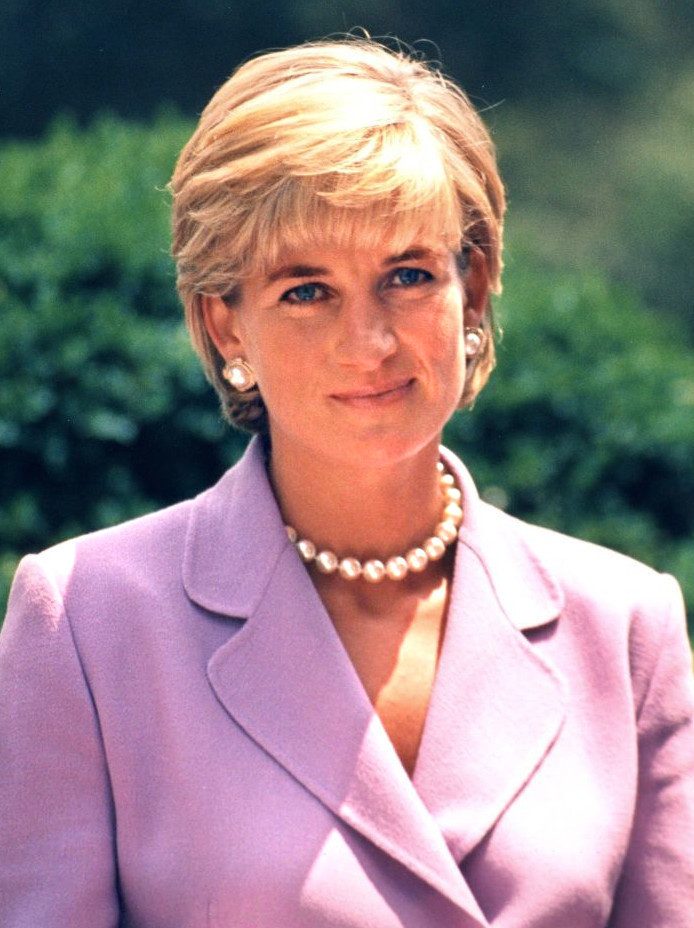
On 31 August 1997 Diana, Princess of Wales, died in a Paris hospital from injuries suffered in a car crash in the Pont de l'Alma tunnel, an event that produced an extraordinary global outpouring of grief. August 31 is also the day Malaya became independent, Solidarity was born in Gdansk, and the Charleston earthquake struck.
Choose another date: open the On This Day calendar to browse events, births and deaths for any day of the year.
At a Glance
- The crash
- Shortly after midnight on 31 August 1997, in the Pont de l'Alma tunnel in Paris
- The car
- A Mercedes driven by Henri Paul, the Ritz Hotel's deputy head of security, pursued by photographers
- The dead
- Dodi Fayed and Henri Paul died at the scene; Diana died in the Pitie-Salpetriere Hospital hours later, aged 36
- The survivor
- Bodyguard Trevor Rees-Jones, the only occupant wearing a seatbelt
- The verdict
- A British inquest jury in 2008 found unlawful killing through the grossly negligent driving of Paul and the pursuing vehicles
- The farewell
- Her funeral at Westminster Abbey on 6 September 1997 was watched by an estimated 2.5 billion people
Events on this day
- 1869Irish scientist Mary Ward falls from an experimental steam car and is killed, the first person recorded to die in a motor vehicle accident.
- 1886A major earthquake, estimated at magnitude 7, devastates Charleston, South Carolina, killing an estimated 60 people.
- 1888Mary Ann Nichols is found murdered in Whitechapel, London, the first of Jack the Ripper's five canonical victims.
- 1897Thomas Edison receives the American patent for the kinetoscope movie camera.
- 1957The Federation of Malaya, now Malaysia, gains independence from Britain, celebrated as Hari Merdeka.
- 1962Trinidad and Tobago becomes independent of British rule.
- 1980Poland's communist government signs the Gdansk Agreement, legalising the Solidarity trade union.
- 1991Kyrgyzstan and Uzbekistan declare independence as the Soviet Union collapses.
- 1994Russian troops complete their withdrawal from Estonia, ending a half-century military presence in the Baltics.
- 1997Diana, Princess of Wales, dies after a car crash in Paris — the featured story above.
- 1998North Korea announces the launch of its first satellite, alarming its neighbours.
- 2010President Obama formally ends the American combat mission in Iraq.
Born on this day
- 12Caligula — third Roman emperor, whose reign slid from promise into terror.
- 1821Hermann von Helmholtz — German physicist and physician who formulated the conservation of energy.
- 1870Maria Montessori — Italian physician and educator whose method reshaped classrooms worldwide.
- 1908William Saroyan — Armenian-American writer of The Human Comedy.
- 1945Van Morrison — Northern Irish singer of Brown Eyed Girl and Astral Weeks.
- 1945Itzhak Perlman — Israeli-American violinist, among the most celebrated of his generation.
- 1949Richard Gere — American actor of An Officer and a Gentleman and Pretty Woman.
- 1955Edwin Moses — American hurdler who won 122 consecutive races.
- 1971Chris Tucker — American comedian and actor of the Rush Hour films.
Died on this day
- 1869Mary Ward — Irish scientist and author, killed in the first recorded fatal motor accident.
- 1888Mary Ann Nichols — Londoner murdered in Whitechapel, the first canonical victim of Jack the Ripper.
- 1997Diana, Princess of Wales — first wife of the Prince of Wales, killed in a Paris car crash at 36.
- 1997Dodi Fayed — Egyptian film producer, killed in the same crash at 42.
The featured story: Diana, Princess of Wales, dies in Paris, 31 August 1997
Diana Frances Spencer was nineteen when her engagement to the Prince of Wales made her the most photographed woman in the world, and twenty when she married him in St Paul's Cathedral in 1981 before a global audience of hundreds of millions. The marriage produced two sons, William and Harry, and then publicly fell apart; the couple separated in 1992 and divorced in 1996. In her independent life Diana built a new kind of royal role without the title: holding the hands of AIDS patients when fear of touch was still common, and in January 1997 walking a cleared path through an Angolan minefield in a flak jacket, an image that helped drive the international treaty banning landmines signed months after her death.
In the summer of 1997 she was holidaying in the Mediterranean with Dodi Fayed, son of the Egyptian businessman Mohamed Al-Fayed, pursued throughout by photographers. On the night of 30-31 August the couple dined at the Ritz in Paris, owned by the Fayed family, and left shortly after midnight by a rear entrance to escape the press, in a Mercedes driven by Henri Paul, the hotel's deputy head of security, who was later found to have been drinking and driving far too fast. Photographers followed. At about twenty-three minutes past midnight the car struck a pillar in the Pont de l'Alma underpass at high speed.
Fayed and Paul died at the scene. Diana, alive but critically injured, was cut from the wreck and taken to the Pitie-Salpetriere Hospital, where surgeons fought for two hours against internal bleeding before she was pronounced dead in the early hours of 31 August, aged thirty-six. The only survivor, bodyguard Trevor Rees-Jones, was also the only person in the car wearing a seatbelt. A French investigation blamed Paul's intoxicated, reckless driving; a later British police inquiry, Operation Paget, found no evidence for the conspiracy theories that flourished around the crash, and the 2008 inquest jury returned a verdict of unlawful killing by grossly negligent driving, by Paul and by the pursuing vehicles.
What followed had no precedent. Flowers piled metres deep outside Kensington Palace; the Queen, criticised for remaining at Balmoral and for the absence of a flag at half-mast, returned to London and addressed the nation live, speaking as your Queen and as a grandmother. At the funeral on 6 September, Diana's brother Earl Spencer promised her blood family would continue to guide her sons, Elton John sang a rewritten Candle in the Wind, and an estimated 2.5 billion people watched. The monarchy she had challenged emerged changed by her death, obliged thereafter to show feeling in public, a lesson learned in a single week of national grief.
Why this date matters
August 31 is a day of thresholds. Empires loosen their grip on it: Malaya in 1957, Trinidad and Tobago in 1962, the Baltic states finally cleared of Russian troops in 1994, and Poland's workers in 1980 forcing a legal crack in the communist system that would spread across Europe. Against those widening doors stands the day's defining private tragedy, a car entering a Paris tunnel in 1997 and a princess not coming out, and the discovery, made by millions at once, of how much feeling a modern public could hold for a woman most had never met.
Sources
- Encyclopaedia Britannica — On This Day: August 31
- HISTORY — What Happened on August 31
- BBC On This Day — 31 August 1997: Princess Diana dies in Paris crash
- Time and Date — On This Day: August 31
- Wikimedia Commons — Diana, Princess of Wales, 1997

The facts on this page were checked against these sources on 19 November 2026. The History Trail's permanent pages are researched and written for this site; the live profiles elsewhere on The History Trail are assembled automatically from Wikipedia and Wikidata.
About the Author
Researched and written by the The History Trail Editorial Team — the accountable editorial function behind this site's permanent story pages. The team works from the published sources cited on each page; it does not invent historians, reviewers or credentials, and it corrects errors openly.
Fact Check
Every load-bearing fact on this page traces to one of the sources listed above, and significant claims link to their source in the text. Our checking method is described on the methodology page; errors can be reported via the corrections page.
Sources & Citations
Cite this page as: The History Trail Editorial Team, The History Trail — this article's title, publication and update dates are shown beneath its headline. The full source list appears under Sources above; the site's source standards are on the sources page.