
Things
Christmas
Christmas celebrates the birth of Jesus on 25 December — a date no Gospel gives, chosen in the age of Constantine, in a season Rome already kept for the Unconquered Sun. Banned by Puritans, reinvented by Victorians and carried into the trenches in 1914, it became the world's defining winter festival.
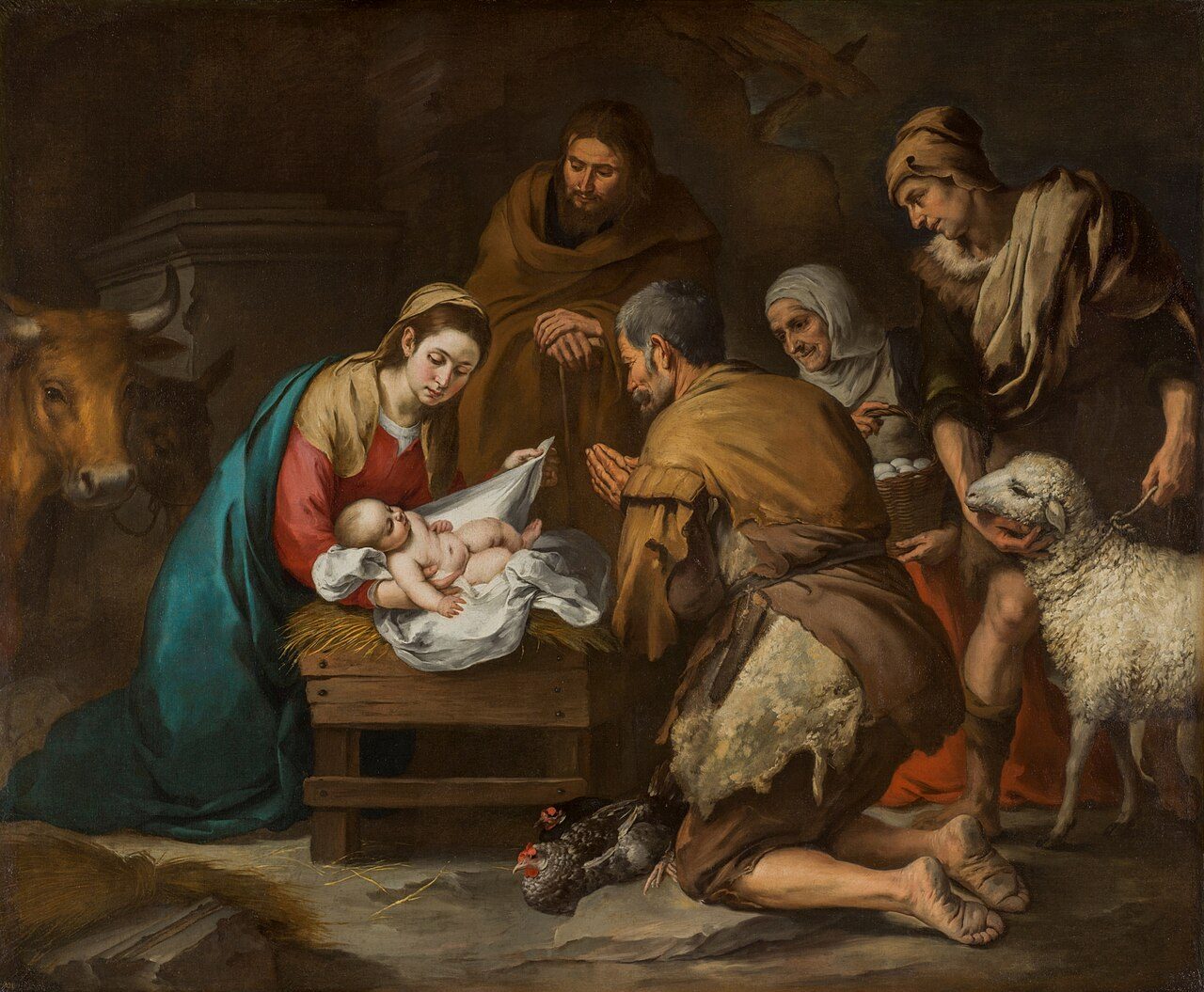
At a Glance
- Date
- 25 December (many Eastern churches: 6–7 January)
- Celebrates
- The birth of Jesus
- Date first proposed
- 221, by Sextus Julius Africanus
- First formal celebration in Rome
- 336, under the emperor Constantine
- Banned
- In England by Parliament in 1647; restored in 1660
- Victorian landmarks
- Dickens's A Christmas Carol (1843); the royal Christmas tree print (1848); the first commercial Christmas card (1843)
- Santa Claus
- Formed from Saint Nicholas and Dutch Sinterklaas, shaped by the 1823 poem, Thomas Nast's drawings and 20th-century advertising
- 1914
- The Christmas Truce — unofficial ceasefires along the Western Front
Introduction
Christmas is the Christian festival celebrating the birth of Jesus, held on 25 December in most Western churches, and now also the world's most widely observed family holiday — a season of decorated trees, gift-giving, feasting and charity that reaches far beyond churchgoing. The Gospels give no date for Jesus's birth; 25 December was first identified as that date in the third century, and the church in Rome was formally celebrating Christmas on it by 336, during the reign of the emperor Constantine.
Almost everything familiar about the modern festival arrived much later. Medieval Christmases were twelve days of feasting and misrule; Puritans banned the holiday outright in the 1640s; and the Christmas of trees, cards, Santa Claus and family sentiment was largely assembled in the nineteenth century, by Queen Victoria's household, Charles Dickens and American writers and cartoonists. The festival's history is therefore two histories: an ancient feast with a contested birthday, and a Victorian reinvention that conquered the world.
Origins
Why 25 December? Scholars discuss two main explanations, and Britannica presents both without settling the question. In the third century the Roman Christian historian Sextus Julius Africanus dated Jesus's conception to 25 March; nine months later falls on 25 December. The other explanation looks to Rome's existing calendar: 25 December was also the festival of the Unconquered Sun, Sol Invictus, marking the return of longer days after the solstice, and it followed Saturnalia, the December festival of feasting and gift-giving. Some have speculated that the church's choice had the political motive of weakening those established pagan celebrations; others argue the calculation from 25 March came first. What is documented is the sequence: the date appears in the early third century, and Rome's church kept the feast on it from 336.
Through the Middle Ages, Christmas was less a single day than a season — the twelve days from 25 December to Epiphany — marked by church services, feasts, pageants, carols and decorations of holly and candles, with an edge of licensed disorder under Lords of Misrule. It was communal, public and often rowdy: a midwinter release in the darkest part of the year, in which generosity to the poor and hospitality to neighbours carried religious weight. That character, more than theology, is what the seventeenth century's reformers turned against.
Timeline
- 221
Sextus Julius Africanus identifies 25 December as the date of Jesus's birth, the first known writer to do so.
- 336
The church in Rome formally celebrates Christmas on 25 December, under the emperor Constantine.
- Middle Ages
Christmas is kept as a twelve-day season of feasting, pageants and carols across Christian Europe.
- 1647
England's Puritan Parliament bans Christmas celebrations outright; riots follow in Canterbury and other towns, and the ban lasts until the Restoration of 1660.
- 1823
The poem 'A Visit from St. Nicholas' — 'The Night Before Christmas' — is published anonymously in Troy, New York, fixing Santa's sleigh, reindeer and chimney descent.
- 1843
Charles Dickens publishes A Christmas Carol; in the same year Henry Cole commissions the first commercial Christmas card in London.
- 1848
The Illustrated London News prints Queen Victoria, Prince Albert and their children around a decorated Christmas tree at Windsor, popularising the German custom in Britain and America.
- 1863
Cartoonist Thomas Nast publishes his first Santa Claus drawings in Harper's Weekly, beginning the series that fixed Santa's modern image.
- 24–25 December 1914
In the Christmas Truce, British and German soldiers along much of the Western Front stop fighting, sing carols, meet in no man's land and exchange food and gifts.
- 1931
Haddon Sundblom's Coca-Cola advertisements begin, standardising the large, red-suited, white-bearded Santa for a global audience.
- Today
Christmas is observed worldwide — as a Christian feast, a public holiday in many countries, and a global season of family gathering, giving and commerce.
Significance
Christmas matters historically because it shows how a festival can be remade. By 1800, after the Puritan bans and a long Georgian decline, Christmas in England was a minor observance. Its Victorian revival was deliberate cultural work: Dickens's A Christmas Carol (1843) recast the feast as a test of generosity toward the poor; the royal family's German tree, pictured in 1848, gave the middle classes a domestic ritual to copy; cards, crackers, carol services and the new railways turned a local feast into a national family reunion. In America, Washington Irving, the 1823 poem and Nast's cartoons performed the same work, domesticating a rowdy street holiday into a child-centred festival of the home.
Santa Claus is the clearest product of that assembly. Behind him stands Saint Nicholas, a fourth-century bishop of Myra famed for secret gifts to the poor; the Dutch Sinterklaas carried the legend to America, where the name softened into Santa Claus. The 1823 poem gave him the sleigh, the eight reindeer and the 'jolly old elf' scale that fits a chimney; Nast drew him from 1863 as a recognisably modern, round-bellied gift-bringer; and twentieth-century advertising, above all Sundblom's Coca-Cola Santas from 1931, standardised the red suit for the world. No single inventor made Santa — a saint, a poem, a cartoonist and an ad campaign each added a layer.
Myths and disputes
Was Christmas simply a pagan festival in disguise? The honest answer is that the evidence allows argument both ways. The date coincides with Sol Invictus and follows Saturnalia, and feasting and gift-giving suit both; but the calculation from a 25 March conception is attested in Christian writing before any record of deliberate substitution, and Saturnalia itself ended on 23 December. Britannica's verdict is that the church began keeping 25 December under Constantine 'possibly to weaken pagan traditions' — a possibility, not a proof, and responsible accounts keep it that way.
The Christmas Truce has its own embroidery. That unofficial ceasefires spread along much of the British-held front in December 1914 is well documented in letters and war diaries — carols answered across no man's land, men meeting to exchange food, whisky and cigars, bury the dead and fraternise. The famous football match is softer ground: contemporary letters report kickabouts and at least one claimed match, but historians note that whether any organised game actually got going is disputed. The truce itself needs no embellishment; headquarters on both sides disapproved, and took steps to ensure it never happened again.
Legacy
Christmas's legacy is a calendar, a culture and an economy. It anchors the Western year: schools and businesses close, families travel further for it than for any other festival, and the season that runs from late November to the New Year organises retail trade in much of the world. Its imagery — the tree, the old man in red, the carol, the feast — is recognised in countries with few Christians, and adapted locally from Tokyo to Sydney, where it falls in high summer.
The festival has also kept its double nature. It remains, for Christians, the feast of the Nativity, kept on 6 or 7 January in many Eastern churches that follow the older calendar; and it remains the occasion its Victorian reinventors made of it — a midwinter argument, renewed annually, that generosity is owed to strangers as well as kin. A holiday that has been banned by Parliament, weaponised in advertising and celebrated in trenches has proved, above all, adaptable: each age keeps the Christmas it needs.
Sources
- Encyclopaedia Britannica — Does Christmas have pagan roots? (origin of the 25 December date)
- Encyclopaedia Britannica — Why Is Christmas in December? (Demystified)
- Encyclopaedia Britannica — When Christmas Became Illegal (the Puritan ban)
- Smithsonian Magazine — The Story of the WWI Christmas Truce
- Encyclopaedia Britannica — Christmas Truce
- National Geographic — In 1647, Christmas was canceled — by Christians
The facts on this page were checked against these sources on 19 November 2026. The History Trail's permanent pages are researched and written for this site; the live profiles elsewhere on The History Trail are assembled automatically from Wikipedia and Wikidata.
About the Author
Researched and written by the The History Trail Editorial Team — the accountable editorial function behind this site's permanent story pages. The team works from the published sources cited on each page; it does not invent historians, reviewers or credentials, and it corrects errors openly.
Fact Check
Every load-bearing fact on this page traces to one of the sources listed above, and significant claims link to their source in the text. Our checking method is described on the methodology page; errors can be reported via the corrections page.
Sources & Citations
Cite this page as: The History Trail Editorial Team, The History Trail — this article's title, publication and update dates are shown beneath its headline. The full source list appears under Sources above; the site's source standards are on the sources page.