
Things
Maize
Maize — corn in North America — began about 9,000 years ago in southern Mexico, where farmers domesticated the wild grass teosinte, whose tiny cobs and stone-hard kernels barely resemble food. Selective breeding, the alkaline cooking process called nixtamalisation and, after 1492, the Columbian exchange turned it into the most produced grain on Earth.
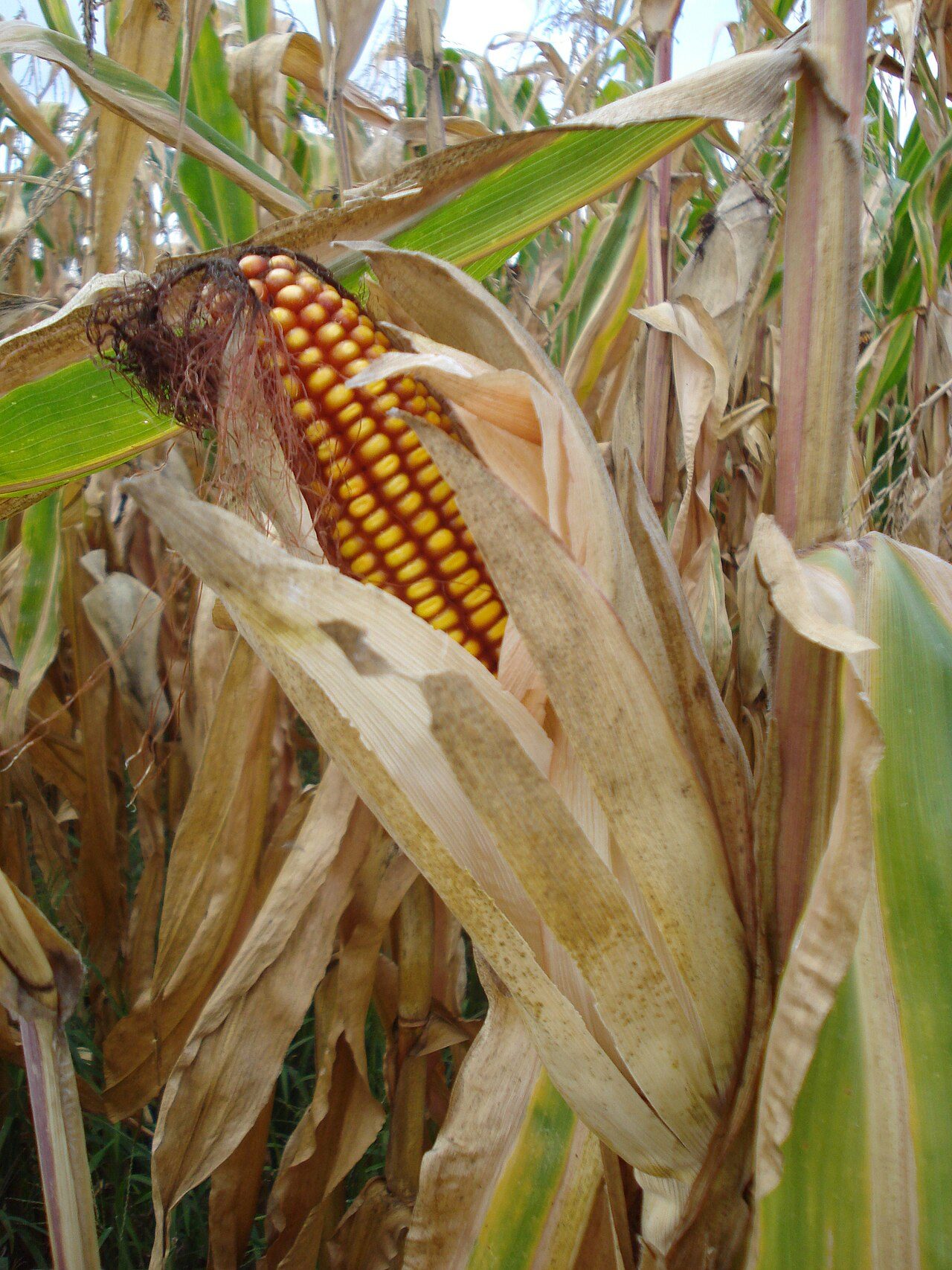
At a Glance
- Scientific name
- Zea mays
- Wild ancestor
- Teosinte (Zea mays subsp. parviglumis)
- Domesticated
- About 9,000 years ago, Balsas River valley, southern Mexico
- Key process
- Nixtamalisation — cooking kernels in alkaline lime or ash water
- Global spread
- The Columbian exchange, from 1492
- World production
- About 1.1 billion tonnes in 2020 — more than wheat or rice
- United States
- The world's largest producer, consumer and exporter (USDA)
Introduction
Maize was domesticated from teosinte in southern Mexico about 9,000 years ago — that is the direct answer, and the Smithsonian's genetic and archaeological work places the beginning in the Balsas River valley, where the teosinte growing wild today is genetically closest to modern corn. Teosinte is a branching grass whose cobs are tiny and whose few kernels sit inside a nearly impenetrable casing. Nothing about it suggests a future world staple, which is precisely what makes maize the greatest breeding achievement of the ancient Americas.
Generation by generation, farmers selected plants with bigger cobs, softer casings and kernels that stayed on the cob — changes that eventually made maize unable to disperse its own seeds and wholly dependent on people. In return, people became dependent on it: maize spread through the Americas, was transformed by nixtamalisation into a nutritionally complete staple, crossed the Atlantic in the Columbian exchange, and is now produced in greater weight than any other grain on Earth.
Origins
The domestication story has grown more interesting with better evidence. DNA from 5,000-year-old cobs found in a Mexican cave shows a plant still mid-transformation, carrying some teosinte genes and some domesticated ones. The Smithsonian-led study published in Science in 2018 concluded that a partially domesticated proto-corn reached South America more than 6,500 years ago, and that farmers in Mexico and in the south-western Amazon then finished the job separately, improving the crop in parallel for thousands of years. Domestication was not a single event but a long, travelling process.
Two farming systems carried it. In much of North America, Indigenous growers planted maize with beans and squash in the Three Sisters polyculture, the plants supporting one another in the same mound. And across Mesoamerica, cooks developed nixtamalisation: kernels cooked and soaked in alkaline water made from lime or wood ash. The University of California, Davis notes that the process makes maize's nutrients far more accessible — it frees niacin, adds calcium and lets the dough form masa for tortillas and tamales. Without it, maize-heavy diets risk deficiency disease; with it, civilisations ran on corn.
Timeline
- c. 9,000 years ago
Farmers in the Balsas River valley of southern Mexico begin domesticating teosinte into maize.
- More than 6,500 years ago
A partially domesticated proto-corn reaches South America; fully domesticated maize is in use in the south-western Amazon.
- c. 5,000 years ago
Maize cobs buried in a Mexican cave still carry a mixture of teosinte and domesticated genes — domestication in progress.
- In the ancient Americas
Growers spread maize through two continents and develop nixtamalisation, the alkaline cooking that unlocks its nutrition.
- 1492
Columbus's voyages begin the Columbian exchange; maize is carried from the Americas to Europe.
- 16th century
Maize is cultivated in Spain within decades, then spreads to Italy, West Africa, the Philippines and beyond.
- By after 1700
Corn underpins population growth and famine resistance in parts of China and Europe, and becomes Africa's most important food crop.
- 2020
World maize production reaches about 1.1 billion tonnes — more than wheat or rice.
Significance
The Columbian exchange made maize a world crop with unusual speed because it yields heavily in climates where wheat and rice struggle. Britannica's account of the exchange records that corn 'had the biggest impact' of the American crops in the Old World, giving in places two or even three harvests a year, and that in Africa, between about 1550 and 1850, farmers from Senegal to Southern Africa adopted it — today it is the continent's most important food. In Asia it fed population growth in uplands unsuited to rice. A Mexican grass quietly redrew the demography of three continents.
In the United States, corn became an industrial system. The US Department of Agriculture describes the US as the world's largest producer, consumer and exporter of corn, planting about 90 million acres a year, concentrated in the Heartland. Most of that crop is field corn, not the sweet corn eaten as a vegetable: field corn, harvested dry, goes mainly to livestock feed and fuel ethanol, with the remainder milled into meal, starch, syrup and oil. Sweet corn, bred for sugar and picked in its milky stage, is a small, delicious minority of the harvest.
Legacy
Maize today is simultaneously a staple food for hundreds of millions, the foundation of the world's meat and dairy industries through animal feed, and an industrial feedstock for ethanol, starches and sweeteners. Institutions such as CIMMYT, the International Maize and Wheat Improvement Center in Mexico, maintain vast collections of maize diversity — the genetic insurance policy for a crop that began in one Mexican valley and now has to withstand a changing climate everywhere.
Its deepest legacy may be the lesson of its origin. Maize was not found; it was made, by unnamed farmers selecting, season after season, from a grass almost no one would look at twice. Every cob on Earth — sweet or field, yellow, white, blue or red — descends from that 9,000-year conversation between people and teosinte in the Balsas valley.
Sources
- Smithsonian Institution — Scientists Overhaul Corn Domestication Story
- University of California, Davis — Maize History
- USDA Economic Research Service — Corn and Other Feed Grains: Sector at a Glance
- Encyclopaedia Britannica — Columbian Exchange
- Smithsonian Magazine — Rethinking the Corny History of Maize
- Wikipedia — Maize
The facts on this page were checked against these sources on 19 November 2026. The History Trail's permanent pages are researched and written for this site; the live profiles elsewhere on The History Trail are assembled automatically from Wikipedia and Wikidata.
About the Author
Researched and written by the The History Trail Editorial Team — the accountable editorial function behind this site's permanent story pages. The team works from the published sources cited on each page; it does not invent historians, reviewers or credentials, and it corrects errors openly.
Fact Check
Every load-bearing fact on this page traces to one of the sources listed above, and significant claims link to their source in the text. Our checking method is described on the methodology page; errors can be reported via the corrections page.
Sources & Citations
Cite this page as: The History Trail Editorial Team, The History Trail — this article's title, publication and update dates are shown beneath its headline. The full source list appears under Sources above; the site's source standards are on the sources page.