
Years
1909 in History
1909 is remembered for beginnings whose endings nobody could yet see. On 31 March shipbuilders at Belfast laid the keel of RMS Titanic, one of the White Star Line's three great Olympic-class liners; on 25 July Louis Blériot flew across the English Channel in 37 minutes, the first crossing by aeroplane. The same year founded the NAACP, claimed the North Pole, and held the first race at Indianapolis.
At a Glance
- Defining event
- Shipbuilders at Belfast lay the keel of RMS Titanic, 31 March 1909, beside her sister Olympic at Harland and Wolff
- Flight of the year
- Louis Blériot flies across the English Channel in 37 minutes, 25 July — the first Channel crossing by aeroplane
- Rights founded
- The NAACP is founded in New York, 12 February, growing into America's oldest major civil rights organisation
- The disputed pole
- Robert Peary's expedition claims to reach the North Pole on 6 April; the claim has been disputed ever since
- The other pole
- Shackleton's Nimrod expedition plants the flag 112 miles from the South Pole on 9 January — the closest any human has yet come
- Plastic patented
- Leo Baekeland is granted a US patent for Bakelite, the first synthetic plastic, on 7 December
The defining story: the keel of the Titanic
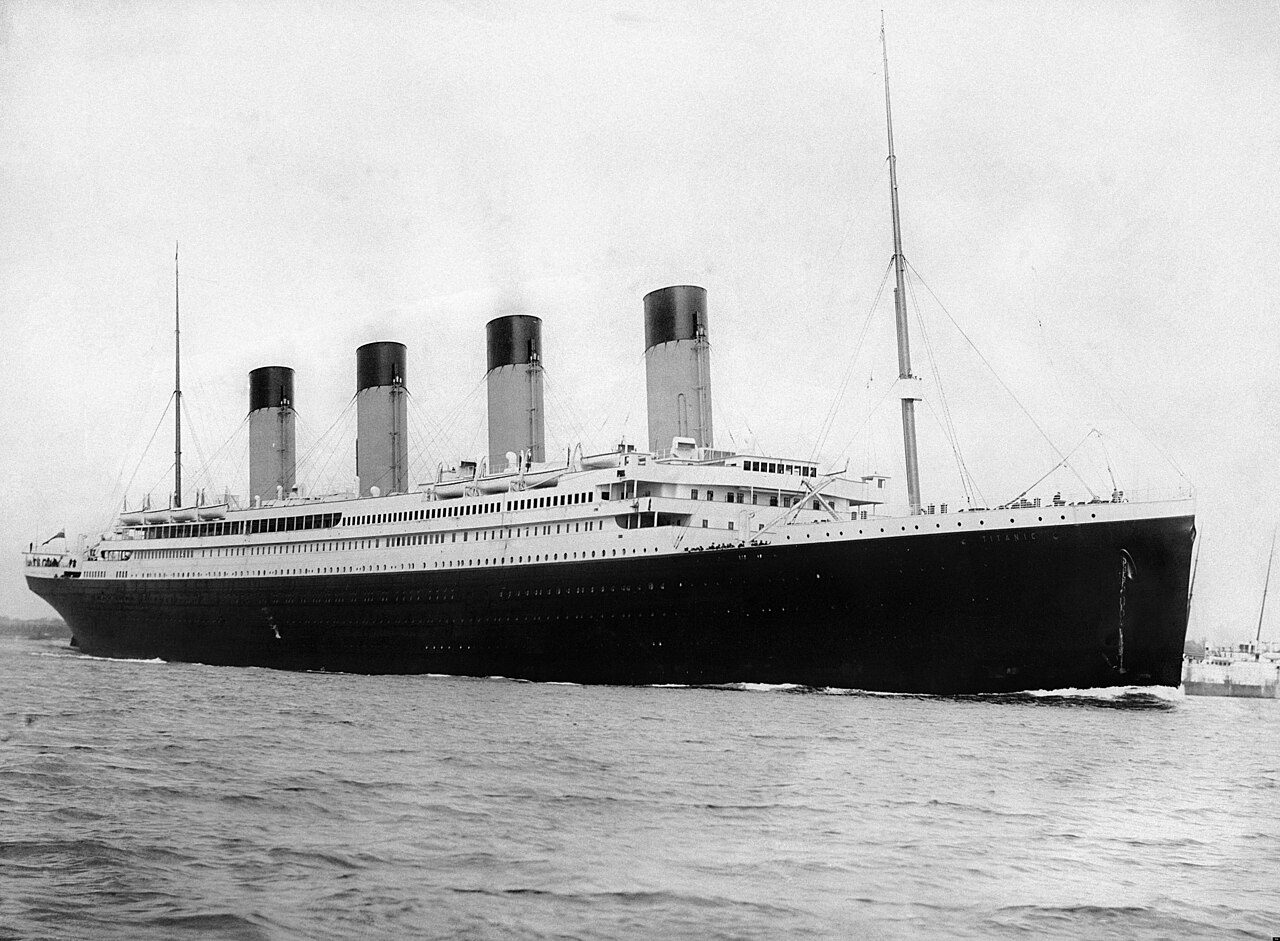
On 31 March 1909, at the Belfast shipyard of Harland and Wolff, shipbuilders laid the keel of RMS Titanic. She was one of the White Star Line's three enormous sister ships — Olympic, Titanic and Britannic — designed largely by Thomas Andrews of the yard, and her keel was laid beside Olympic's in a gantry built for their unprecedented size. The photograph at the head of this page shows her three years later, departing Southampton on 10 April 1912 at the start of her maiden voyage; five days after that departure she was on the bottom of the North Atlantic. In 1909 none of that was imaginable: what was laid at Belfast was simply the largest moving object ambition could then assemble, a hull whose launch would follow on 31 May 1911.
The year's other great machine was at the opposite scale. On 25 July the French aviator Louis Blériot flew across the English Channel in 37 minutes, the first crossing of the Channel by aeroplane. A flight that a ship's passengers could watch from the deck had abolished, in half an hour, the moat that had protected and defined Britain for a thousand years: the Channel was now a strip of water under a sky that could be crossed. Between the biggest ship ever laid down and a frail monoplane over the Channel, 1909 stated the transport century's two directions — mass and speed.
Exploration closed its old account the same year, at both ends of the Earth. On 9 January Ernest Shackleton's Nimrod expedition planted the Union flag 112 miles from the South Pole — the closest any human had yet come. On 6 April Robert Peary's expedition, with Matthew Henson and four Inuit companions, claimed to reach the North Pole; the claim has been disputed ever since. The heroic age of polar exploration was ending in an argument about evidence — a fittingly modern conclusion.
The year's foundings were built to last longer than any ship. On 12 February the National Association for the Advancement of Colored People was founded in New York, growing into America's oldest major civil rights organisation. On 11 April families from Jaffa held a lottery for plots of sand north of the city — the founding moment of Tel Aviv. On 2 August the Lincoln penny went into circulation, the first American coin to carry the portrait of a president. And on 7 December the Belgian-born chemist Leo Baekeland was granted a United States patent for Bakelite, the first synthetic plastic: the material of the coming century, patented the same year as its largest ship was begun.
Timeline of 1909
- 9 January
Shackleton's Nimrod expedition plants the Union flag 112 miles from the South Pole, the closest any human has yet come.
- 12 February
The NAACP is founded in New York.
- 31 March
Shipbuilders in Belfast lay the keel of RMS Titanic, one of the White Star Line's three great Olympic-class liners.
- 6 April
Robert Peary's expedition, with Matthew Henson and four Inuit companions, claims to reach the North Pole; the claim has been disputed ever since.
- 11 April
Families from Jaffa hold a lottery for plots of sand north of the city — the founding moment of Tel Aviv.
- 25 July
Louis Blériot flies across the English Channel in 37 minutes, the first crossing by aeroplane.
- 2 August
The Lincoln penny goes into circulation in the United States, the first American coin to carry a president's portrait.
- 11 August
The SS Arapahoe, disabled off Cape Hatteras, sends the first SOS signal used by an American ship.
- 19 August
The first automobile race is held at the newly built Indianapolis Motor Speedway.
- 21 September
Kwame Nkrumah, first leader of independent Ghana, is born.
- 4 December
The first Grey Cup game is played in Toronto, deciding Canadian football's championship.
- 7 December
Leo Baekeland is granted a US patent for Bakelite, the first synthetic plastic.
Why 1909 still matters
Titanic's keel is the rare beginning that everyone reads backwards. The ship laid down in March 1909 was, to her builders, a triumph of scale and comfort; her loss in April 1912 rewrote safety at sea, as this site's Titanic record argues, because the rules had simply not kept pace with the size of ships — she carried more lifeboats than the regulations of the day required, and it was nowhere near enough. The gantry at Belfast thus holds both halves of the industrial age's lesson: what could be built had outrun what had been imagined about failure.
Blériot's 37 minutes had the longer fuse. The Channel crossing proved the aeroplane could cross water, weather and borders, and every air route since descends from that summer morning. The NAACP, founded the same February, outlasted both ship and aircraft type: the organisation created in 1909 became the legal arm of the American civil rights movement for the century that followed. And Bakelite's patent opened the plastics age in a laboratory, as quietly as the penny put a president into every American pocket.
Even the year's polar argument is modern. Peary's claim, disputed ever since, turned exploration into a question of documentation — who measured what, and who was believed — with Matthew Henson and the four Inuit companions long written out of the credit the expedition claimed. 1909 is the year the heroic age ended and the evidential age began, at the Pole, in the Channel and on a Belfast slipway alike.
1909 on The History Trail
Titanic's keel and Blériot's crossing lead this year on The History Trail, with the NAACP's founding and the disputed Pole.
- March 31 in History — Shipbuilders at Belfast lay the keel of RMS Titanic.
- July 25 in History — Blériot flies across the English Channel in 37 minutes.
- February 12 in History — The NAACP is founded in New York.
- April 6 in History — Peary's expedition claims the North Pole, a claim disputed ever since.
- January 9 in History — Shackleton's expedition reaches 112 miles from the South Pole.
- August 11 in History — The Arapahoe sends the first SOS used by an American ship.
Sources
- Encyclopaedia Britannica — On This Day: March 31
- HISTORY — This Day in History: March 31
- Encyclopaedia Britannica — On This Day: July 25
- Encyclopaedia Britannica — On This Day: February 12
- Encyclopaedia Britannica — On This Day: April 6
- Encyclopaedia Britannica — On This Day: January 9
- Encyclopaedia Britannica — On This Day: April 11
- Encyclopaedia Britannica — On This Day: August 11
The facts on this page were checked against these sources on 19 November 2026. The History Trail's permanent pages are researched and written for this site; the live profiles elsewhere on The History Trail are assembled automatically from Wikipedia and Wikidata.
About the Author
Researched and written by the The History Trail Editorial Team — the accountable editorial function behind this site's permanent story pages. The team works from the published sources cited on each page; it does not invent historians, reviewers or credentials, and it corrects errors openly.
Fact Check
Every load-bearing fact on this page traces to one of the sources listed above, and significant claims link to their source in the text. Our checking method is described on the methodology page; errors can be reported via the corrections page.
Sources & Citations
Cite this page as: The History Trail Editorial Team, The History Trail — this article's title, publication and update dates are shown beneath its headline. The full source list appears under Sources above; the site's source standards are on the sources page.