
Years
1804 in History
1804 remade three worlds at once. On 1 January Haiti declared independence from France, the first republic founded by formerly enslaved people. In May Napoleon was proclaimed Emperor of the French and crowned himself in December, while Lewis and Clark set out to explore the Louisiana Purchase. And on 11 July, at Weehawken, Vice President Aaron Burr fatally wounded Alexander Hamilton in the most famous duel in American history.
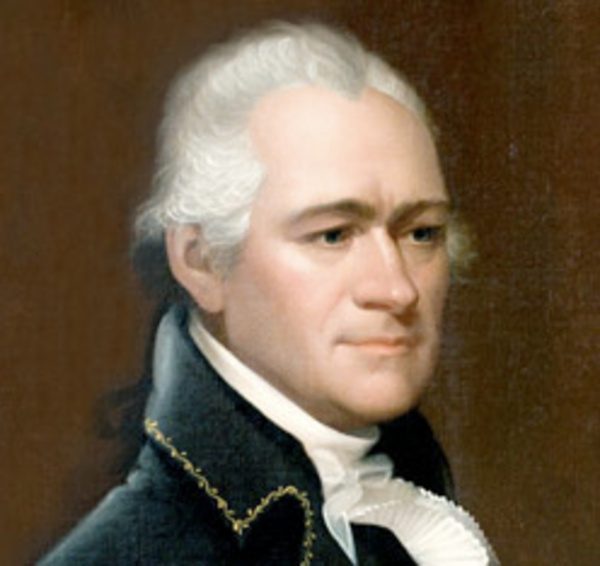
At a Glance
- Defining event
- The Burr–Hamilton duel, 11 July 1804 — Hamilton dies of his wound the next day
- A new nation
- Haiti declares independence from France, 1 January — the first republic founded by formerly enslaved people
- An empire proclaimed
- Napoleon is proclaimed Emperor of the French on 18 May and crowns himself on 2 December
- The expedition
- Lewis and Clark set out from St Louis on 14 May to explore the Louisiana Purchase
- The first railway journey
- Trevithick's steam locomotive hauls iron and men at Penydarren, Wales, 21 February
- A philosopher dies
- Immanuel Kant dies in Königsberg on 12 February, the city he never left
The defining story: the duel at Weehawken
The year began with a revolution completed. On 1 January Haiti declared independence from France, becoming the first republic founded by formerly enslaved people, after the revolution led by Toussaint Louverture and Jean-Jacques Dessalines. It was the only successful slave revolution in history to found a state, and it destroyed Napoleon's American ambitions at a stroke — the empire that had just sold Louisiana to the United States now lost its richest Caribbean colony altogether.
In the United States, Aaron Burr and Alexander Hamilton had been rivals for some fifteen years: New York lawyers, Revolutionary War veterans and leaders of opposing parties. Hamilton had repeatedly worked to block Burr's rise, helping to deny him the presidency in the deadlocked election of 1800 and opposing his run for governor of New York in 1804. When a published report claimed Hamilton had expressed a 'despicable opinion' of him, Burr demanded satisfaction. In the early republic a gentleman's honour was a political asset, and duelling — illegal almost everywhere — remained its recognised, if disreputable, defence.
On the morning of 11 July 1804 the two parties rowed across the Hudson to the duelling ground at Weehawken, New Jersey — the same ledge where Hamilton's son Philip had been mortally wounded in a duel less than three years earlier. The seconds measured ten paces. Both men fired. Hamilton's shot went wide, striking a tree; whether he deliberately threw it away, as a statement he left behind said he intended, has been argued ever since. Burr's shot struck Hamilton low in the body, and Hamilton died in New York the following day, 12 July. Burr, the sitting vice president, was indicted for murder in New York and New Jersey, finished his term in political ruin and never held high office again.
Around the duel, the year's other transformations proceeded. On 21 February Richard Trevithick's steam locomotive hauled ten tons of iron and some seventy men along the tramroad at Penydarren in Wales — the first railway journey by a steam locomotive. On 14 May Lewis and Clark set out from St Louis to explore the Louisiana Purchase and find a route to the Pacific. On 18 May the French Senate proclaimed Napoleon Bonaparte Emperor of the French, and on 2 December, in Notre Dame Cathedral, he took the crown from the hands of Pope Pius VII and placed it on his own head. The republic born in 1792 now had an emperor; the republic founded in 1776 had lost, to a pistol shot, the man who had built its finances.
Timeline of 1804
- 1 January
Haiti declares independence from France, the first republic founded by formerly enslaved people.
- 12 February
Immanuel Kant, whose Critique of Pure Reason reshaped modern philosophy, dies in Königsberg.
- 16 February
Lieutenant Stephen Decatur leads a night raid into Tripoli harbour and burns the captured frigate Philadelphia.
- 21 February
Richard Trevithick's steam locomotive hauls ten tons of iron and some seventy men at Penydarren in Wales.
- 12 March
Samuel Chase is impeached by the U.S. House of Representatives, the first Supreme Court justice to face impeachment.
- 14 May
Lewis and Clark set out from St Louis to explore the Louisiana Purchase.
- 18 May
Napoleon Bonaparte is proclaimed Emperor of the French.
- 11 July
Vice President Aaron Burr fatally wounds Alexander Hamilton in a duel at Weehawken, New Jersey.
- 12 July
Alexander Hamilton dies in New York of the wound inflicted by Burr the previous day.
- 23 November
Franklin Pierce, the future 14th president of the United States, is born.
- 2 December
Napoleon Bonaparte is crowned emperor in Notre Dame Cathedral, placing the crown on his own head.
- 21 December
Benjamin Disraeli, twice British prime minister, is born.
Why 1804 still matters
1804 still matters because its three great events mark the limits and possibilities of the revolutionary age. Haiti proved that enslaved people could overthrow slavery and found a state — and was punished for it by isolation and debt for generations. Napoleon's coronation showed how quickly a republic's general could become its emperor, taking the crown into his own hands as the symbol of self-made power. And the duel showed the young American republic still governed, at its summit, by a code of honour that could kill its most talented financier at the hands of its own vice president.
The year's quieter firsts compounded. Trevithick's Penydarren run began the railway age that would bind continents; Lewis and Clark's departure began the exploration that would map the American West the Louisiana Purchase had claimed on paper; and Samuel Chase's impeachment — he was later acquitted by the Senate — set the boundary that impeachment would not become a routine weapon against judges.
Even the births read as a table of contents for the century: George Sand on 1 July, Nathaniel Hawthorne on 4 July, Franklin Pierce on 23 November and Benjamin Disraeli on 21 December. The world of 1804 — empires crowned, republics born, steam moving on rails — was already the nineteenth century in embryo.
1804 on The History Trail
An emperor crowned, a republic born and a fatal duel — 1804 day by day.
- July 11 in History — Burr shoots Hamilton at Weehawken — the featured story of the duel.
- January 1 in History — Haiti declares independence from France.
- December 2 in History — Napoleon crowns himself emperor in Notre Dame.
- May 14 in History — Lewis and Clark set out from St Louis.
- February 21 in History — Trevithick's locomotive makes the first steam railway journey.
- The steam locomotive — power that moved the world — The machine whose first railway journey came in 1804.
Sources
- Encyclopaedia Britannica — On This Day: July 11
- HISTORY — What Happened on July 11
- Founders Online, National Archives — The Duel Between Aaron Burr and Alexander Hamilton
- Encyclopaedia Britannica — On This Day: January 1
- Encyclopaedia Britannica — On This Day: December 2
- Guinness World Records — First steam locomotive to run on rails
The facts on this page were checked against these sources on 19 November 2026. The History Trail's permanent pages are researched and written for this site; the live profiles elsewhere on The History Trail are assembled automatically from Wikipedia and Wikidata.
About the Author
Researched and written by the The History Trail Editorial Team — the accountable editorial function behind this site's permanent story pages. The team works from the published sources cited on each page; it does not invent historians, reviewers or credentials, and it corrects errors openly.
Fact Check
Every load-bearing fact on this page traces to one of the sources listed above, and significant claims link to their source in the text. Our checking method is described on the methodology page; errors can be reported via the corrections page.
Sources & Citations
Cite this page as: The History Trail Editorial Team, The History Trail — this article's title, publication and update dates are shown beneath its headline. The full source list appears under Sources above; the site's source standards are on the sources page.