
Things
Why Turkey on Thanksgiving?
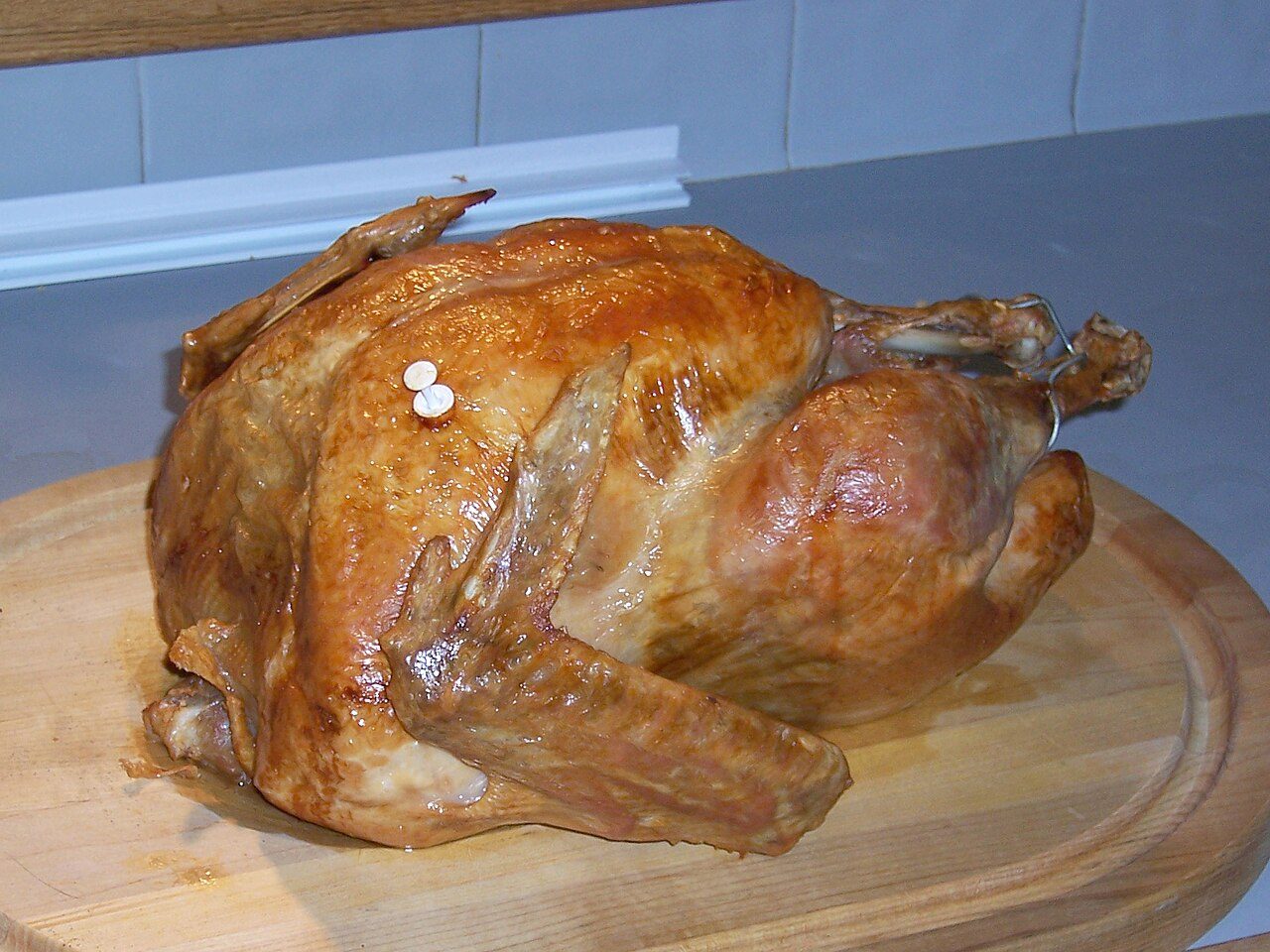
Americans eat turkey on Thanksgiving not because the Pilgrims demonstrably did — no account of the 1621 feast names the bird — but because turkey was plentiful, practical and sized for a crowd, and because a campaigning editor, a bestselling novel and a president made it a new national holiday's centrepiece.
At a Glance
- At the 1621 feast?
- Not documented: Winslow names only wildfowl and venison; historians think the fowl was likelier ducks or geese
- Why it fitted
- Turkeys were plentiful in America, raised only for meat so always available for slaughter, and one bird could feed a family
- The book
- Sarah Josepha Hale's 1827 novel Northwood put a roast turkey at the head of the Thanksgiving table
- The Dickens effect
- A Christmas Carol (1843) replaced the Cratchits' goose with a huge turkey, boosting turkey as the festive bird
- The holiday
- Lincoln proclaimed national Thanksgiving in 1863, after Hale's campaign; her magazine spread turkey recipes nationwide
- The pardon
- Formalised as an annual White House event by President George H. W. Bush in 1989 — not begun by Lincoln or Truman
Introduction
Americans eat turkey on Thanksgiving for practical and literary reasons, not because the bird is documented at the feast the holiday claims as its model. The only firsthand account of the 1621 Plymouth celebration, Edward Winslow's letter, mentions wildfowl and the five deer the Wampanoag brought — and never names turkey. The fowl was probably ducks or geese. Turkey's reign dates instead to the nineteenth century, when writers and editors made sure the whole nation adopted the perfect festive meat.
By the turn of the 1800s turkey was already a popular dish for special occasions in America. What Thanksgiving added was a fixed annual date, a national mythology linking the bird to the Pilgrims, and — from 1863 — a federal holiday on which to eat it. What follows is how that happened — and how the presidential pardon really began.
Background: A Big, Plentiful, Disposable Bird
Turkey's advantages were material before they were symbolic. The bird was native to North America and remarkably plentiful — one expert estimated at least ten million in America at European contact — so they could be hunted or raised almost anywhere. On a family farm, a turkey was also uniquely expendable. Cows were kept alive for milk and hens for eggs, but turkeys were raised only for meat, so a farmer could kill one for a feast without destroying a producing asset. And a single turkey was big enough to feed a whole family, where a chicken or duck could not feed a crowd.
Those economics explain why other candidates lost ground. Beef meant slaughtering an animal worth far more alive or in labour and milk; a pig cost more to produce than a turkey, as food historian Ken Albala points out. Pork and ham settled into other festive slots in the American calendar. Goose — the traditional English celebration bird — was smaller, greasier and less abundant in America than the native turkey. Venison, the documented meat of 1621, depended on hunting and could not supply millions of tables on a fixed date. Turkey alone was large, cheap, native and plentiful at exactly Thanksgiving's season.
Timeline
- 1621
The Plymouth harvest feast is held; Winslow records wildfowl and venison, with no mention of turkey by name.
- 1827
Sarah Josepha Hale's novel Northwood devotes a chapter to a New England Thanksgiving, with a roasted turkey placed at the head of the table.
- 1841
A collection of Pilgrim writings calls the 1621 meal the first Thanksgiving, beginning the mythic link between Pilgrims and the holiday menu.
- 1843
Charles Dickens publishes A Christmas Carol, in which the redeemed Scrooge replaces the Cratchit family's goose with an enormous turkey.
- 1856
Bradford's journal, with its great store of wild turkeys at Plymouth in 1621, is reprinted, seeming to confirm turkey at the feast.
- 3 October 1863
After Hale's campaign, President Lincoln proclaims a national Thanksgiving; Hale's magazine Godey's Lady's Book spreads turkey-centred menus nationwide.
- 1870s
Sending turkeys as gifts to the president for the White House Thanksgiving becomes an honoured routine.
- December 1947
The National Turkey Federation presents President Truman with a live turkey; the ceremony is later conflated with Thanksgiving, though Truman pardoned nothing.
- 1963
President John F. Kennedy, presented with a turkey ahead of Thanksgiving, unofficially spares it during the White House ceremony.
- 1989
President George H. W. Bush formalises the turkey pardon as an annual White House event, the form in which it continues today.
Significance
Turkey's conquest of Thanksgiving shows how national traditions are manufactured. Sarah Josepha Hale did not merely lobby for the holiday: as editor of Godey's Lady's Book, the era's most influential magazine, she filled its pages with New England recipes and idealised menus in which turkey always starred. Hale assumed the Pilgrims had eaten turkey, and her vision, repeated annually to a national readership, taught Americans what a proper Thanksgiving dinner looked like. When Lincoln made the holiday national in 1863, the menu was already written.
Dickens supplied the emotional reinforcement. A Christmas Carol, published in 1843 and instantly beloved on both sides of the Atlantic, made a giant turkey the emblem of festive generosity, as Scrooge sends one to replace the Cratchits' meagre goose. The scene cemented turkey as the favoured celebration bird in England and strengthened the same association in America. Between Hale's magazine, Dickens's novella and Lincoln's proclamation, turkey acquired what no rival meat had: a story, a date and a national stage, all within twenty years.
Questions readers ask
Did the Pilgrims eat turkey at the first Thanksgiving in 1621? Nobody knows, and the evidence leans against it being the centrepiece. Winslow's letter names only fowl and venison; Bradford mentions plenty of wild turkeys around Plymouth that autumn, so one could have reached the table, but historians judge ducks and geese — easier prey, migrating through in thousands — the likelier birds.
Was turkey chosen because it was Benjamin Franklin's favourite bird? No. Franklin praised the turkey as a respectable, native American bird, but he never proposed it for a holiday menu, and the famous story that he wanted it as the national bird instead of the bald eagle is a later embellishment. Turkey won on farms and in magazines, not in Franklin's correspondence.
Why did ham and beef lose? They were out-competed on practicality rather than beaten in a single contest. A cow was too valuable alive, a pig costlier to produce than a turkey, and neither offered one self-contained roasting joint sized exactly for a family feast. Ham kept its place at Christmas and Easter in many homes; turkey owned the new holiday because Hale's Thanksgiving menus were built around it from the start.
Who started the presidential turkey pardon? Not Abraham Lincoln and not Harry Truman, despite the popular stories. Lincoln is said to have spared a bird in 1863 because his son Tad had adopted it — and that bird was intended for Christmas, not Thanksgiving. Truman received the first federation-presented turkey in 1947 but ate his turkeys like everyone else. Kennedy spared one informally in 1963, Reagan first used the word pardon of a turkey, and George H. W. Bush made it an official annual ceremony in 1989.
Why does the tradition survive when so many people say they prefer other food? Because turkey became the holiday's symbol as well as its dinner: pardons, parades, pageants and two centuries of family habit reinforce it. Britannica notes a final practical prop — modern breeding has made turkeys larger and cheaper than ever, and wild populations, once endangered in the early twentieth century, again number in the millions.
Legacy
Turkey is now so fused with Thanksgiving that the holiday is nicknamed Turkey Day, and the bird anchors everything from parade balloons to the pardon ceremony. Its route to the table — a practical farm bird promoted by a magazine campaign, blessed by Dickens and fixed by a wartime proclamation — is a tidy example of an invented tradition that became a genuine one through repetition.
The honest history does not diminish the meal. Knowing that the 1621 table probably held venison and waterfowl, and that turkey arrived by way of nineteenth-century publishing, gives the feast a truer story: not a dish preserved unchanged for four centuries, but one a young nation chose for itself.
Sources
- Encyclopaedia Britannica — Why Do We Eat Turkey on Thanksgiving?
- Encyclopaedia Britannica — Why Do We Pardon Turkeys on Thanksgiving?
- Texas A&M University — Why Is Turkey the Main Dish on Thanksgiving?
- Plimoth Patuxet Museums — What did they eat at the 1621 harvest celebration?
- Encyclopaedia Britannica — Thanksgiving Day
The facts on this page were checked against these sources on 19 November 2026. The History Trail's permanent pages are researched and written for this site; the live profiles elsewhere on The History Trail are assembled automatically from Wikipedia and Wikidata.
About the Author
Researched and written by the The History Trail Editorial Team — the accountable editorial function behind this site's permanent story pages. The team works from the published sources cited on each page; it does not invent historians, reviewers or credentials, and it corrects errors openly.
Fact Check
Every load-bearing fact on this page traces to one of the sources listed above, and significant claims link to their source in the text. Our checking method is described on the methodology page; errors can be reported via the corrections page.
Sources & Citations
Cite this page as: The History Trail Editorial Team, The History Trail — this article's title, publication and update dates are shown beneath its headline. The full source list appears under Sources above; the site's source standards are on the sources page.