
Things
How Pearl Harbor Changed the Course of World War II
Before 7 December 1941, the Second World War was a conflict the United States armed but would not join. Pearl Harbor changed that in a single morning — and within four days the separate wars in Europe and Asia had merged into one global war, with American industry, manpower and carriers committed to winning it.
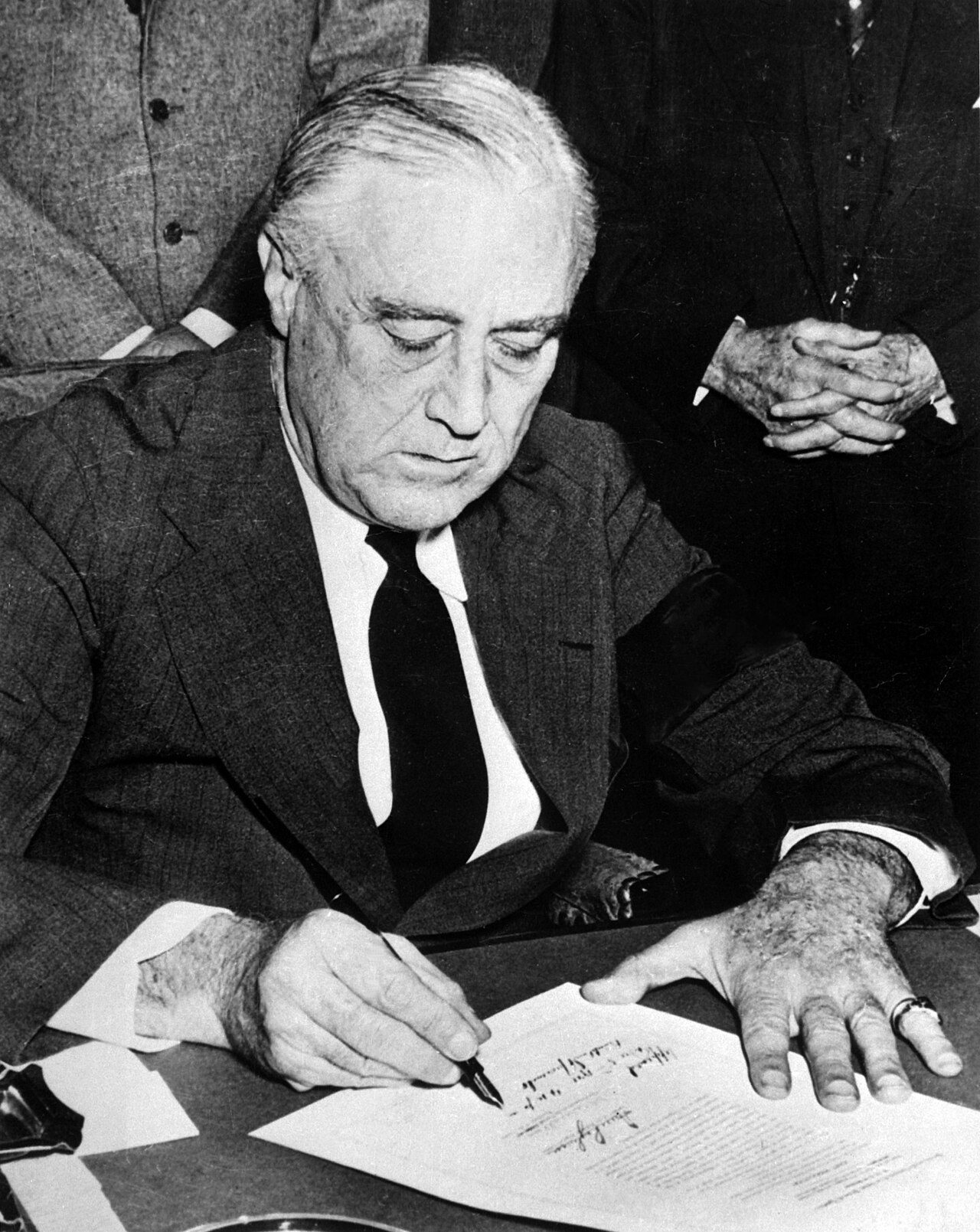
At a Glance
- 8 December 1941
- The United States declares war on Japan, the day after the attack
- 11 December 1941
- Germany and Italy declare war on the United States; Congress reciprocates the same day
- Isolationism
- The attack ended the isolationist debate overnight; the America First movement dissolved within days
- Mobilisation
- US forces grew from under 350,000 in 1939 to more than 12 million at their 1945 peak; over 16 million Americans served in all
- Industry
- American factories produced more than 300,000 aircraft during the war, supplying the US and its allies
- The carrier war
- With the battleships sunk, the carriers that escaped became the Pacific Fleet's striking arm — vindicated at Midway in June 1942
- At home
- Executive Order 9066 (19 February 1942) led to the incarceration of some 120,000 people of Japanese ancestry, two-thirds of them US citizens
Introduction
Pearl Harbor changed the Second World War first of all by changing who was fighting it. On 8 December 1941, the day after the attack, the United States declared war on Japan; on 11 December, Germany and Italy declared war on the United States, and Congress answered in kind the same day. A country that had spent two years arguing about whether the war was any of its business was now a full belligerent on two oceans — and the European and Pacific conflicts had fused into a single world war in fact as well as in name.
Everything else flowed from that political transformation. The attack abolished the domestic debate that had limited American action, unlocked a mobilisation of men and industry on a scale no other belligerent could match, and — by sinking the battleships while sparing the carriers — pushed the US Navy toward the carrier warfare that would decide the Pacific war. It also had darker consequences at home, above all the incarceration of Japanese Americans. The war of 1942–45, and the world it produced, are unintelligible without the morning of 7 December 1941.
Background
American involvement had been growing by inches. Through 1940 and 1941 the Roosevelt administration supplied Britain and then the Soviet Union through Lend-Lease, occupied Iceland, and fought an undeclared naval war against German submarines in the Atlantic. Yet public and congressional opinion remained strongly isolationist: the powerful America First movement argued that the oceans still protected the United States, and Roosevelt, for all his sympathy to the Allied cause, had no mandate — and no plan — to declare war on Germany. As late as the autumn of 1941, direct American entry into the European war looked unlikely.
Japan's attack cut through the deadlock from an unexpected direction. It was an attack on American territory by Japan, not Germany, and Roosevelt's war request on 8 December named Japan alone. The link to Europe was supplied by Berlin: on 11 December Hitler, under no obligation from the Tripartite Pact to join a war Japan had started, declared war on the United States anyway, with Mussolini's Italy following. Historians regard it as one of Hitler's greatest blunders. It removed the last obstacle to a full American effort in Europe and guaranteed that the world's largest industrial economy would fight the Axis on every front at once.
Timeline
- 7 December 1941
Japan attacks Pearl Harbor; American isolationism collapses overnight as news of the surprise attack unites public opinion behind war.
- 8 December 1941
Roosevelt's 'date which will live in infamy' address; Congress declares war on Japan.
- 11 December 1941
Germany and Italy declare war on the United States; Congress recognises a state of war with both, merging the European and Pacific wars into one global conflict.
- January 1942
The War Production Board is established to convert American industry to war production, centralising the mobilisation of factories and materials.
- 19 February 1942
Roosevelt signs Executive Order 9066, authorising the military zones under which some 120,000 people of Japanese ancestry are removed from the West Coast and incarcerated.
- June 1942
At Midway, US carrier aircraft sink four Japanese carriers — the striking arm Japan used at Pearl Harbor — turning the tide of the Pacific war six months after the attack.
- 6 June 1944
American and Allied forces land in Normandy; the United States is now fighting, and supplying, major campaigns in both Europe and the Pacific simultaneously.
- 1945
Germany surrenders in May and Japan in September. US forces peak at more than 12 million personnel; over 16 million Americans have served.
- 1988
The Civil Liberties Act formally apologises for the wartime incarceration of Japanese Americans and authorises reparations to surviving victims.
Significance
The deepest change was industrial. Pearl Harbor converted the United States from the Allies' supplier into their arsenal and their army at once. The armed forces grew from fewer than 350,000 personnel in 1939 to more than 12 million at the 1945 peak, fed by a draft that took some ten million men and by millions of volunteers; over 16 million Americans served in total. Behind them, converted factories produced war material on a scale that dwarfed every enemy economy — more than 300,000 aircraft during the war, tens of thousands of tanks, and fleets of ships launched faster than submarines could sink them. Germany and Japan had gambled that American power would arrive too late or too divided to matter; mobilisation made it arrive everywhere, in overwhelming quantity, within two years.
The attack also rewired the Pacific war itself. Japan had aimed at the battleships, the prestige weapon of the age, and left the carriers — which became the war's decisive weapon — untouched at sea. The US Navy rebuilt its strategy around carrier task forces, and at Midway in June 1942 those carriers destroyed the core of the force that had struck Pearl Harbor. Meanwhile the coalition Pearl Harbor created — the United States fully joined to Britain, the Soviet Union and China — commanded resources the Axis could never match. From December 1941 the war's outcome was no longer a question of whether the Axis could win its quick victories, but of how long Allied material superiority would take to crush it.
Myths and disputes
One consequence must be recorded plainly, because it belongs to Pearl Harbor's history and not to its glory. In the fear and racial prejudice that followed the attack, the United States government removed some 120,000 people of Japanese ancestry from the West Coast under Executive Order 9066, signed on 19 February 1942, and incarcerated them in camps for years — without charges or trials. About two-thirds were American citizens by birth. A federal commission later concluded that the policy was driven by racial prejudice, wartime hysteria and a failure of political leadership rather than military necessity, and in 1988 the Civil Liberties Act delivered a formal national apology and reparations. It stands as the attack's gravest domestic legacy: a reminder that the unity Pearl Harbor created was turned, in this case, against Americans themselves.
Legacy
The world that emerged in 1945 was built by the coalition Pearl Harbor completed. The United States ended the war as the strongest military and industrial power on earth, a founding force in the United Nations and the central pillar of the post-war order — a permanent global role that isolationist America had refused for a generation and that a single morning in Hawaii made unavoidable. American strategy ever since, from forward-deployed fleets to the doctrine that the US must be ready to fight in two theatres at once, descends from the mobilisation Pearl Harbor triggered.
For Japan and Germany the change was equally total. Both had counted on a short war against divided opponents; Pearl Harbor and Hitler's declaration four days later ensured a long war against a united coalition led by the one power whose industry neither could bomb and neither could match. Yamamoto had feared exactly this outcome. The attack that was supposed to keep America out of Japan's war instead brought America into everyone's war — and decided it.
Sources
- The National WWII Museum — Pearl Harbor Attack, December 7, 1941
- National Park Service — Remembering Executive Order 9066
- EBSCO Research Starters — Germany and Italy Declare War on the United States
- Naval History and Heritage Command — The Pearl Harbor Attack, 7 December 1941 (FAQ 66-1)
- Wikipedia — German Declaration of War on the United States
The facts on this page were checked against these sources on 19 November 2026. The History Trail's permanent pages are researched and written for this site; the live profiles elsewhere on The History Trail are assembled automatically from Wikipedia and Wikidata.
About the Author
Researched and written by the The History Trail Editorial Team — the accountable editorial function behind this site's permanent story pages. The team works from the published sources cited on each page; it does not invent historians, reviewers or credentials, and it corrects errors openly.
Fact Check
Every load-bearing fact on this page traces to one of the sources listed above, and significant claims link to their source in the text. Our checking method is described on the methodology page; errors can be reported via the corrections page.
Sources & Citations
Cite this page as: The History Trail Editorial Team, The History Trail — this article's title, publication and update dates are shown beneath its headline. The full source list appears under Sources above; the site's source standards are on the sources page.