
Things
Count Dracula
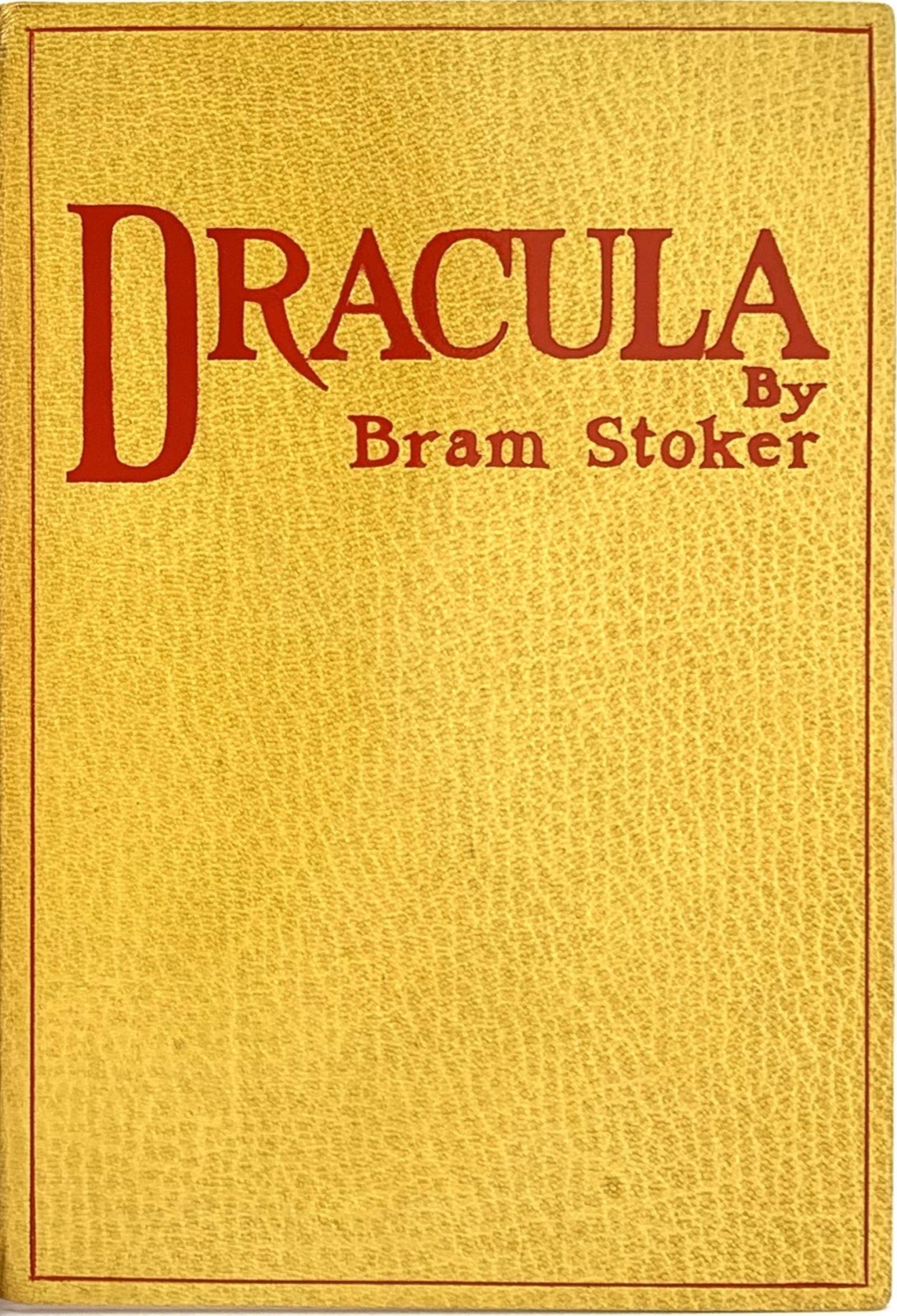
Count Dracula is a fictional character, created by the Irish writer Bram Stoker in his Gothic novel Dracula, published in 1897. He did not exist. What does exist, and can be documented, is the history of the book that invented him: Stoker's research, the borrowed name behind the Count, the stage and film versions that fixed his face, and the Romanian tourism that still sells his castle.
At a Glance
- Created by
- Bram Stoker, Irish theatre manager and novelist, in Dracula, published in London in May 1897
- The form
- An epistolary novel told through letters, diaries, telegrams and newspaper reports; the Count is hunted by a group led by Abraham Van Helsing
- The name
- Copied by Stoker at Whitby in 1890 from William Wilkinson's 1820 account of Wallachia, which said Dracula in Wallachian means devil
- The real men behind the name
- Vlad II Dracul, named for the Order of the Dragon, and his son Vlad III, called Dracula - son of Dracul - and later Vlad the Impaler
- First film
- Nosferatu (1922), an unauthorised adaptation; Stoker's widow sued, and a German court ordered all copies destroyed in 1925
- The defining performance
- Bela Lugosi, who played the Count on Broadway in 1927 and in Universal's 1931 film, based largely on the stage play
- The castle
- Bran Castle in Romania is marketed as Dracula's Castle, but no document connects Stoker to it and he never visited Romania
Introduction
Count Dracula never lived, but the novel that created him is a documented object with a documented history. Bram Stoker, an Irishman who worked as business manager to the actor Henry Irving at London's Lyceum Theatre, published Dracula in May 1897 with Archibald Constable and Company. The story is told through letters, diaries, telegrams and newspaper reports: the solicitor Jonathan Harker travels to a castle in Transylvania to complete a property sale, discovers his client is a vampire, and the Count then sails for England, where a group led by Abraham Van Helsing hunts him down.
Because the Count is an invention, this page does not tell his life story. It tells the verifiable story around him: how Stoker researched the book, where the name came from, how the courts, the stage and the cinema reshaped him, and how a real Romanian castle came to be sold to the world as his home.
Origins: Stoker's Research and the Making of the Novel
Stoker left behind more than a hundred pages of working notes, now held by the Rosenbach in Philadelphia, and they show a methodical researcher rather than a man transcribing folklore. He read travel books and histories of eastern Europe and gathered material on superstition, storms and shipwrecks. In the summer of 1890 he holidayed in Whitby, the Yorkshire port that later appears in the novel as the place where the Count's ship, the Demeter, runs ashore empty. Whitby gave him its abbey ruins and churchyard, and a real wreck, that of the Russian schooner Dmitry, helped shape the Demeter episode.
The notes also show the book changing as he worked. Its working titles included The Un-Dead, and the vampire himself was at first called Count Wampyr. Stoker died in 1912, long before his Count's greatest fame. One accident helped that fame: the novel's copyright had been incorrectly filed in the United States, a defect noticed only decades later, which left Dracula effectively in the American public domain and made adaptation there far easier.
The Name: Vlad II, Vlad III and a Whitby Footnote
In the Whitby library in 1890 Stoker read William Wilkinson's An Account of the Principalities of Wallachia and Moldavia, published in 1820 by a former British consul in Bucharest. He copied into his notes Wilkinson's statement that Dracula, in the Wallachian language, means devil. On the strength of that footnote, Count Wampyr became Count Dracula.
Behind the footnote stand two real men. Vlad II of Wallachia was called Dracul, the Dragon, after joining the Order of the Dragon, founded to defend Christian Europe against the Ottoman Empire; the name derives from the Latin draco, dragon. His son was therefore Vlad III Dracula - son of Dracul. Vlad III, who ruled Wallachia briefly in 1448, again from 1456 to 1462 and again in 1476, became known as Vlad the Impaler for impaling his enemies on stakes. Britannica records that in 1462, retreating before an Ottoman army, he left a field of impaled victims as a deterrent. Killed in battle in 1476, he is remembered in Romania as a folk hero for resisting Ottoman expansion.
Stage and Screen: Nosferatu, the Lawsuit and Lugosi
Nosferatu, directed by F. W. Murnau and premiered in Berlin in March 1922, was an unauthorised adaptation by the German company Prana Film. Names were changed - the Count became Orlok - but Stoker's plot was kept, and the film was advertised as freely adapted from Bram Stoker's Dracula. Stoker's widow Florence sued for copyright infringement, backed by the British Incorporated Society of Authors. Prana went bankrupt, and in 1925 a German court ruled for Florence and ordered all copies destroyed. The order failed: prints had already reached other countries, including the United States, where the novel was in the public domain, and Nosferatu survived to become a classic of silent cinema.
The authorised route ran through the theatre. Hamilton Deane's stage adaptation opened in Derby in 1924; revised by John L. Balderston, it reached Broadway in 1927 with the Hungarian actor Bela Lugosi as the Count. Universal's Dracula of 1931, directed by Tod Browning, was based largely on that stage play rather than directly on the novel, and carried Lugosi and Edward Van Sloan, Broadway's Van Helsing, with it. Lugosi's evening dress, cape and accented delivery fixed the screen image of Dracula for generations.
Timeline
- 1448
Vlad III, called Dracula, son of Dracul, first takes the throne of Wallachia; his later reigns and impalements make him notorious.
- 1820
William Wilkinson publishes An Account of the Principalities of Wallachia and Moldavia, the book whose note on the name Dracula Stoker would copy.
- Summer 1890
On holiday in Whitby, Stoker reads Wilkinson in the town library and notes that Dracula in Wallachian means devil; Count Wampyr is renamed.
- May 1897
Dracula is published in London by Archibald Constable and Company; the epistolary novel is well received.
- March 1922
Murnau's Nosferatu, an unauthorised adaptation by Prana Film, premieres in Berlin.
- 1925
A German court, ruling for Stoker's widow Florence, orders all copies of Nosferatu destroyed; prints abroad survive.
- 1927
Deane's stage play, revised by John L. Balderston, opens on Broadway with Bela Lugosi as the Count.
- 1931
Universal releases Dracula, directed by Tod Browning and starring Lugosi - the first sound film adaptation.
- 1972
In Search of Dracula by Raymond McNally and Radu Florescu popularises the claim that Stoker modelled the Count on Vlad the Impaler.
Significance
Dracula's significance is measurable in what he standardised. Earlier vampires in English fiction varied widely; after Stoker, the vampire was an eastern European aristocrat bound by fixed rules and weaknesses - the need to rest in native soil, the dread of garlic and the cross, destruction by a stake. Its hunters fight him with typewriters, phonograph diaries and blood transfusions as much as with stakes, and still nearly lose.
He also became a legal landmark twice over. The Nosferatu judgment asserted an author's rights against a young film industry, and the defective American copyright filing let the character multiply freely in the United States, one reason adaptations proliferated there without anyone's permission.
Myths and disputes
Was the Count modelled on Vlad the Impaler? The evidence does not show it, and this page flags the popular claim as disputed. Stoker's notes, the only factual record of his research, contain the borrowed name and a brief note of a voivode Dracula who crossed the Danube to fight the Turks - and nothing about Vlad III's impalements, reigns or cruelty. Britannica makes the same point: the account Stoker used mentions only the appellation, not the deeds of its bearer, and the theory that a historian acquaintance supplied more has no concrete evidence behind it. Scholars such as Elizabeth Miller therefore treat the Vlad link as tenuous. What is documented is a borrowed name; a borrowed biography is not.
Is Bran Castle Dracula's castle? No document connects Stoker to it. He never visited Romania, and his fictional castle stands near the Borgo Pass, far from Bran. Bran Castle's own official history urges visitors to distinguish Bran's reality from the fictional Count, notes that documents do not attest whether Vlad even conquered the castle, and reports only as a possibility that he was imprisoned there for two months in 1462. The castle's claim rests on resemblance: a fortress on a rock in Transylvania that looks the way readers imagine the Count's home. Promoted to tourists from the 1970s onward, Bran is now known worldwide as Dracula's Castle - a triumph of marketing over the record.
Legacy
The legacy is a character who has escaped his book. Dracula is among the most filmed figures in all fiction, endlessly rewritten - Stephen King's Salem's Lot claims Stoker as its inspiration, Stephenie Meyer's Twilight vampires descend from his rules even as they reject them, and Sesame Street turned him into Count von Count, a vampire who counts instead of biting. In Romania, where Vlad III is a national hero, the vampire trade built on his borrowed name is both a major earner and, to some, an insult. The Count remains what Stoker made him in 1897 - an invention, and one of the most durable ever published.
Sources
- Encyclopaedia Britannica - Dracula (novel by Bram Stoker)
- Encyclopaedia Britannica - Vlad the Impaler
- Bran Castle - Count Dracula: The Myth of Count Dracula
- Mental Floss - How Nosferatu Ripped Off Dracula and Became a Plagiarism Success Story
- Mental Floss - Why Bram Stoker's Dracula Almost Had a Very Different Name
- Spooky Isles - Dracula's Stage Journey: From Lyceum to Broadway
The facts on this page were checked against these sources on 19 November 2026. The History Trail's permanent pages are researched and written for this site; the live profiles elsewhere on The History Trail are assembled automatically from Wikipedia and Wikidata.
About the Author
Researched and written by the The History Trail Editorial Team — the accountable editorial function behind this site's permanent story pages. The team works from the published sources cited on each page; it does not invent historians, reviewers or credentials, and it corrects errors openly.
Fact Check
Every load-bearing fact on this page traces to one of the sources listed above, and significant claims link to their source in the text. Our checking method is described on the methodology page; errors can be reported via the corrections page.
Sources & Citations
Cite this page as: The History Trail Editorial Team, The History Trail — this article's title, publication and update dates are shown beneath its headline. The full source list appears under Sources above; the site's source standards are on the sources page.