
Things
Common cold
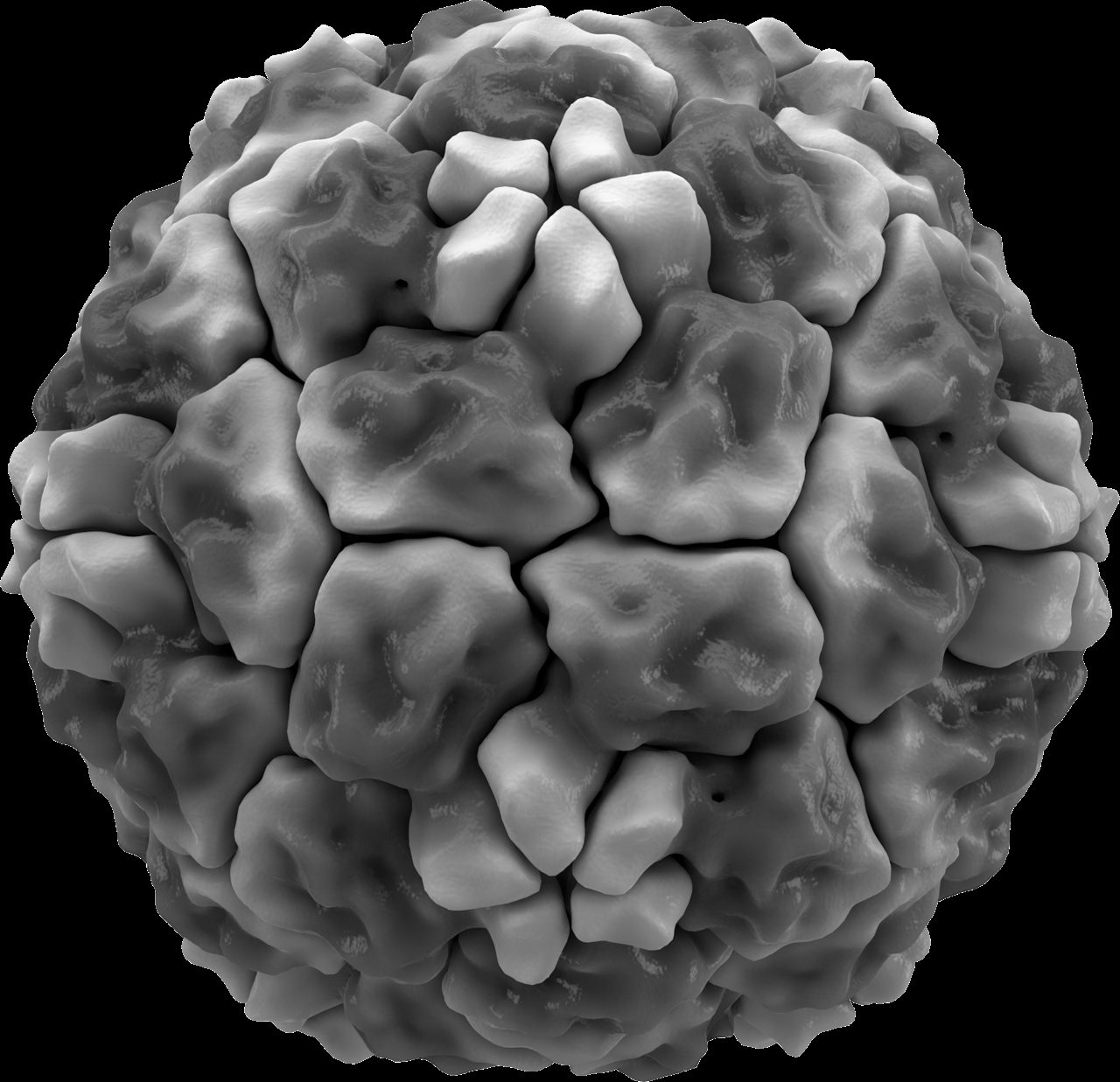
The common cold defeated researchers for half a century — not because it is rare, but because it is many. The dedicated British unit that chased it from 1946 discovered that there is no single cold virus: there are hundreds, beginning with the rhinoviruses grown at last in Salisbury in 1960.
At a Glance
- Main cause
- Rhinoviruses — more than 100 distinct types identified
- Other causes
- Coronaviruses and several other respiratory virus families
- Dedicated research centre
- The Common Cold Unit, Salisbury, Wiltshire, founded 1946
- Volunteers studied
- More than 10,000 over the unit's history
- Rhinoviruses first grown
- David Tyrrell's team, using nasal cells at 33 °C, reported 1960
- Filterable cause shown
- Walther Kruse's volunteer experiments, published at the start of the First World War
- Coronavirus named
- 1967, by June Almeida and David Tyrrell, for the viruses' crown-like spikes
Introduction
Everyone knows the common cold, and for most of medical history that familiarity bred a puzzle: a disease this common, this contagious and this mild should have been easy to study, yet no one could find its cause. Experiments early in the twentieth century showed that something in the nasal secretions of a cold sufferer could pass through filters fine enough to stop bacteria and still give volunteers colds. The agent was a virus — but it refused to grow in the laboratory cultures that worked for other viruses.
The hunt was institutionalised after the Second World War. In 1946 the British Medical Research Council set up the Common Cold Unit in the huts of the former American Red Cross–Harvard Hospital at Salisbury in Wiltshire, under Christopher Andrewes. Volunteers came to stay in isolation, were given nasal drops, and had every tissue counted. Over the unit's life, more than ten thousand volunteers passed through — an entire research method built around the world's most ordinary illness.
Background
The unit's early years were a lesson in negative results: earlier claims to have grown a cold virus, in fertile eggs for example, proved unfounded. A turning point came from tissue culture. In 1953 Andrewes and colleagues showed that material from explant cultures of human embryo lung could produce colds in volunteers, even though the cultures looked normal. American workers, meanwhile, cultured related viruses in monkey kidney cells — Price in 1956 and Pelon in 1957 — but the viruses in Salisbury's own cold-producing material remained elusive.
The breakthrough belonged to David Tyrrell, who joined the unit in 1957. His distinctive approach was to grow well-oxygenated nasal epithelial cells at 33 °C — the temperature of the nose, cooler than the body's core. In that environment the cold viruses finally grew, and in 1960 his team published the work in The Lancet. The viruses became known as rhinoviruses, from the Greek for nose. It soon became clear there were more than a hundred types — and that rhinoviruses were not the whole story.
Timeline
- 1914
Walther Kruse publishes volunteer experiments in Munich showing colds are caused by a filterable agent, not a bacterium.
- 1930s
Alphonse Dochez in New York confirms the filterable-virus finding with rigorous experiments in volunteers and chimpanzees.
- 1946
The Common Cold Unit is established at Salisbury, Wiltshire, in former wartime hospital huts, directed by Christopher Andrewes.
- 1953
Andrewes' team shows a cold virus can be passed in cultures of human embryo lung and still produce colds in volunteers.
- 1956
Winston Price cultures a cold-type virus, the JH strain, in monkey kidney cells in the United States.
- 1957
David Tyrrell joins the Common Cold Unit to attack the problem of growing the cold virus.
- 1960
Tyrrell's team reports growing rhinoviruses in nasal epithelial cells kept at 33 °C, the temperature of the nose.
- 1965
A novel cold virus from a schoolboy's sample, designated B814, is confirmed as a new kind of virus.
- 1967
June Almeida and David Tyrrell coin the name coronavirus for the group, from the crown-like spikes on their surfaces.
Significance
The cold's significance is scientific rather than dramatic, and it is large. The Salisbury work dissolved the idea of the common cold virus: with more than a hundred rhinovirus types, plus coronaviruses and other families all producing the same symptoms, a single vaccine faced an enemy that was actually a crowd. That discovery explained, in advance, why decades of effort produced no cold vaccine — and redirected research toward how respiratory viruses infect, spread and provoke symptoms.
The unit also pioneered a style of research: the human challenge study, in which volunteers are deliberately exposed under controlled, isolated conditions and observed in fine detail. Its records of incubation, shedding and transmission became foundational data for respiratory virology generally, informing the study of influenza and, much later, of new coronaviruses. The methods outlasted the unit, which studied volunteers for more than four decades.
Legacy
Tyrrell's name remains linked with the discovery of the common cold viruses and the unravelling of how they cause disease; he was elected a Fellow of the Royal Society and led the unit's research tradition into the era of molecular virology. The coronaviruses he helped characterise as cold agents in the 1960s later proved capable of far more serious disease, giving the old Salisbury work an unexpected second life as background knowledge.
The cold itself remains uncured and unvaccinated against, a standing reminder that commonness is not simplicity. Its history inverted the usual story of medical progress: the breakthrough was not a drug but a realisation — that the target was hundreds of viruses, and that the humble volunteer unit in Wiltshire had mapped the problem correctly for everyone who followed.
Sources
- Royal Society — David Arthur John Tyrrell CBE, Biographical Memoir (Fellows of the Royal Society)
- PubMed Central — Tyrrell (1979), Studies of rhinoviruses and coronaviruses at the Common Cold Unit, Salisbury (Postgraduate Medical Journal)
- WikiJournal of Medicine — A history of coronaviruses (full text PDF)
The facts on this page were checked against these sources on 19 November 2026. The History Trail's permanent pages are researched and written for this site; the live profiles elsewhere on The History Trail are assembled automatically from Wikipedia and Wikidata.
About the Author
Researched and written by the The History Trail Editorial Team — the accountable editorial function behind this site's permanent story pages. The team works from the published sources cited on each page; it does not invent historians, reviewers or credentials, and it corrects errors openly.
Fact Check
Every load-bearing fact on this page traces to one of the sources listed above, and significant claims link to their source in the text. Our checking method is described on the methodology page; errors can be reported via the corrections page.
Sources & Citations
Cite this page as: The History Trail Editorial Team, The History Trail — this article's title, publication and update dates are shown beneath its headline. The full source list appears under Sources above; the site's source standards are on the sources page.