
Things
Asthma
Asthma is among the oldest named conditions in medicine. Greek physicians gave it a word meaning panting, Roman doctors described its attacks in recognisable detail, and yet the decisive insight — that it is a disease of airway inflammation, not merely of spasm — only arrived in the last decades of the twentieth century.
At a Glance
- Name
- From the Greek asthma, meaning panting or shortness of breath
- Early description
- Aretaeus of Cappadocia, around AD 100 — cough, chest heaviness, breathlessness
- Ancient remedies
- More than 700 remedies in the Egyptian Ebers papyrus tradition
- Modern definition
- Henry Hyde Salter's treatise, late 19th century
- Key textbook account
- William Osler, Principles and Practice of Medicine, 1892
- Allergy link identified
- Reagin experiments of Prausnitz and Küstner, 1921
- Turning point
- Inhaled corticosteroids established in clinical trials in the 1970s
Introduction
The word asthma comes from Greek, where it meant panting or being short of breath — for centuries, almost any breathlessness could carry the name. Hippocrates used the term and, notably, connected attacks with environmental triggers, an observation that would prove durable. Herbal fumes and inhaled remedies were already ancient responses: the Egyptian Ebers papyrus tradition contained hundreds of remedies for airway discomfort, and smoke from stramonium leaves was used to relax the lungs in the ancient world.
The first description a modern clinician would recognise came around AD 100, when Aretaeus of Cappadocia listed asthma's symptoms — cough, difficulty in breathing, tiredness and heaviness in the chest — and observed that coughing grew more frequent as an attack worsened. Patients, he noted, might escape death yet lived under the condition's constant shadow. That combination of episodic attack and persistent vulnerability remains the shape of the disease today.
Background
For most of its history asthma was explained by the theories available at the time. Pliny the Elder reported pollen as a source of breathing difficulty in the first century AD and recommended ephedra extract in wine. Maimonides, writing around 1200, advised fluids, rest and hygiene from his own observations. In the seventeenth century Jean Baptiste van Helmont located the problem in what he called the pipes of the lungs, and Bernardino Ramazzini connected asthma with dust — early steps toward understanding triggers rather than humours.
The modern definition took shape in the late nineteenth century. Henry Hyde Salter's treatise On Asthma and its Treatment defined it as paroxysmal breathlessness with intervals of healthy breathing between attacks, and pictured airways narrowed by contraction of their smooth muscle. William Osler's 1892 textbook added spasm of the bronchial muscles, swelling of the bronchial membrane, a resemblance to hay fever, and the fact that the condition ran in families and often began in childhood.
Timeline
- 2600 BC
Respiratory distress and wheezing are recorded in China, among the earliest mentions of symptoms later called asthma.
- AD 50
Pliny the Elder identifies pollen as a source of breathing difficulty and recommends ephedra, a forerunner of later bronchodilator drugs.
- c. AD 100
Aretaeus of Cappadocia gives the first accurate clinical description of asthma, listing cough, chest heaviness and laboured breathing.
- c. 1200
Maimonides writes on asthma from observation, advising sleep, fluids and hygiene rather than supernatural explanations.
- 1892
Osler's Principles and Practice of Medicine describes bronchial spasm and swelling, a family pattern and links with hay fever.
- 1921
Prausnitz and Küstner show that a serum substance — later identified as IgE — can transfer allergy from one person to another.
- Mid-1960s
An epidemic of asthma deaths in Australia, the United States and Britain is linked to over-reliance on strong bronchodilator inhalers.
- 1970s
Clinical trials establish inhaled corticosteroids, notably beclomethasone, as highly effective daily controller treatment.
- 1980s
Research reframes asthma as an inflammatory disorder driven by mast cells, eosinophils and allergic mechanisms, not spasm alone.
Significance
Asthma's history is a case study in how a wrong emphasis can persist inside a partly right theory. Because bronchodilators visibly relieved attacks, asthma was managed for decades as an acute disorder of bronchospasm, treated episode by episode. Yet pathologists had known since the early 1920s that fatal asthma involved extensive inflammation and structural change in the airways. The death epidemics of the 1960s and the second peak in New Zealand in the 1980s forced the question of what was happening between attacks.
The answer reorganised care. Allergen exposure was shown to trigger an early reaction from mast cells and a later inflammatory response that left airways twitchy and reactive. Inhaled corticosteroids, proven in 1970s trials, treated that underlying inflammation, and the identification of IgE and of the Th2 lymphocyte pathways eventually produced targeted biologic medicines for severe allergic asthma. The historical lesson — treat the inflammation, not only the spasm — is the disease's main contribution to respiratory medicine.
Legacy
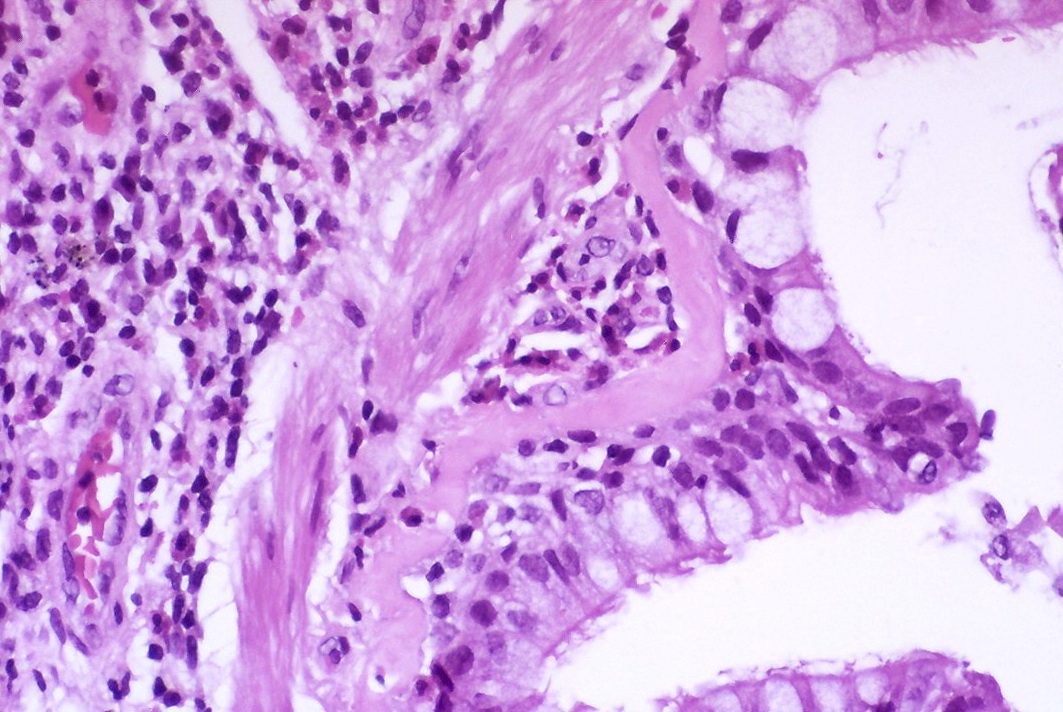
Asthma remains a chronic condition without a cure in the historical record, but its study changed how medicine thinks about chronic airway disease: as a set of differing phenotypes shaped by genes, allergens, viruses and pollution, rather than a single uniform disorder. The recognition that airway remodelling begins early, and that the airway lining itself may be defective from the start, brought the story full circle — back to the formed elements of the airway that the earliest physicians could only guess at.
The long arc from ephedra in wine to monoclonal antibodies also marks a change in method. Ancient remedies were empirical; Salter and Osler systematised observation; the twentieth century added immunology and controlled trials. Each stage corrected the last without entirely discarding it — Hippocrates' environmental triggers are still, in modern language, part of the disease. WHO estimates that 363 million people were living with asthma in 2023 — the ancient disease of panting remains a thoroughly global one.
Sources
- PubMed Central — A Brief History of Asthma and Its Mechanisms to Modern Concepts of Disease Pathogenesis
- News-Medical — Asthma History
- World Health Organization — Asthma fact sheet
The facts on this page were checked against these sources on 19 November 2026. The History Trail's permanent pages are researched and written for this site; the live profiles elsewhere on The History Trail are assembled automatically from Wikipedia and Wikidata.
About the Author
Researched and written by the The History Trail Editorial Team — the accountable editorial function behind this site's permanent story pages. The team works from the published sources cited on each page; it does not invent historians, reviewers or credentials, and it corrects errors openly.
Fact Check
Every load-bearing fact on this page traces to one of the sources listed above, and significant claims link to their source in the text. Our checking method is described on the methodology page; errors can be reported via the corrections page.
Sources & Citations
Cite this page as: The History Trail Editorial Team, The History Trail — this article's title, publication and update dates are shown beneath its headline. The full source list appears under Sources above; the site's source standards are on the sources page.