
On This Day
September 25 in History
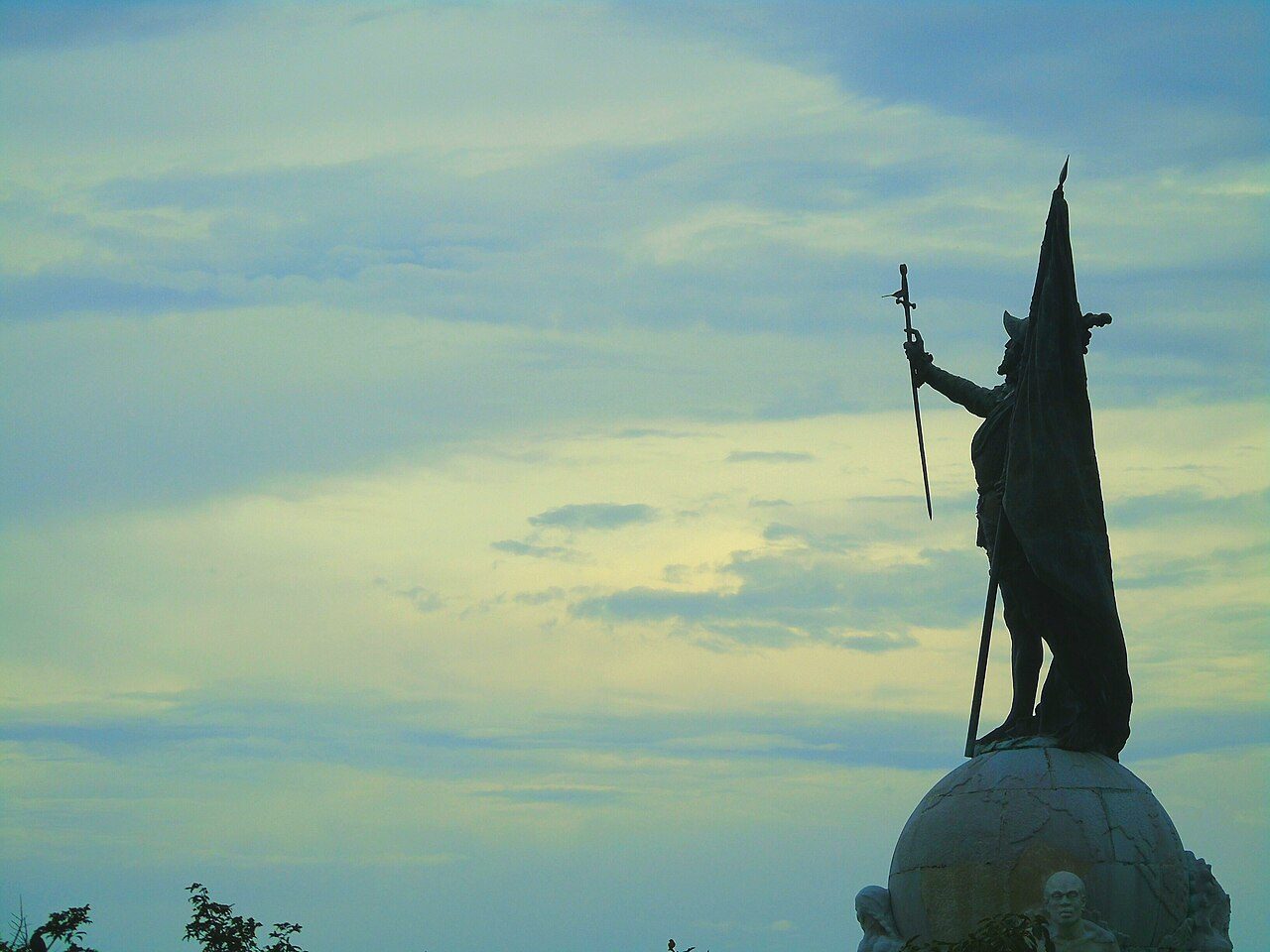
On 25 September 1513, from a peak in Darién, in what is now Panama, the Spanish explorer Vasco Núñez de Balboa looked down on an ocean no European had seen from the New World: the Pacific, which he called the Mar del Sur, the South Sea, and claimed for Spain. September 25 is also the day of the Battle of Stamford Bridge, the Peace of Augsburg, and the Little Rock Nine's first full day of school.
Choose another date: open the On This Day calendar to browse events, births and deaths for any day of the year.
At a Glance
- The march
- Balboa left Santa María la Antigua on 1 September 1513 with 190 Spaniards and hundreds of Indigenous porters
- The sighting
- 25 September 1513 — from a peak in Darién he saw the Pacific; Britannica notes the date is also given as 27 September
- The claim
- Four days later, wading into the Gulf of San Miguel, he claimed the sea and all lands it touched for the king of Castile
- The name
- He called it the Mar del Sur — the South Sea; Ferdinand Magellan later gave it the name Pacific
- What it proved
- A great ocean lay west of the Americas, between the New World and Asia
- Balboa's end
- Arrested by his rival Pedrarias, Balboa was beheaded for treason in January 1519
Events on this day
- 1066At the Battle of Stamford Bridge, King Harold II of England destroys a Norwegian invasion, killing King Harald Hardrada and his own brother Tostig.
- 1513Balboa sights the Pacific Ocean from a peak in Darién — the featured story above.
- 1555The Peace of Augsburg is signed, allowing each German prince to choose Lutheranism or Catholicism for his territory.
- 1789Congress approves the Bill of Rights — twelve proposed amendments to the United States Constitution, ten of which are ratified.
- 1957Escorted by federal troops, the Little Rock Nine attend their first full day of classes at Central High School.
- 1963Mob witness Joseph Valachi begins testifying to a Senate committee, publicly confirming for the first time that the Mafia exists.
- 1974Surgeon Frank Jobe performs the first ulnar collateral ligament reconstruction on pitcher Tommy John — the operation that still bears John's name.
- 1981Sandra Day O'Connor is sworn in as the first woman justice of the United States Supreme Court.
Born on this day
- 1897William Faulkner — American novelist of The Sound and the Fury and As I Lay Dying, Nobel laureate in Literature.
- 1929Barbara Walters — American television journalist who reshaped the celebrity and news interview.
- 1944Michael Douglas — American actor and producer of Wall Street and One Flew Over the Cuckoo's Nest.
- 1969Catherine Zeta-Jones — Welsh actress, Academy Award winner for Chicago.
Died on this day
- 1534Clement VII — pope who refused Henry VIII an annulment, setting England on the road to schism with Rome.
- 1970Erich Maria Remarque — German novelist of All Quiet on the Western Front, the defining novel of the First World War's soldiers.
- 1980John Bonham — English drummer of Led Zeppelin, whose death ended the band.
- 2011Wangari Maathai — Kenyan environmentalist and Nobel Peace laureate who founded the Green Belt Movement.
The featured story: Balboa sights the Pacific, 25 September 1513
Balboa was a man in a hurry and in debt to fortune. A Spanish settler who had stowed away to the mainland to escape his creditors, he had seized leadership of the struggling colony of Santa María la Antigua del Darién, on the Caribbean coast of what is now Panama — the first stable Spanish settlement on the American mainland. There he heard from Indigenous leaders of another sea to the south, beyond the mountains, and of lands rich in gold along its shores. On 1 September 1513 he set out to find that sea, with 190 Spaniards, hundreds of Indigenous porters and a pack of war dogs, cutting through jungle, rivers and swamp.
The crossing took three weeks of fighting, disease and exhaustion. On the morning of 25 September 1513 — some accounts give 27 September — guides told Balboa that from a nearby peak the sea could be seen. By the traditional account he ordered his men to halt below the summit and climbed alone, so that no one would share the first sight. Below him, glittering to the horizon, lay the largest ocean on Earth. He called his companions up, a Te Deum was sung, stones were piled and crosses carved with the king's initials: the Mar del Sur, the South Sea, was claimed for Castile.
Four days later Balboa reached the shore at the Gulf of San Miguel, waded in with sword and banner, and formally took possession of the sea 'and all the lands it might touch' — a claim of breathtaking presumption, since neither he nor anyone in Europe had any idea that the ocean covered a third of the planet. What the sighting actually proved was more modest and more important: the landmass Columbus had found was a continent with a western shore, and Asia lay across another ocean beyond it. Within a decade Magellan's expedition would cross that ocean and measure its terrible width.
Balboa never enjoyed his discovery. The crown sent a new governor, Pedrarias, whose jealousy of the younger man curdled into prosecution; Balboa was arrested on charges of treason, tried in a proceeding few historians defend, and beheaded at Acla in January 1519, aged about 44. The sea he had shown Europe kept his Spanish name for it only briefly — but the peak in Darién entered English poetry through Keats, who gave the moment, by a famous error, to 'stout Cortez' instead.
Why this date matters
September 25 is a day of first sightings and hard bargains. Balboa sees an ocean; Harold wins the battle that exhausts him before Hastings; German princes trade religious peace for princely power at Augsburg; nine students finally sit through a school day under guard. The pattern is the glimpse and the price: again and again the date shows someone reaching the thing they sought — a sea, a settlement, a classroom — and discovering what it will cost to hold it. Perhaps that is why Keats reached for this date when he wanted an image for the shock of discovery itself — the moment the world becomes larger than the map you were given, and there is no going back to the smaller one.
Sources
- Encyclopaedia Britannica — On This Day: September 25
- HISTORY — This Day in History: September 25
- Wikimedia — On This Day feed: September 25
- Encyclopaedia Britannica — Vasco Núñez de Balboa
- Library of Congress — Today in History: September 25
The facts on this page were checked against these sources on 19 November 2026. The History Trail's permanent pages are researched and written for this site; the live profiles elsewhere on The History Trail are assembled automatically from Wikipedia and Wikidata.
About the Author
Researched and written by the The History Trail Editorial Team — the accountable editorial function behind this site's permanent story pages. The team works from the published sources cited on each page; it does not invent historians, reviewers or credentials, and it corrects errors openly.
Fact Check
Every load-bearing fact on this page traces to one of the sources listed above, and significant claims link to their source in the text. Our checking method is described on the methodology page; errors can be reported via the corrections page.
Sources & Citations
Cite this page as: The History Trail Editorial Team, The History Trail — this article's title, publication and update dates are shown beneath its headline. The full source list appears under Sources above; the site's source standards are on the sources page.