
On This Day
September 16 in History
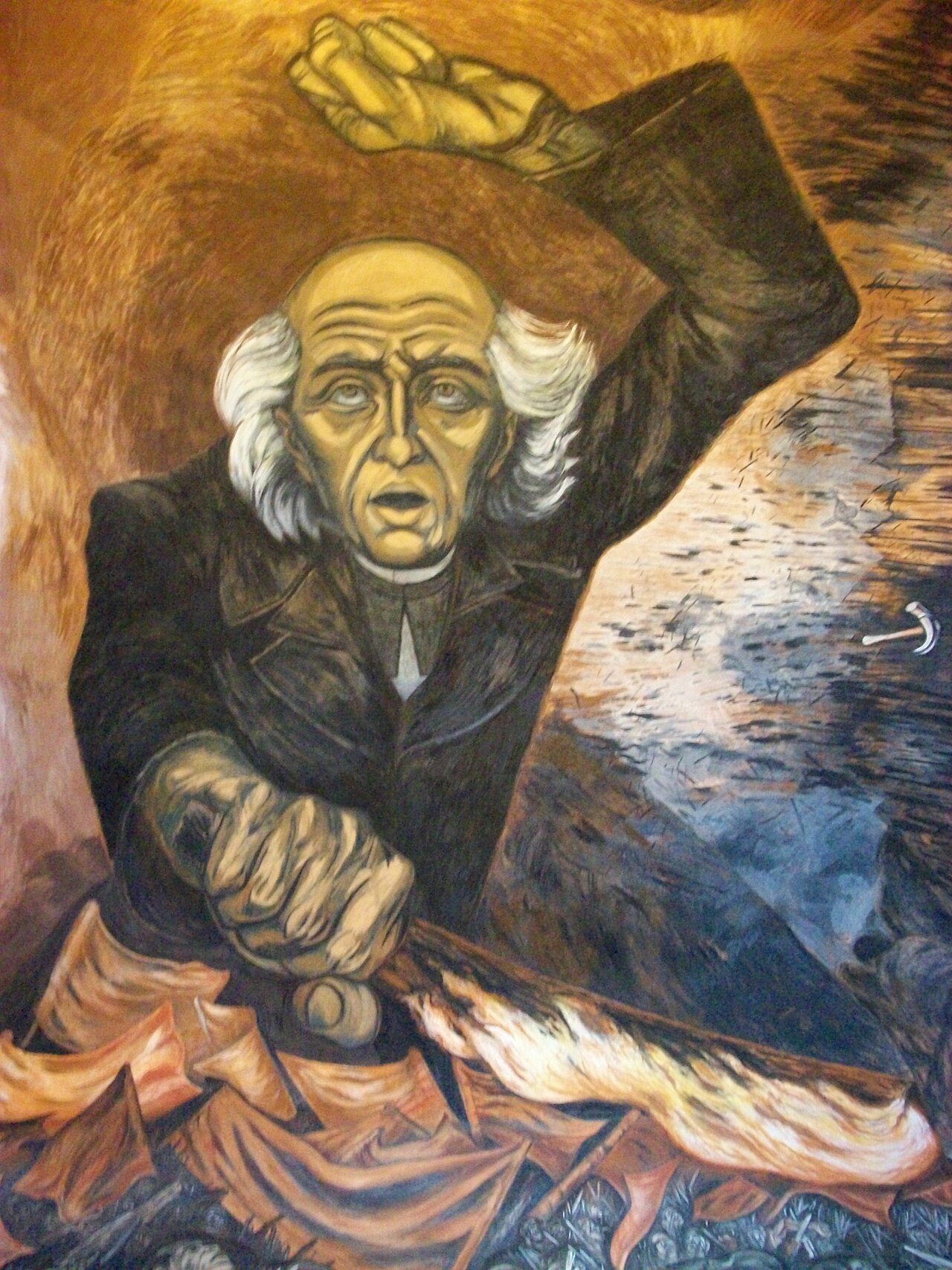
Before dawn on 16 September 1810, in the Mexican town of Dolores, the parish priest Miguel Hidalgo y Costilla rang his church bell and called his people to rise against Spanish rule — the Grito de Dolores, the opening act of Mexico's War of Independence, whose anniversary is Mexico's national day. September 16 is also the day the Mayflower sailed, General Motors was founded and Malaysia was formed.
Choose another date: open the On This Day calendar to browse events, births and deaths for any day of the year.
At a Glance
- The place
- Dolores (now Dolores Hidalgo), Guanajuato, in Spanish-ruled New Spain
- The man
- Miguel Hidalgo y Costilla, parish priest of Dolores and a member of a creole conspiracy for independence
- The trigger
- The conspiracy had been discovered by the Spanish authorities, forcing Hidalgo to act at once or face arrest
- The act
- Hidalgo rang the church bell to summon the town and issued a call to arms — the Grito, whose exact words were never recorded
- The war
- The rising began an 11-year war; Mexico's independence was finally secured in 1821
- The commemoration
- Each year on the night of 15 September, Mexico's president re-enacts the Grito from the National Palace balcony, ringing Hidalgo's original bell
Events on this day
- 1400Owain Glyndŵr is proclaimed Prince of Wales by his followers, beginning the last great Welsh rising against English rule.
- 1620The Mayflower sets sail from Plymouth, England, carrying 102 passengers toward North America, where they will found Plymouth Colony.
- 1776American troops win the Battle of Harlem Heights, a morale-restoring counterattack days after the fall of New York City.
- 1810Father Miguel Hidalgo issues the Grito de Dolores, beginning Mexico's War of Independence — the featured story above.
- 1893More than 100,000 settlers race into the Cherokee Strip in Oklahoma in one of the largest land runs in American history.
- 1908William C. Durant founds the General Motors Corporation in Flint, Michigan, assembling Buick and other makers into an industrial giant.
- 1920A bomb in a horse-drawn wagon explodes outside the J. P. Morgan building on Wall Street, killing 38 people; the crime is never solved.
- 1940President Franklin D. Roosevelt signs the Selective Training and Service Act, the first peacetime draft in United States history.
- 1963The Federation of Malaysia is formed, uniting Malaya, Singapore, Sabah and Sarawak; Singapore will leave two years later.
- 1975Papua New Guinea becomes independent of Australia, with Michael Somare as its first prime minister.
- 1987The Montreal Protocol on substances that deplete the ozone layer is signed, one of the most successful environmental treaties ever made.
- 2022Mahsa Amini dies in Tehran after her arrest by Iran's morality police, sparking months of nationwide protest.
Born on this day
- 1386Henry V — king of England from 1413, victor of Agincourt and, briefly, heir to the throne of France.
- 1745Mikhail Kutuzov — Russian field marshal who commanded against Napoleon in 1812 and traded space for time.
- 1858Bonar Law — Canadian-born British prime minister, the only one born outside the British Isles to hold the office in his era.
- 1924Lauren Bacall — American actress of To Have and Have Not and The Big Sleep, a defining star of film noir.
- 1925B. B. King — American blues guitarist and singer, 'the King of the Blues', whose guitar Lucille spoke for him.
- 1971Amy Poehler — American comedian and actress, star of Parks and Recreation and co-founder of the Upright Citizens Brigade.
Died on this day
- 1701James II — deposed king of England, Scotland and Ireland, who died in exile in France, still recognised as king by his Jacobite supporters.
- 1736Daniel Gabriel Fahrenheit — Polish-Dutch physicist who invented the mercury thermometer and the temperature scale named for him.
- 1824Louis XVIII — restored king of France after Napoleon, whose reign tried to hold monarchy and revolution in balance.
- 1977Maria Callas — Greek-American soprano whose voice and dramatic intensity remade operatic performance, dead in Paris at 53.
- 2016Edward Albee — American playwright of Who's Afraid of Virginia Woolf?, a three-time Pulitzer Prize winner.
The featured story: the Grito de Dolores, 16 September 1810
In the small hours of 16 September 1810, Miguel Hidalgo y Costilla learned that the game was up. The parish priest of Dolores, in the Bajío region of New Spain, belonged to a circle of creole conspirators who had been plotting a rising against Spanish rule — a rule thrown into question two years earlier when Napoleon invaded Spain and deposed its king. Word now came that the authorities had discovered the plot. Hidalgo's choice was to flee, to wait for arrest, or to begin the rebellion at once, unprepared. He rang the bell of his parish church to gather the town, and from before the assembled crowd he issued the call to arms remembered as the Grito de Dolores — the Cry of Dolores.
What exactly he said is unknown. As Britannica notes, the text of the most famous speech in Mexican history was never recorded, and the versions published since are reconstructions; in essence, he is believed to have cried up the Virgin of Guadalupe, and death to bad government and to the Spaniards. The appeal was religious and social as much as political: under the banner of Guadalupe, thousands of Indigenous and mestizo peasants, miners and labourers joined the rising within days, and an insurgent multitude marched on the mining city of Guanajuato. The movement Hidalgo unleashed was far wilder than the conspiracy that planned it — a mass upheaval against three centuries of colonial hierarchy.
Hidalgo's own war was short. His army came close to Mexico City but turned back; in January 1811 it was defeated at Calderón Bridge, and Hidalgo, captured in flight toward the United States, was executed at Chihuahua in July 1811. The struggle passed to other leaders — above all his former student José María Morelos — and ground on for a decade before independence was finally won in 1821 by the Army of the Three Guarantees under Agustín de Iturbide. Mexico, notably, does not celebrate 1821: it celebrates the Grito, the beginning rather than the end.
That choice is renewed every year. On the night of 15 September the president of Mexico stands on the central balcony of the National Palace in Mexico City, rings the very bell Hidalgo rang — brought to the capital in 1896 — and shouts the Grito to the vast crowd in the Zócalo, ending with cries of '¡Viva México!' In 2025 Claudia Sheinbaum became the first woman to lead the ceremony. The bell, the balcony and the cry bind the modern republic to a parish priest's desperate improvisation before dawn on 16 September 1810.
Why this date matters
September 16 is a day of foundings launched before their time. Hidalgo rang his bell with no army, no plan for victory and a price on his head within the year, yet the date — not the tidier independence of 1821 — is the one Mexico keeps. The Mayflower's passengers, too, sailed into the unknown on this date, as did the founders of General Motors and of Malaysia. Against those beginnings stand the day's warnings: a bomb on Wall Street in 1920 and a young woman's death in Tehran in 2022, each of which also started something its authors could not control.
Sources
- Encyclopaedia Britannica — On This Day: September 16
- HISTORY — This Day in History: September 16
- Encyclopaedia Britannica — Grito de Dolores
- Encyclopaedia Britannica — Today in History: Grito de Dolores and Independence for Mexico
- Texas State Historical Association — Diez y Seis de Septiembre
The facts on this page were checked against these sources on 19 November 2026. The History Trail's permanent pages are researched and written for this site; the live profiles elsewhere on The History Trail are assembled automatically from Wikipedia and Wikidata.
About the Author
Researched and written by the The History Trail Editorial Team — the accountable editorial function behind this site's permanent story pages. The team works from the published sources cited on each page; it does not invent historians, reviewers or credentials, and it corrects errors openly.
Fact Check
Every load-bearing fact on this page traces to one of the sources listed above, and significant claims link to their source in the text. Our checking method is described on the methodology page; errors can be reported via the corrections page.
Sources & Citations
Cite this page as: The History Trail Editorial Team, The History Trail — this article's title, publication and update dates are shown beneath its headline. The full source list appears under Sources above; the site's source standards are on the sources page.